Natural (Rough Crystal)
Natural (Rough Crystal) · Uncut Octahedral / Irregular Rough Specimen
Not applicable (Rough crystal, uncut and unpolished) Cut
Carat
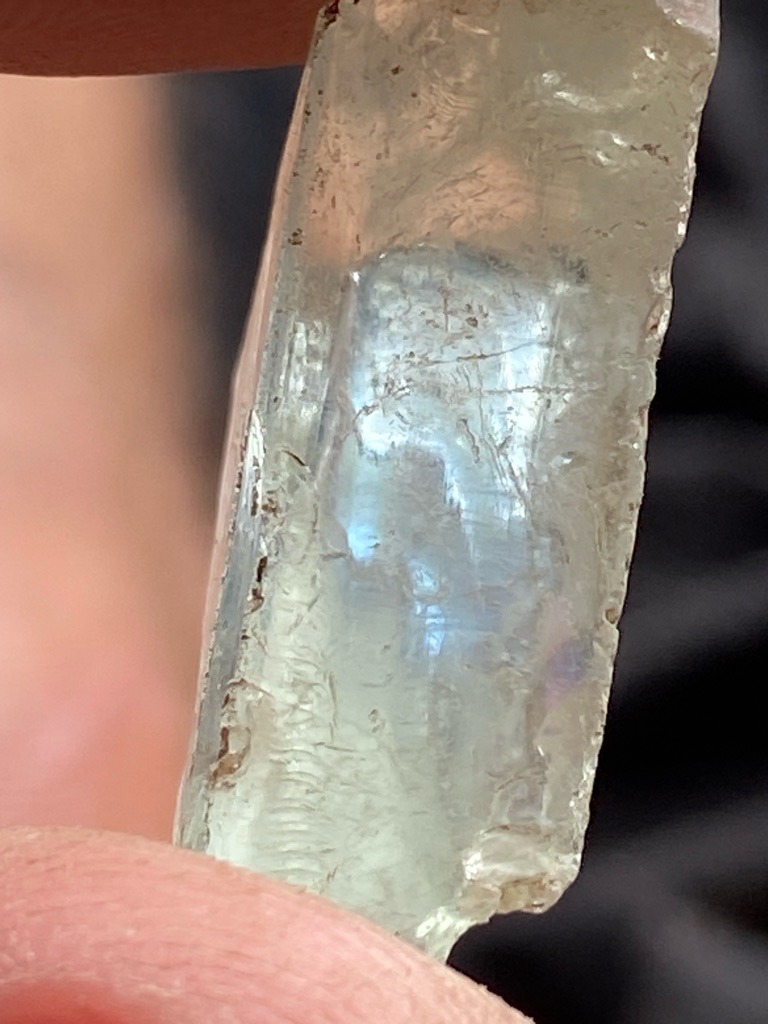
Estimated 8.50 carats based on visual scale against fingers
Color
H-I (Near Colorless with a slight yellowish/greenish tint common in rough)
Clarity
SI2 (Significant internal flaws and feather fractures visible in rough form)
Shape
Uncut Octahedral / Irregular Rough Specimen
Overall Assessment
An impressive, large natural rough diamond crystal displaying characteristic surface growth features and internal inclusions, offering potential for custom lapidary work or preservation as a mineral specimen.
Cut Quality
Not applicable (Rough crystal, uncut and unpolished)
Brilliance
Low to Moderate due to rough, unpolished surfaces absorbing and scattering light
Fire
Minimal dispersion visible on the raw faces
Scintillation
Poor due to lack of standard facet patterns
Proportions
Not applicable for rough uncut stone
Symmetry
Natural crystal symmetry (distorted octahedral/elongated rough form)
Polish
Raw crystal faces showing natural growth lines and striations
Fluorescence
Cannot be definitively determined without UV testing (Likely Faint to Medium Blue based on typical natural rough)
Inclusions
Numerous internal feathers, fractures, and dark mineral inclusions visible throughout the core
Blemishes
Natural surface trigons, pitting, growth lines, and rough edges
Origin
Likely alluvial or primary kimberlite pipe origin (Africa or Russia)
Treatment Detection
No signs of artificial treatments; completely natural untreated rough
Estimated Value
$1,500 - $3,000 USD (rough gemstone value prior to cutting)
Certification Estimate
GIA (Gemological Institute of America) as a natural rough diamond report
Investment Potential
Moderate, primarily valued as a collectible mineral specimen or custom cut potential
Similar Diamonds
Other industrial or jewelry-grade uncut octahedral and elongated rough diamond crystals
Setting Suggestions
Custom organic bezel or raw-stone claw setting to preserve the natural crystal aesthetic
Care & Maintenance
Store separately in a fabric-lined box; avoid dropping as rough stones can fracture along cleavage planes
Interesting Facts
Displays natural growth lines (triangular striations called trigons) on the faces, typical of un-abraded natural diamond crystals