Non-diamond (Glass or Quartz)
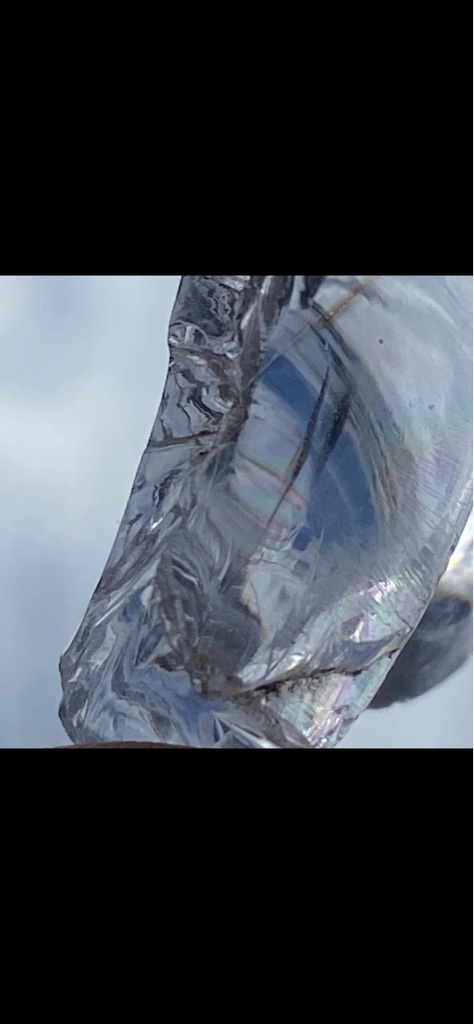
Non-diamond (Glass or Quartz) · Rough / Uncut fragment
Uncut / Raw fragment Cut
Carat
Estimated 10-20 carats based on visual scale
Color
Colorless with iridescent surface sheen
Clarity
Included / Fragured (I3 equivalent)
Shape
Rough / Uncut fragment
Overall Assessment
This specimen is not a diamond. Based on the visual evidence of curved (conchoidal) fracture patterns and the lack of high refractive index characteristics, it is likely a glass fragment or a common mineral like quartz.
Cut Quality
Uncut / Raw fragment
Brilliance
Low; surface reflects light rather than internal refraction
Fire
Low; visible surface iridescence rather than spectral dispersion
Scintillation
Minimal; no faceted light return
Proportions
Irregular fragment geometry
Symmetry
N/A - Asymmetrical rough
Polish
N/A - Natural/Rough surface with conchoidal fractures
Fluorescence
Inconclusive from image
Inclusions
Visible internal fractures, veining, and flow-like lines
Blemishes
Conchoidal chipping, surface pits, and jagged edges
Origin
Terrestrial mineral (likely Glass or Quartz)
Treatment Detection
Natural state for fragment; no specific gem treatments observed
Estimated Value
$5 - $50 (Decorative/Mineral specimen value)
Certification Estimate
Likely would not be accepted by GIA/IGI as a gem-quality diamond
Investment Potential
Very Low; no resale value as a gemstone
Similar Diamonds
None; characteristics more similar to glass cullet or quartz shards
Setting Suggestions
Wire-wrapped pendant or kept as a mineral specimen
Care & Maintenance
Avoid impacts as material shows high brittle fracture potential
Interesting Facts
The wave-like conchoidal fractures are highly characteristic of amorphous glass or certain crystalline minerals rather than the cubic cleavage of diamond.