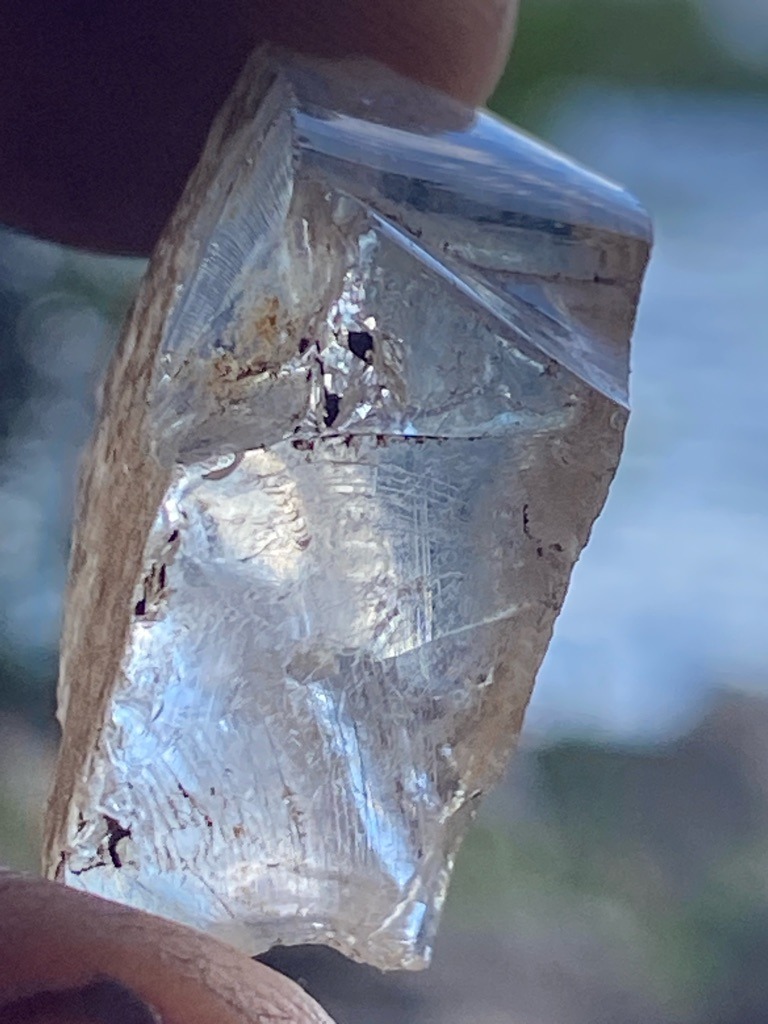
Natural rough diamond crystal
Natural rough diamond crystal · Rough octahedral/fragment crystal form with natural faces
Not applicable (Rough, unpolished crystal specimen) Cut
Carat
Estimated 3.50 to 4.50 carats based on size and density appearance
Color
Near-colorless to light brown tint (approx. G-I range)
Clarity
I1 to I2 (Included due to visible internal fracturing and dark inclusion spots)
Shape
Rough octahedral/fragment crystal form with natural faces
Overall Assessment
An interesting and genuine natural rough diamond crystal showcasing raw geological features, growth patterns, and natural inclusions, suited for mineral collectors or custom organic jewelry design.
Cut Quality
Not applicable (Rough, unpolished crystal specimen)
Brilliance
Low to moderate due to rough surfaces and internal fractures
Fire
Minimal dispersion visible on the raw faces
Scintillation
Poor due to lack of standard facet patterns
Proportions
Natural crystal habit, no traditional proportions applicable
Symmetry
Asymmetrical raw crystal form
Polish
Raw, untreated crystal faces with natural striplications (trigons potentially present)
Fluorescence
Cannot be determined without UV testing (Likely Inert to Medium Blue)
Inclusions
Prominent dark mineral inclusions and internal feather fractures visible
Blemishes
Natural surface cavities, rough skin, and growth lines
Origin
Likely alluvial or primary kimberlite deposit (Africa or Canada origin typical)
Treatment Detection
No signs of enhancement or treatment; completely natural
Estimated Value
$500 - $1,500 depending on cutter yield assessment
Certification Estimate
GIA or IDEX gemological lab report for rough stone identification
Investment Potential
Low investment value as a loose rough gemstone; higher as a mineral specimen
Similar Diamonds
Industrial or lower-grade jewelry-tier rough diamond crystals
Setting Suggestions
Raw crystal pendant setting in yellow gold or platinum using prongs or wire wrap
Care & Maintenance
Store securely away from harder gems; clean gently with warm soapy water and a soft brush
Interesting Facts
Shows natural crystal growth lines (striations) formed deep within the Earth's mantle over a billion years ago