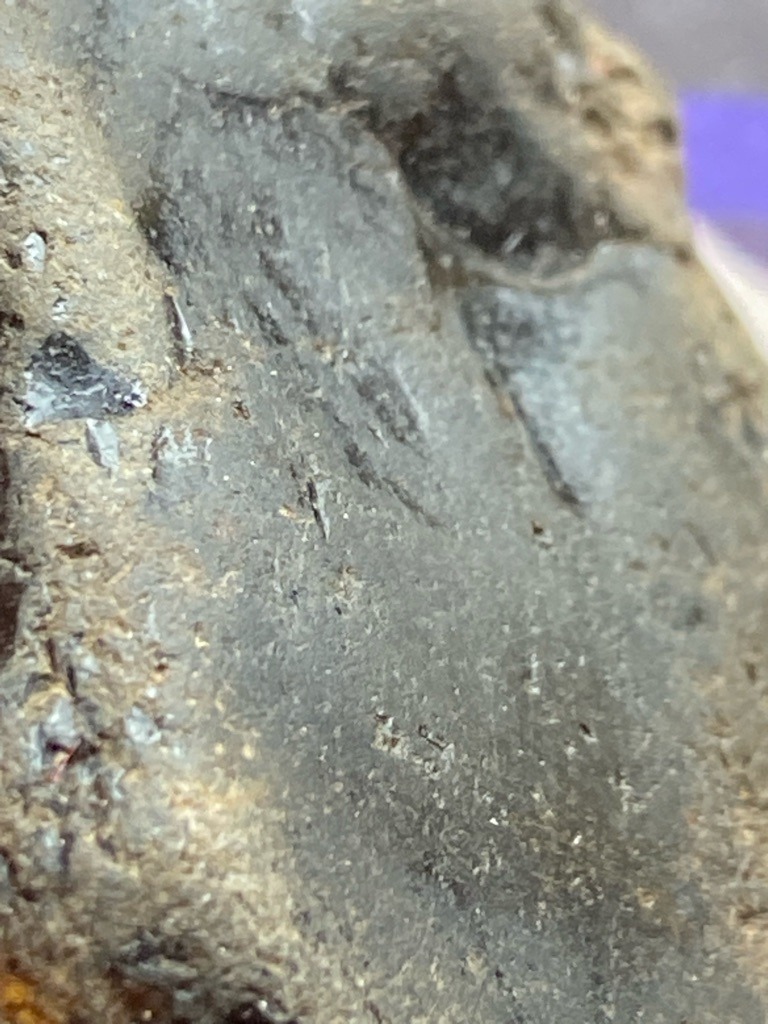
Natural rough diamond matrix or host rock containing micro-diamonds
Natural rough diamond matrix or host rock containing micro-diamonds · Rough crystal / Irregular aggregate
Not applicable (Rough state) Cut
Carat
Undetermined due to matrix enclosure (rough stone view)
Color
Industrial / Grayish brown (typical of rough host material)
Clarity
Included / Industrial grade
Shape
Rough crystal / Irregular aggregate
Overall Assessment
An interesting raw geological specimen showing natural rough matrix material, suitable for mineral collections rather than jewelry use in its current form
Cut Quality
Not applicable (Rough state)
Brilliance
Poor to None in current unpolished rough state
Fire
Minimal to None prior to cutting and polishing
Scintillation
None in current rough condition
Proportions
Not applicable to rough matrix stone
Symmetry
Not applicable (Uncut rough stone)
Polish
Unpolished natural crystal surface
Fluorescence
Cannot be determined visually without UV light testing
Inclusions
Heavy internal mineral grains, carbon spots, and matrix rock inclusions
Blemishes
Natural surface etch channels, trigons, and rough skin textures
Origin
Primary kimberlite or lamproite pipe deposit
Treatment Detection
No treatments detected; completely untreated natural rough specimen
Estimated Value
Nominal value as a raw specimen or collector mineral specimen rather than gem-quality faceted diamond
Certification Estimate
Industrial assessment or rough sorting certificate rather than standard GIA diamond dossier
Investment Potential
Low liquidity for investment; primarily of interest to mineral collectors or educational purposes
Similar Diamonds
Uncut kimberlite ore samples and industrial-grade rough diamond crystals
Setting Suggestions
Best preserved as a raw mineral specimen in a custom wire-wrap or organic bezel setting
Care & Maintenance
Handle with care to prevent matrix crumbling; clean gently with a soft brush and mild soapy water
Interesting Facts
Most natural diamonds are recovered from deep within the Earth's mantle via kimberlite pipes, often embedded in rough host rock just like this specimen