Non-diamond (Glass/Slag/Plastic)
Non-diamond (Glass/Slag/Plastic) · Rough / Uncut fragment with jagged edges
None (Irregular fragment) Cut
Carat
Indeterminate (Visual size suggests medium-large specimen)
Color
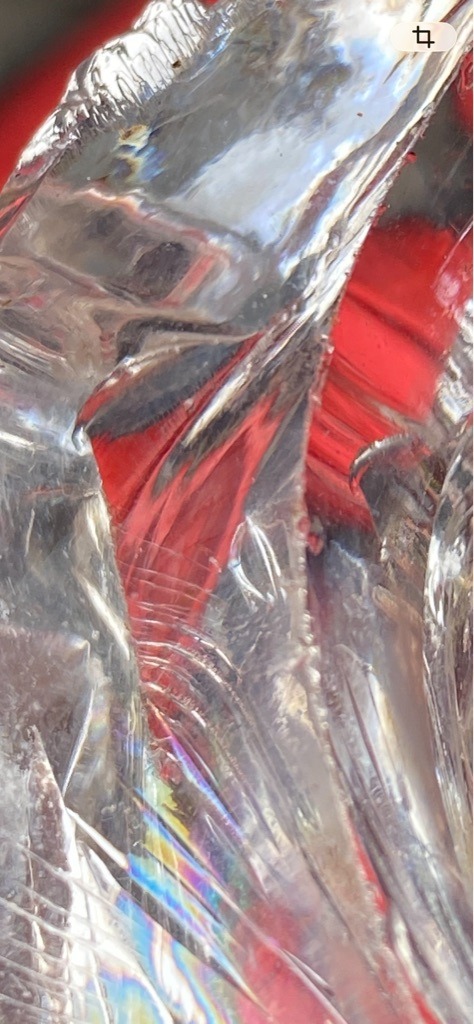
Colorless/Translucent with visible red background reflection
Clarity
Poor (Highly included with fractures and surface debris)
Shape
Rough / Uncut fragment with jagged edges
Overall Assessment
The specimen is not a diamond. Based on surface morphology, conchoidal fracture patterns, and internal flow lines, it is identified as a fragment of glass or clear synthetic resin.
Cut Quality
None (Irregular fragment)
Brilliance
Low (Lacks high refractive index of diamond)
Fire
Weak (Visible mainly as surface diffraction/oil film effect)
Scintillation
Negligible
Proportions
Non-standard irregular mass
Symmetry
Poor / Asymmetrical
Polish
Poor (Uneven, scratched surface)
Fluorescence
Non-applicable
Inclusions
Gas bubbles, flow lines, and internal stress fractures visible
Blemishes
Heavy surface scratching, conchoidal fractures, and impact chips
Origin
Industrial byproduct or recycled glass
Treatment Detection
None detected; natural state of material is industrial
Estimated Value
Negligible / Decorative value only
Certification Estimate
Unlikely to be certified by major labs (GIA/IGI) as a gemstone
Investment Potential
Zero
Similar Diamonds
None; characteristics align with glass cullet or clear acrylic
Setting Suggestions
Not recommended for fine jewelry; possible craft wire-wrap
Care & Maintenance
Avoid high heat and pressure; fragile material prone to shattering
Interesting Facts
The wavy flow lines and conchoidal fractures are classic diagnostic indicators of glass rather than crystalline diamond.