Likely Non-Diamond (Glass or Slag)
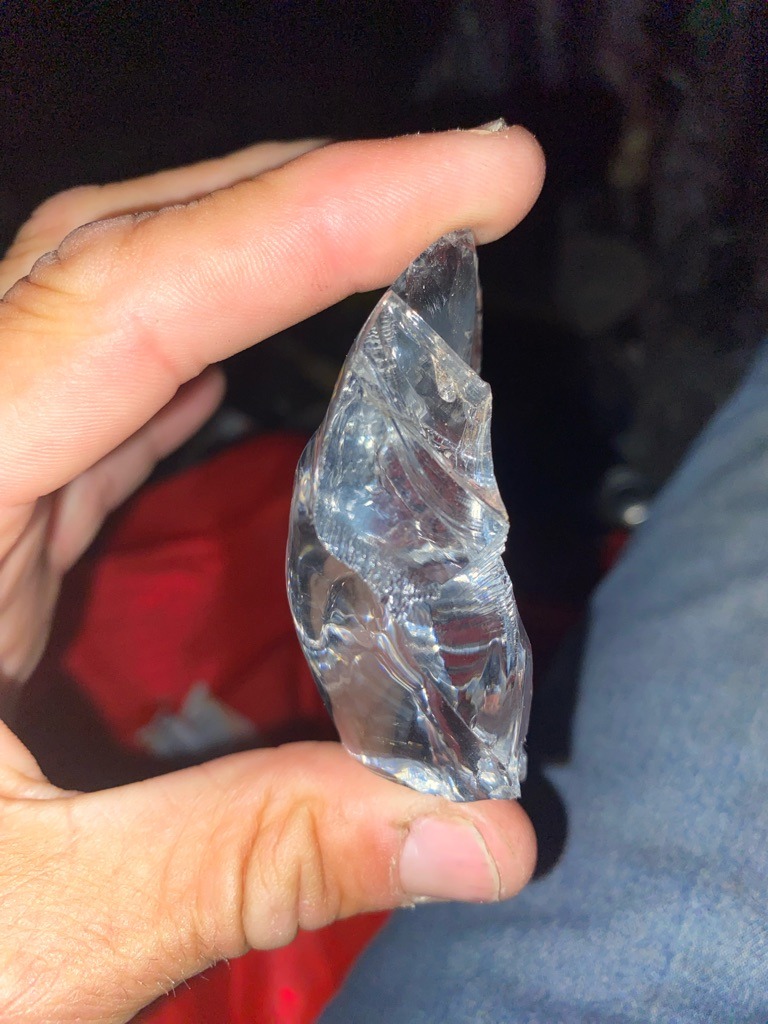
Likely Non-Diamond (Glass or Slag) · Irregular/Rough Shard
N/A (Uncut/Broken Shard) Cut
Carat
Estimated 200-400 carats based on size
Color
Colorless (Vitreous)
Clarity
Transparent but with internal flow lines
Shape
Irregular/Rough Shard
Overall Assessment
The specimen lacks the crystalline structure, adamantine luster, and refractive properties of a diamond. The size, transparency, and shell-like fracture marks strongly suggest it is a piece of glass or industrial material rather than a gemstone.
Cut Quality
N/A (Uncut/Broken Shard)
Brilliance
Low (Does not exhibit total internal reflection common in diamonds)
Fire
None detected; lack of dispersion
Scintillation
Poor; lacks faceted surface for sparkle
Proportions
N/A
Symmetry
None (Asymmetrical)
Polish
Natural Vitreous Luster (Not polished)
Fluorescence
Unknown without UV light, but glass often lacks diamond-specific fluorescence
Inclusions
Conchoidal fracture patterns and possible air bubbles (indicative of glass)
Blemishes
Impact marks and sharp, uneven edges
Origin
Man-made glass or industrial slag
Treatment Detection
N/A
Estimated Value
Minimal to none (Decorative value only)
Certification Estimate
Unlikely to be accepted by GIA/AGS as a diamond; would be identified as glass
Investment Potential
Zero
Similar Diamonds
None (Does not match characteristics of industrial or gem-grade diamond)
Setting Suggestions
Not recommended for jewelry due to low hardness and lack of refractive beauty
Care & Maintenance
Glass is prone to scratching and shattering; handle with care to avoid cuts from sharp edges
Interesting Facts
The conchoidal (shell-like) fracture pattern seen on the surface is a classic identifier of glass or quartz, whereas diamonds fracture along cleavage planes.