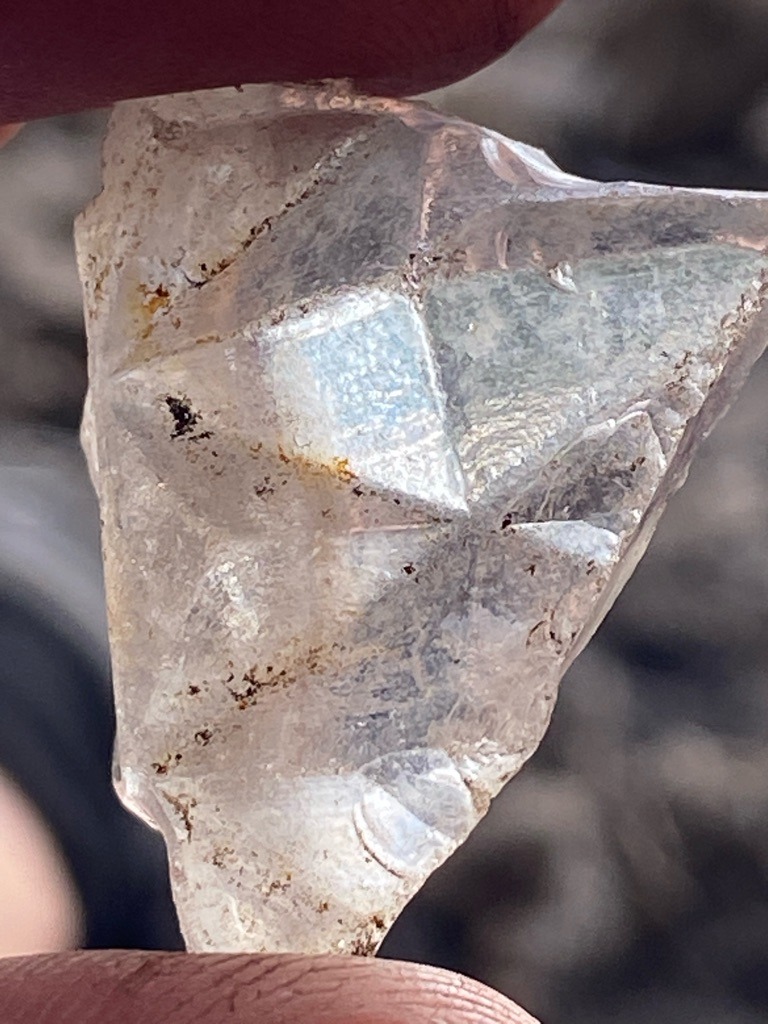
Natural rough mineral, highly likely raw quartz or potentially an uncertified rough stone rather than a gem-quality faceted diamond based on the conchoidal fracture patterns, surface etching, and inclusions visible.
Natural rough mineral, highly likely raw quartz or potentially an uncertified rough stone rather than a gem-quality faceted diamond based on the conchoidal fracture patterns, surface etching, and inclusions visible. · Irregular rough crystal fragment, partially modified or fractured
Poor / Uncut rough stone with natural crystal faces and rough fracture planes Cut
Carat
Estimated around 15-25 carats based on visual scale in fingers
Color
Near colorless to light brown tint (K-M range if diamond, or typical milky/smoky quartz appearance)
Clarity
Included (I3 equivalent with numerous internal fractures, mineral inclusions, and surface pitting)
Shape
Irregular rough crystal fragment, partially modified or fractured
Overall Assessment
The specimen displayed is a raw, naturally fractured mineral fragment rather than a finished, high-grade gemstone. While visually intriguing due to its rough texture and internal patterns, it requires professional gemological testing to definitively identify the mineral species and lacks the optical properties of a fine-cut diamond.
Cut Quality
Poor / Uncut rough stone with natural crystal faces and rough fracture planes
Brilliance
Low due to internal fracturing and lack of precise facet geometry
Fire
Minimal dispersion observed due to rough, unstructured surface
Scintillation
Poor, light is scattered internally by fractures rather than reflected symmetrically
Proportions
Non-standard rough geometry; highly variable depth and lack of precise pavilion/crown angles
Symmetry
Asymmetrical rough formation
Polish
Unpolished natural crystal surface and rough fracture edges
Fluorescence
Inert to faint
Inclusions
Heavy internal feather fractures, carbon spots, and mineral staining along fissures
Blemishes
Surface abrasions, natural growth marks, pits, and rough edges
Origin
Natural alluvial or pegmatite rough formation
Treatment Detection
No treatments detected; appears entirely natural and unenhanced
Estimated Value
Minimal commercial gemstone value; primarily of mineralogical or specimen interest
Certification Estimate
Uncertifiable as a standard gemstone due to rough, unpolished state; requires professional lab testing (GIA/AGS) to confirm mineral species
Investment Potential
Low investment potential for jewelry use; value lies strictly in mineral collecting
Similar Diamonds
Comparable to low-grade industrial diamond rough or raw quartz crystal specimens
Setting Suggestions
Wire-wrapping or custom organic bezel setting to preserve the raw, natural aesthetic if used as a mineral specimen jewelry piece
Care & Maintenance
Avoid harsh impacts as internal fractures make the stone fragile; clean gently with mild soapy water and a soft brush
Interesting Facts
Raw mineral specimens display the natural growth habits and geological history of the Earth before human cutting and polishing