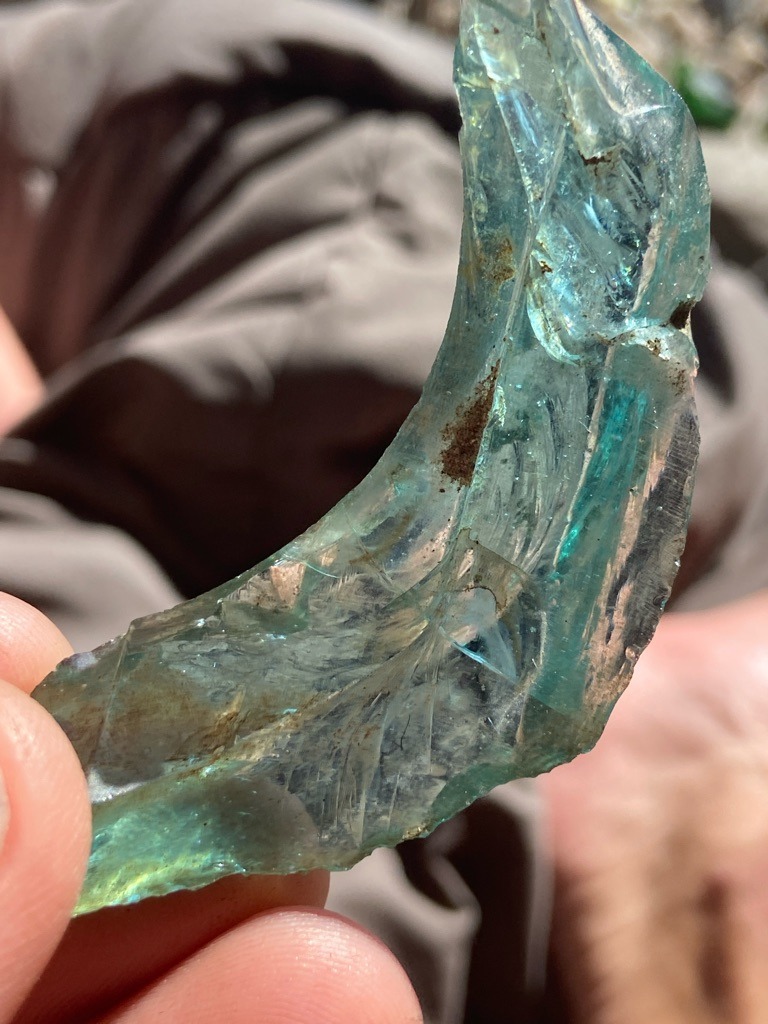
Not a diamond; this is a piece of industrial or decorative glass slag featuring characteristic conchoidal fracture patterns.
Not a diamond; this is a piece of industrial or decorative glass slag featuring characteristic conchoidal fracture patterns. · Irregular / Raw Fragment
Poor (Uncut raw fragment with natural fracture surfaces) Cut
Carat
N/A (Glass piece, significantly heavy due to large volume)
Color
Aquamarine Blue / Turquoise (Fancy Color equivalent)
Clarity
Included (Contains internal bubbles, swirl lines, and debris typical of glass)
Shape
Irregular / Raw Fragment
Overall Assessment
The specimen pictured is not a diamond or a natural gemstone of any kind, but rather a fragment of colored glass showing classic conchoidal fracturing and internal bubbles.
Cut Quality
Poor (Uncut raw fragment with natural fracture surfaces)
Brilliance
Low to Moderate (Glass luster, not adamantine)
Fire
Minimal to None
Scintillation
Poor
Proportions
N/A
Symmetry
Asymmetrical
Polish
Raw / Unpolished fracture surfaces
Fluorescence
None observed
Inclusions
Gas bubbles, flow lines, and trapped impurities
Blemishes
Surface chips, weathering, and rough fracture edges
Origin
Man-made industrial or artisanal glass waste
Treatment Detection
N/A
Estimated Value
Minimal (Scrap or decorative slag glass value, essentially negligible)
Certification Estimate
Not applicable for grading laboratories (GIA/AGS/IGI do not grade glass)
Investment Potential
None
Similar Diamonds
None (No gemstone equivalence, purely decorative glass)
Setting Suggestions
Wire wrapping or bezel setting if used for wire-wrap artisan jewelry
Care & Maintenance
Wash with mild soap and water; avoid heavy impacts as glass is fragile and prone to chipping
Interesting Facts
Slag glass is often mistaken for rough precious gemstones like aquamarine, tourmaline, or emerald by untrained finders due to its appealing blue-green color and conchoidal fractures.