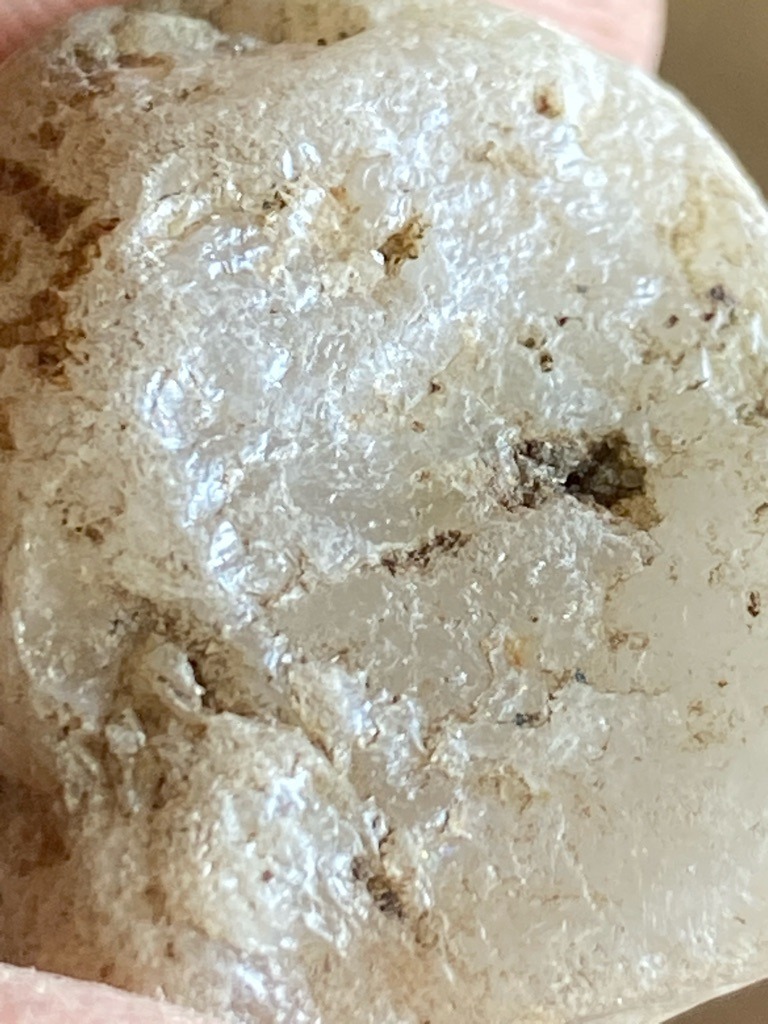
Natural rough diamond / mineral crystal
Natural rough diamond / mineral crystal · Rough / Uncut / Natural irregular pebble
Not applicable (Rough uncut stone) Cut
Carat
Estimated 2.50 - 4.00 carats based on rough dimensions
Color
Near-colorless to light brown/yellow tint in rough form (Estimated G-J equivalent)
Clarity
Included (I1 - I3 equivalent due to visible surface cavities and internal fractures)
Shape
Rough / Uncut / Natural irregular pebble
Overall Assessment
This is a fascinating specimen of an uncut natural diamond showing characteristic rough surface textures, etching, and inclusions, valuable mainly as a raw educational or collector piece rather than a finished polished gem
Cut Quality
Not applicable (Rough uncut stone)
Brilliance
Minimal in current rough state; requires faceting to display optical brilliance
Fire
Obscured by rough surface and natural frosted skin
Scintillation
None in current uncut state
Proportions
Natural uncut morphology; depth and table percentages do not apply
Symmetry
Natural irregular radial symmetry typical of alluvial or primary rough crystals
Polish
Unpolished natural crystal skin (etched/resorbed surface features)
Fluorescence
Cannot determine accurately without UV testing (Likely none to faint)
Inclusions
Surface etching channels, natural indented natural faces, carbon spots, and internal feather fractures
Blemishes
Natural surface pitting, rough skin, and minor abrasion marks from transport
Origin
Likely alluvial deposit or primary kimberlite rough
Treatment Detection
No signs of artificial treatment; completely untreated natural state
Estimated Value
Nominal value as a mineral specimen or low-grade industrial/cuttable rough ($50 - $200 USD)
Certification Estimate
GIA or similar major lab if submitted for a rough diamond report
Investment Potential
Low investment potential as a gemstone; primarily of interest to collectors of rough minerals
Similar Diamonds
Other unassorted industrial or lower-gem-quality alluvial rough diamond crystals
Setting Suggestions
Best kept as a raw mineral specimen or set in an organic, rustic wire-wrap pendant using yellow or white gold
Care & Maintenance
Store separately to prevent scratching other stones; clean gently with warm soapy water and a soft brush
Interesting Facts
The rough surface features distinct triangular etch marks known as trigons, which are typical growth and dissolution features on natural diamond crystals