Rough Diamond or Mineral Fragment
Rough Diamond or Mineral Fragment · Natural Rough (Uncut)
N/A (Rough State) Cut
Carat
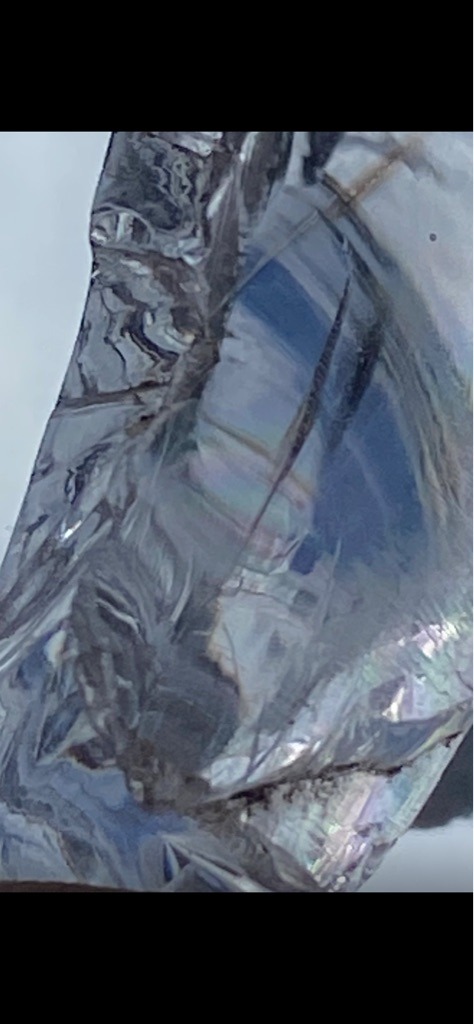
Estimated 10-20 carats based on visual scale and density appearance
Color
Visual Silver/Grayish with spectral iridescence; likely in the K-M range or industrial grade
Clarity
I3 (Included Level 3) due to heavy internal fractures and structural graining
Shape
Natural Rough (Uncut)
Overall Assessment
This is a raw mineral specimen, likely a diamond rough or a similar crystalline material. It possesses significant structural integrity issues that would prevent it from being cut into a high-value gemstone, but holds interest as a geological sample.
Cut Quality
N/A (Rough State)
Brilliance
Low; suppressed by internal fractures and lack of optimized facets
Fire
Moderate iridescence visible on internal fracture planes (thin-film interference)
Scintillation
Low to None; minimal light return pattern
Proportions
Irregular natural crystalline structure with conchoidal-like fracture patterns
Symmetry
N/A (Asymmetric Rough)
Polish
N/A (Natural Surface Texture)
Fluorescence
None visible in current lighting
Inclusions
Extensive internal twinning wisps, heavy feathers, and possible crystal inclusions
Blemishes
Chipped edges, surface pits, and natural skin textures
Origin
Likely Alluvial source or Primary Kimberlite pipe if natural; alternatively, industrial glass-slag
Treatment Detection
No obvious signs of HPHT or coating; surface appears naturally worn
Estimated Value
$100 - $1,500 depending on actual mineral composition and industrial utility
Certification Estimate
GIA (Rough Diamond Report) if natural; likely categorized as Industrial or specimen grade
Investment Potential
Low; high risk due to significant fracturing which makes successful faceting unlikely
Similar Diamonds
Uncut Boart or Bort diamonds used in industrial tools or 'rough' jewelry
Setting Suggestions
Specimen display box or custom 'Rough' organic-style tension setting in 14k White Gold
Care & Maintenance
Avoid ultrasonic cleaners; internal fractures may expand under thermal or vibrational stress
Interesting Facts
Thin-film interference on internal cleavage planes creates the rainbow colors seen in the center