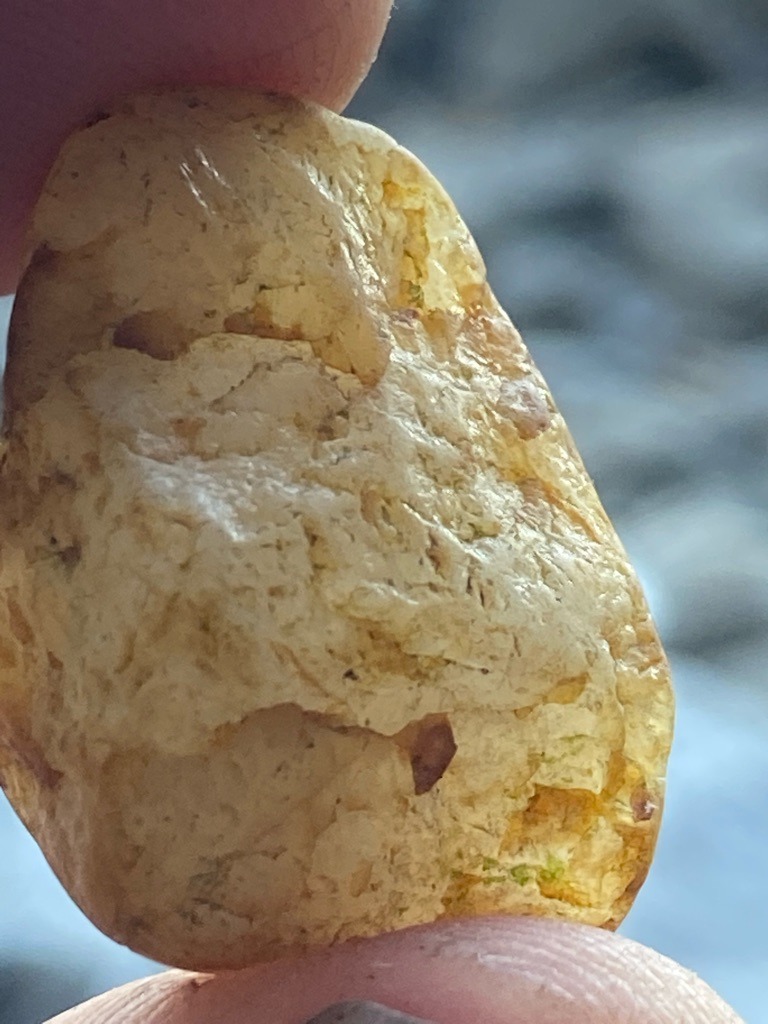
Natural rough diamond / mineral specimen (or potentially quartz/quartzite given the surface texture, requiring further testing)
Natural rough diamond / mineral specimen (or potentially quartz/quartzite given the surface texture, requiring further testing) · Rough crystal / Natural pebble form
Not applicable (uncut rough specimen) Cut
Carat
Estimated 3.5 to 5.0 carats based on relative finger size and density
Color
Light yellow to brownish-yellow
Clarity
I3 / Included (rough state with heavy surface texture and internal fractures)
Shape
Rough crystal / Natural pebble form
Overall Assessment
An intriguing raw mineral specimen displaying natural weathering and texture. Professional gemological testing (such as a thermal conductivity or Raman spectroscopy test) is recommended to definitively confirm if this is diamond or another crystalline mineral like quartz.
Cut Quality
Not applicable (uncut rough specimen)
Brilliance
Minimal to none due to lack of faceting and opaque rough surface
Fire
Absent in current uncut, unpolished state
Scintillation
None present in rough condition
Proportions
N/A - Untreated rough stone with natural form
Symmetry
Asymmetrical natural crystal form
Polish
Unpolished natural rough surface with characteristic etch marks
Fluorescence
Cannot be determined without UV light testing
Inclusions
Heavy internal feather fractures, clouds, and potential mineral inclusions
Blemishes
Natural surface pitting, rough skin, chips, and abrasion marks
Origin
Alluvial deposit (riverbed or secondary source recovery)
Treatment Detection
No signs of enhancement; completely natural as-found condition
Estimated Value
Nominal specimen value ($20 - $100) depending on exact mineral confirmation and weight
Certification Estimate
GIA or local gemological lab for preliminary origin and species identification
Investment Potential
Low investment potential; primarily of interest as a mineral specimen or educational piece
Similar Diamonds
Low-grade industrial diamond rough or alluvial quartz pebbles
Setting Suggestions
Wire-wrapped pendant or rustic organic bezel setting to preserve the raw look
Care & Maintenance
Store separately to avoid scratching softer stones; clean gently with warm soapy water and a soft brush
Interesting Facts
Rough diamonds often possess frosted or pitted surfaces due to natural chemical dissolution during transport in magma or rivers