Natural Diamond (Industrial Grade / Raw Crystal)
Natural Diamond (Industrial Grade / Raw Crystal) · Rough Octahedron / Irregular Crystalline Fragment
Poor (Uncut / Raw Crystal Form) Cut
Carat
Estimated 2.5 - 3.5 carats
Color
Brownish-Yellow (Fancy Dark Brownish Yellow)
Clarity
I3 (Included / Heavily Flawed)
Shape
Rough Octahedron / Irregular Crystalline Fragment
Overall Assessment
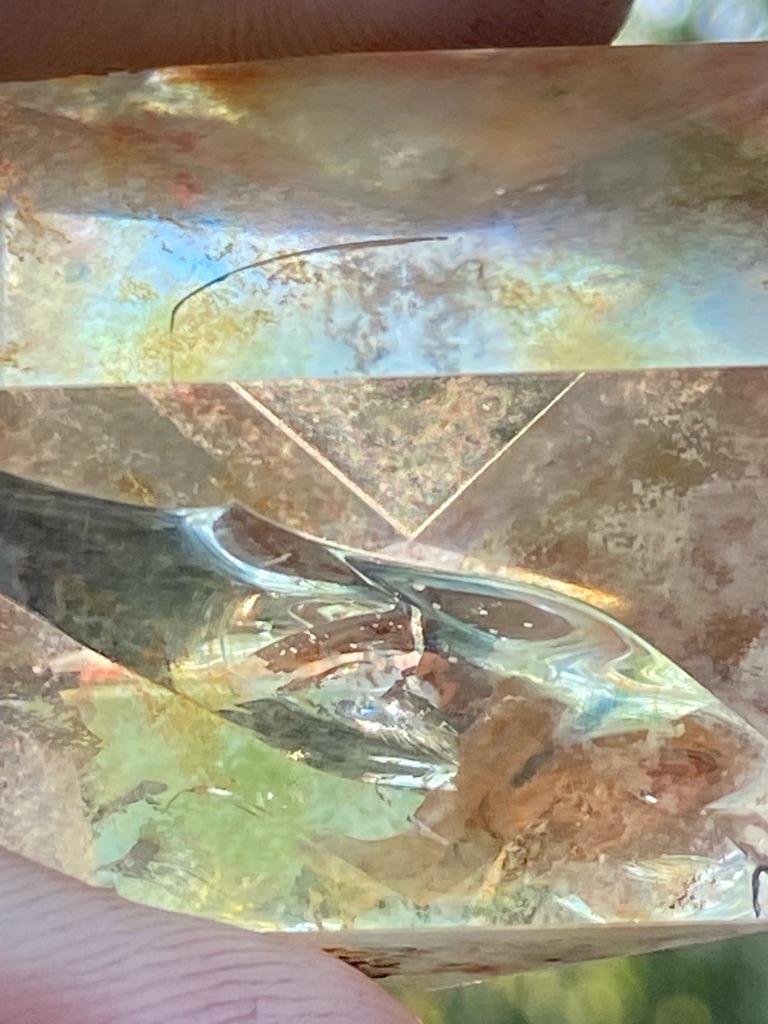
This is a fascinating raw, uncut diamond crystal featuring distinct natural features such as curved growth lines and deep internal inclusions. While it lacks the clarity and cut for fine jewelry, it possesses significant appeal as a geological specimen for collectors.
Cut Quality
Poor (Uncut / Raw Crystal Form)
Brilliance
Very low due to natural surface texture and internal fracturing
Fire
Limited dispersion visible only through translucent cleavage windows
Scintillation
Minimal sparkle, localized flash effects from internal fracture planes
Proportions
Natural rough proportions, asymmetric depth and angles
Symmetry
Natural Crystal Symmetry (Distorted Octahedral)
Polish
Natural Unpolished Crystal Faces (Trigons visible)
Fluorescence
Likely None to Faint Blue under UV
Inclusions
Large feather fractures, black carbon spots, cloud clusters, and internal cleavage planes
Blemishes
Natural surface etch channels, trigons, and abrasion marks
Origin
Alluvial or primary kimberlite deposit (African or Canadian origin likely)
Treatment Detection
No signs of enhancement; completely untreated natural rough stone
Estimated Value
$150 - $400 USD (Specimen / Industrial Value)
Certification Estimate
GIA or IGI (Rough Diamond Report / Technical Characterization Only)
Investment Potential
Low investment potential for jewelry use; strictly collectible mineral specimen value
Similar Diamonds
Other low-grade industrial or mineral specimen rough diamonds
Setting Suggestions
Wire-wrapped raw crystal pendant or bespoke bezel setting in yellow gold to highlight its organic, uncut state
Care & Maintenance
Avoid harsh impacts due to internal cleavage planes and fracture lines; clean gently with warm soapy water and a soft brush
Interesting Facts
The curved surface markings and triangular etch pits (trigons) on the crystal face are direct evidence of the corrosive journey the diamond took from the earth's mantle to the surface.