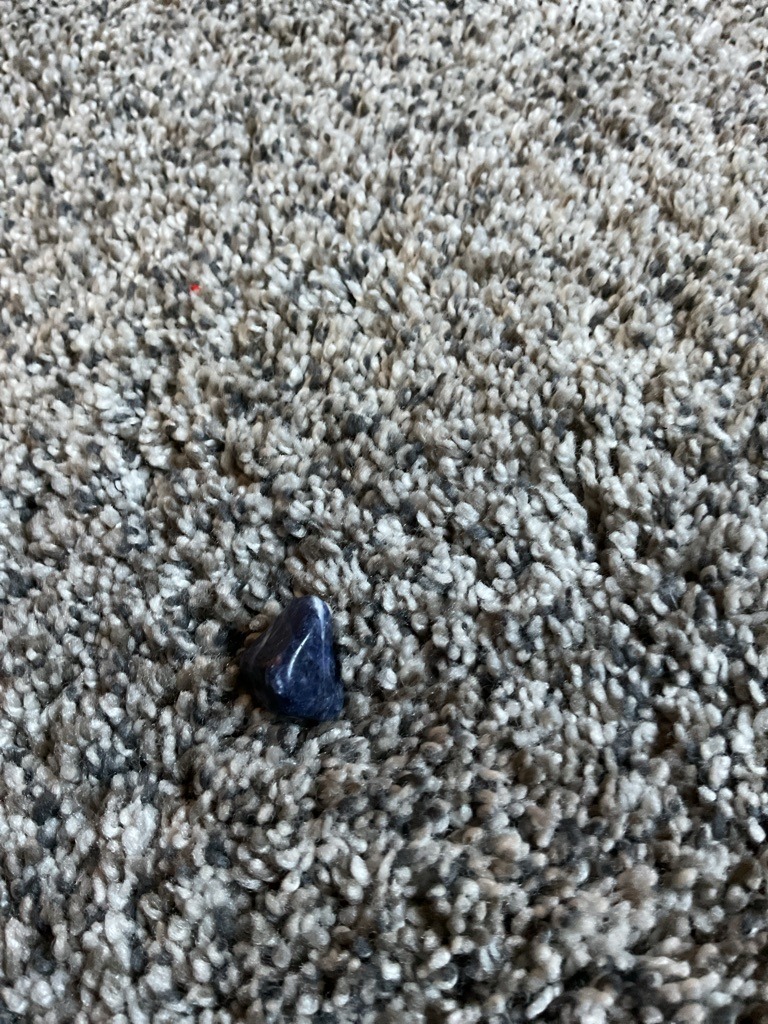
Non-diamond mineral (Sodalite or Dumortierite)
Non-diamond mineral (Sodalite or Dumortierite) · Rough/Tumbled
None (Tumbled stone) Cut
Carat
Estimated 2.0 - 5.0 carats
Color
Deep Blue with white veining (N/A to D-Z scale)
Clarity
Opaque (N/A)
Shape
Rough/Tumbled
Overall Assessment
The object is not a diamond; it is an opaque, tumbled semi-precious mineral specimen, likely Sodalite or Dumortierite, based on the signature deep blue color and white veining.
Cut Quality
None (Tumbled stone)
Brilliance
None (Opaque)
Fire
None
Scintillation
None
Proportions
N/A
Symmetry
N/A (Irregular)
Polish
Waxy to Vitreous
Fluorescence
Unknown (Often orange in Sodalite under LWUV)
Inclusions
White calcite/quartz veining and dark mineral patches
Blemishes
Surface pitting and irregular bumps characteristic of tumbled stones
Origin
Likely Brazil, Canada, or Namibia (Common sources for Sodalite)
Treatment Detection
Possibly dyed, though natural color is common for this species
Estimated Value
$1 - $5 USD
Certification Estimate
N/A; not a gemstone typically graded by GIA/AGS
Investment Potential
None (Collectivity/monetary value is negligible)
Similar Diamonds
None (This is a decorative semi-precious mineral)
Setting Suggestions
Wire wrapping, cage pendant, or small pocket stone
Care & Maintenance
Avoid harsh chemicals and ultrasonic cleaners; clean with damp cloth
Interesting Facts
Sodalite is often used as a substitute for Lapis Lazuli but lacks the pyrite inclusions