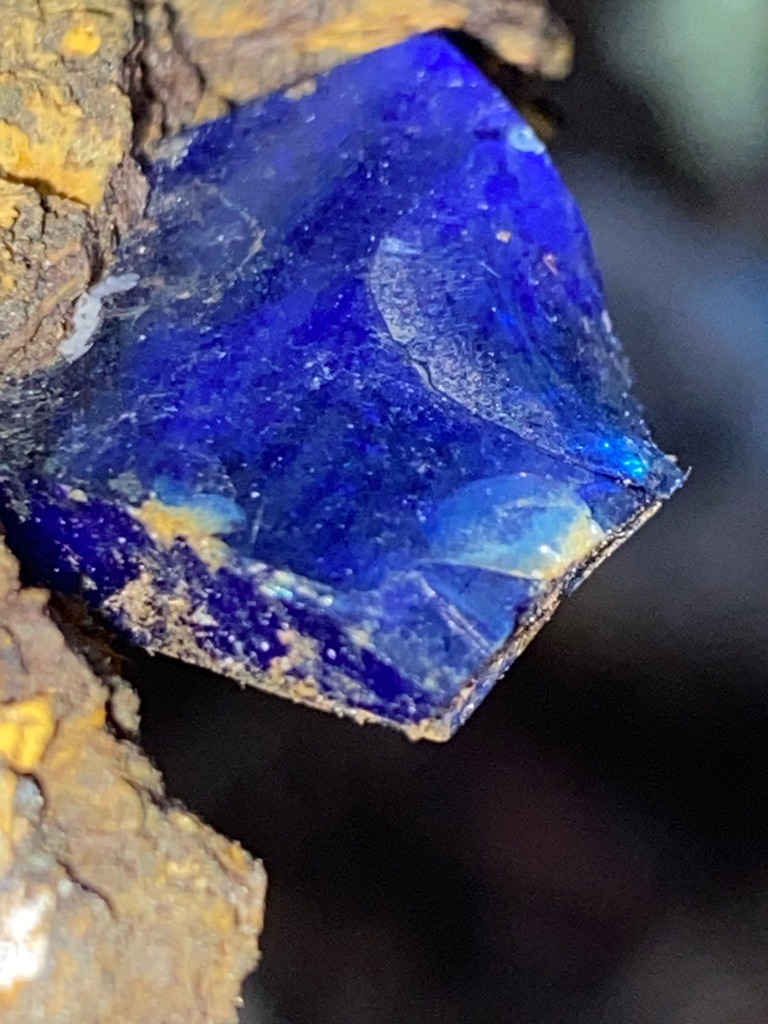
Natural Rough Crystal (Potential Lapis Lazuli or Azurite, non-diamond)
Natural Rough Crystal (Potential Lapis Lazuli or Azurite, non-diamond) · Rough / Uncut (Natural octahedron or rhombohedral fragment)
Not Applicable (Rough Crystal) Cut
Carat
Estimated at 2.5 to 5.0 carats (unmounted)
Color
Fancy Intense Royal Blue (Opaque/Translucent)
Clarity
Included (I3 - Opaque with visible internal fractures)
Shape
Rough / Uncut (Natural octahedron or rhombohedral fragment)
Overall Assessment
This specimen appears to be a natural mineral crystal rather than a diamond, likely Azurite or a similar copper-based mineral, given the matrix and color.
Cut Quality
Not Applicable (Rough Crystal)
Brilliance
Low (Surface reflection only due to opacity)
Fire
None (Material is too opaque/dense for light dispersion)
Scintillation
Low (Static light reflection only)
Proportions
Natural crystalline structure (unprocessed)
Symmetry
Poor (Natural rough state)
Polish
N/A (Natural crystal face)
Fluorescence
None observed
Inclusions
Heavy internal fracturing, color zoning, and mineral matrix inclusions
Blemishes
Surface pitting, matrix attachment, and jagged cleavage planes
Origin
Likely metamorphic or hydrothermal deposit (e.g., Afghanistan or Arizona)
Treatment Detection
No visible signs of dye or stabilization, though common for such minerals
Estimated Value
$50 - $200 (Varies significantly based on mineral verification)
Certification Estimate
GIA (Colored Stone Identification Report only)
Investment Potential
Low (Specimen value primarily for collectors rather than gemstone resale)
Similar Diamonds
Blue rough diamonds (Hope Diamond precursors), though this lacks diamond luster
Setting Suggestions
Ideal for a custom 'rough stone' claw setting in silver or yellow gold
Care & Maintenance
Avoid ultrasonic cleaners and harsh chemicals; clean with soft brush and lukewarm water
Interesting Facts
The intense blue suggests boron trace elements if it were diamond, but the texture is more typical of Azurite.