Simulant / Glass
Simulant / Glass · Rough / Fragmented
Uncut / Natural fracture Cut
Carat
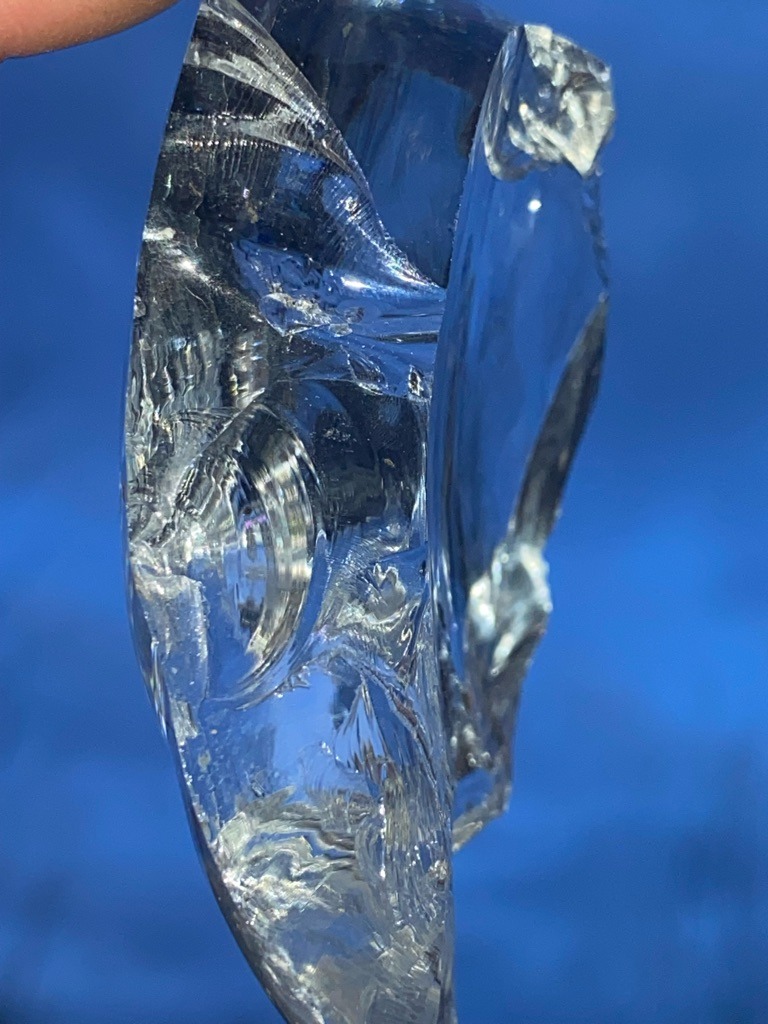
Estimated 20-40 carats based on visual scale against fingertips
Color
Colorless (equivalent to D-F range)
Clarity
Included (highly fractured)
Shape
Rough / Fragmented
Overall Assessment
This specimen is not a diamond. The visual characteristics, particularly the conchoidal fracture patterns and lack of adamantine luster, indicate it is a piece of clear glass or a similar synthetic simulant.
Cut Quality
Uncut / Natural fracture
Brilliance
Low; characteristic of vitreous luster rather than adamantine
Fire
Minimal to none
Scintillation
Weak reflections from flat fracture planes
Proportions
Non-geometric / Random
Symmetry
None (irregular shard)
Polish
N/A (fractured surfaces)
Fluorescence
Indeterminate from image
Inclusions
Conchoidal fractures, internal stress lines, and flow-like patterns
Blemishes
Large external chips and impact points
Origin
Man-made glass or industrial slag
Treatment Detection
N/A (synthetic material)
Estimated Value
Minimal (low decorative value)
Certification Estimate
N/A (most major labs would not certify as a diamond)
Investment Potential
None
Similar Diamonds
None (exhibits properties of glass such as conchoidal fracture)
Setting Suggestions
Wire wrapping for novelty use only
Care & Maintenance
Avoid impact; glass is prone to shattering
Interesting Facts
The curved, shell-like (conchoidal) fractures seen here are a diagnostic indicator of glass or quartz, as diamonds cleave along flat planes.