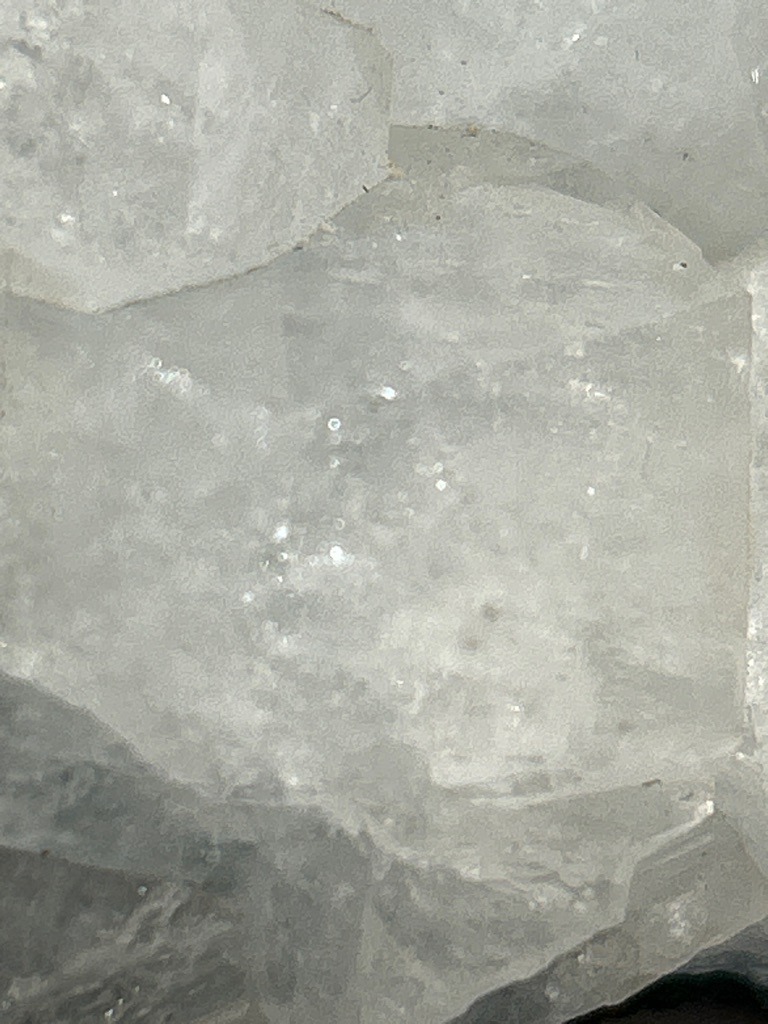
Natural rough crystal / aggregate
Natural rough crystal / aggregate · Uncut crystal matrix
Not applicable (rough, uncut stone) Cut
Carat
Difficult to estimate accurately from visual angle, likely a multi-carat specimen aggregate
Color
Near-colorless to white (H-J range estimate)
Clarity
Included (I1-I2 range based on natural internal cloudiness and crystal imperfections)
Shape
Uncut crystal matrix
Overall Assessment
An interesting raw mineral specimen showing natural crystal habit and unpolished aggregate structure, best suited for mineral collections or rustic bespoke jewelry.
Cut Quality
Not applicable (rough, uncut stone)
Brilliance
Low to moderate due to rough, unpolished surfaces obscuring light return
Fire
Minimal dispersion visible on uncut, rough crystal planes
Scintillation
Limited flash effect restricted to specific natural reflective crystal faces
Proportions
Natural uncut proportions with deep raw pavilion and unfacetted crown
Symmetry
Natural asymmetric crystal growth formations
Polish
Natural unpolished crystal face (rough matrix)
Fluorescence
Cannot be determined without UV light testing
Inclusions
Internal clouds, feathers, and micro-crystals typical of raw diamond rough
Blemishes
Natural surface etch channels, trigons, and rough skin textures
Origin
Likely alluvial or primary kimberlite pipe origin from major producing regions like South Africa, Russia, or Canada
Treatment Detection
No signs of artificial treatment; completely natural rough state
Estimated Value
Varies widely depending on industrial vs. gem-grade potential of the interior yield
Certification Estimate
GIA rough diamond evaluation service or Kimberley Process certification
Investment Potential
Collectible mineral specimen value rather than standard investment-grade polished diamond potential
Similar Diamonds
Other natural unpolished kimberlite rough diamond specimens
Setting Suggestions
Raw uncut diamond jewelry settings, such as rustic bezel settings in yellow or white gold
Care & Maintenance
Clean with mild soap and warm water; avoid harsh chemicals and hard impacts that could fracture the natural crystal planes
Interesting Facts
Natural rough diamonds like this represent billions of years of formation deep within the Earth's mantle before being brought to the surface