Rough Natural Diamond Crystal
Rough Natural Diamond Crystal · Rough Octahedral / Elongated Crystal
Uncut Rough (N/A for standard cut scale) Cut
Carat
Estimated 3.5 - 5.0 carats
Color
Near-Colorless to Light Yellow (Estimated G-J range)
Clarity
Included (Estimated SI1-SI2 range in finished state)
Shape
Rough Octahedral / Elongated Crystal
Overall Assessment
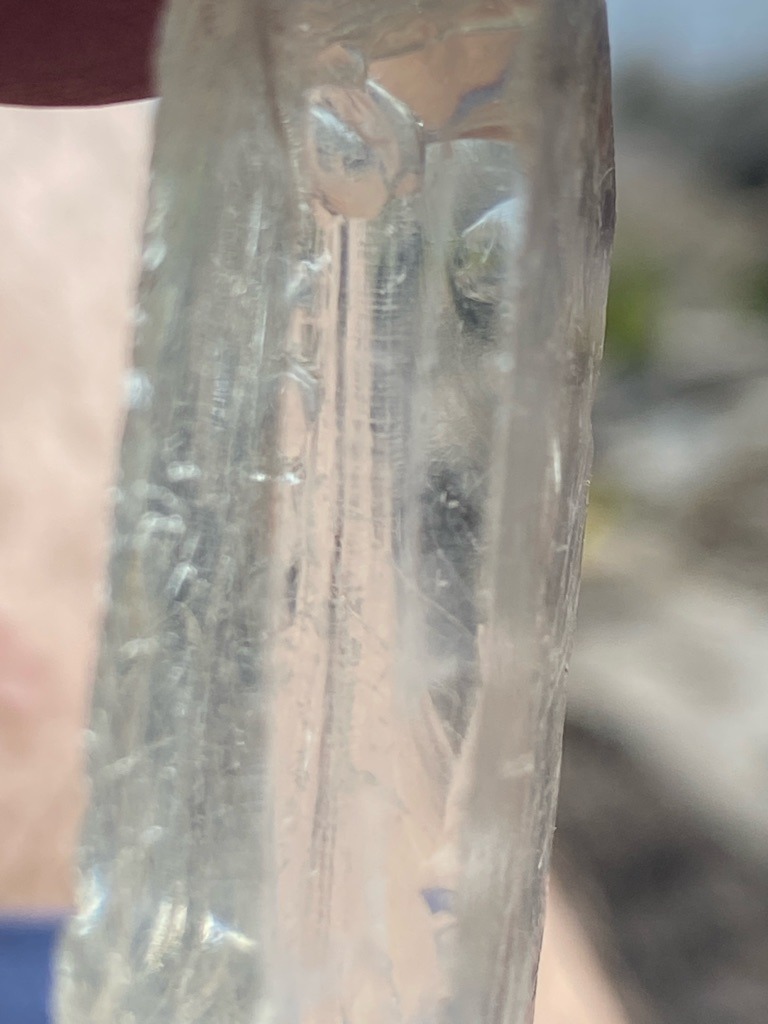
A fascinating, gem-quality rough diamond crystal displaying classic natural growth features, striations, and internal character. It holds great potential for a custom master cutter to maximize weight retention and clarity through careful planning.
Cut Quality
Uncut Rough (N/A for standard cut scale)
Brilliance
Low in rough form, will increase significantly upon cutting and polishing
Fire
Subdued in rough state; excellent potential once faceted
Scintillation
None in current rough state
Proportions
Natural rough proportions, requires sawing and planning for optimal yield
Symmetry
Natural crystal symmetry, distorted growth
Polish
Natural crystal faces (trigons and striations visible)
Fluorescence
Cannot be determined visually without UV light (Likely None to Faint)
Inclusions
Internal feather fractures, cloud formations, and pinpoint inclusions visible
Blemishes
Natural surface etch channels, growth lines, and rough skin
Origin
Alluvial or primary kimberlite pipe deposit (Africa, Canada, or Russia)
Treatment Detection
No signs of artificial treatments; entirely untreated natural rough
Estimated Value
Dependent on final cut yield, roughly $1,500 - $4,000 USD as rough specimen
Certification Estimate
GIA or HRD (Rough analysis report prior to cutting)
Investment Potential
Moderate to High for collectors of raw minerals, or high if successfully cut into a high-grade investment diamond
Similar Diamonds
Other run-of-mine gem-quality diamond crystals of similar size and clarity
Setting Suggestions
Can be set raw in organic or rustic bespoke jewelry, or cut into a Radiant or Emerald shape with platinum or yellow gold
Care & Maintenance
Store separately to prevent scratching other stones; clean with warm soapy water and a soft brush
Interesting Facts
The striations on the surface are growth lines that reveal how the carbon atoms stacked during formation deep within the Earth's mantle millions of years ago