Natural Diamond (estimated based on internal stress patterns and inclusion morphology, though confirmation via advanced spectroscopy is recommended)
Natural Diamond (estimated based on internal stress patterns and inclusion morphology, though confirmation via advanced spectroscopy is recommended) · Irregular / Raw Crystal Fragment (facet structure not fully developed or obscured)
Not Applicable (rough/uncut crystal matrix) Cut
Carat
Estimated 1.50 - 2.50 carats (based on visible fragment scale under microscopic examination)
Color
Estimated G-H (near colorless with subtle brown or grey undertones visible in deep lattice)
Clarity
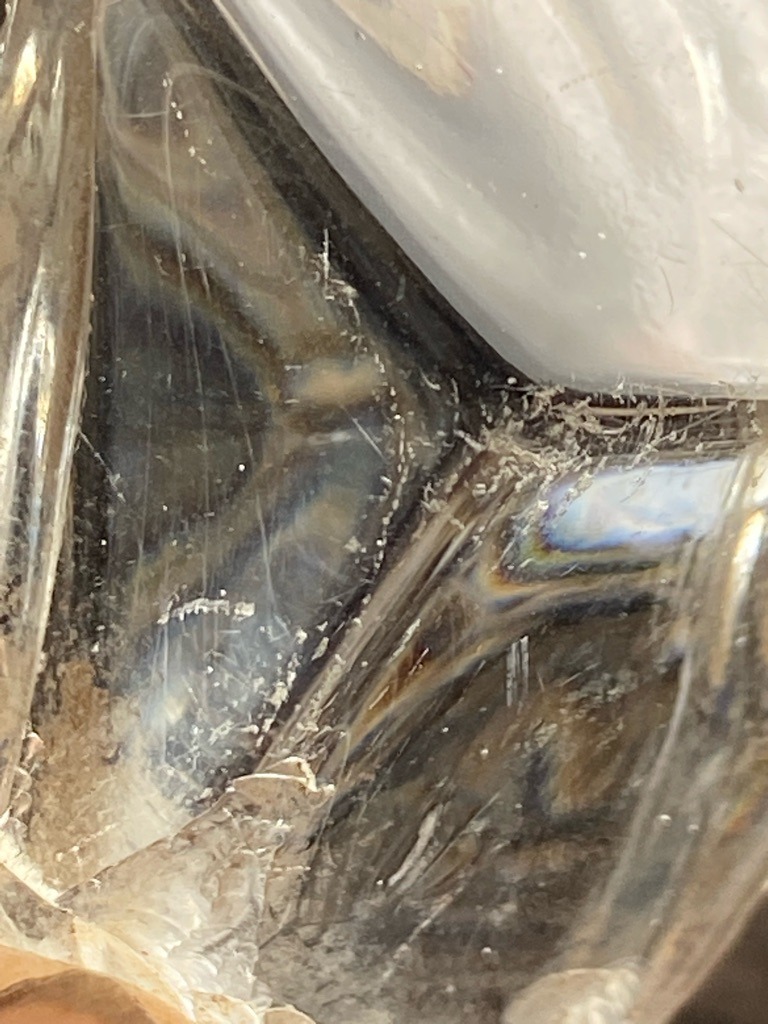
Estimated I1 - I3 (significant internal feathering, cloud formations, and strain patterns visible)
Shape
Irregular / Raw Crystal Fragment (facet structure not fully developed or obscured)
Overall Assessment
This appears to be a raw, uncut diamond specimen exhibiting natural crystal growth features, significant internal strain, and inclusions. While not suitable for standard jewelry without cutting and polishing, it possesses unique geological and aesthetic appeal as a natural mineral specimen.
Cut Quality
Not Applicable (rough/uncut crystal matrix)
Brilliance
Low to moderate due to raw, unpolished surface and internal fracturing
Fire
Minimal dispersion observed in the current raw state
Scintillation
Poor, lacking standard facet arrangements required for optimal light return
Proportions
Non-standard rough crystal geometry
Symmetry
Irregular (natural crystal habit)
Polish
Natural crystal face / Unpolished
Fluorescence
Cannot be determined without UV lamp testing
Inclusions
Extensive internal twinning striations, feathers, heavy clouding, and stress fractures
Blemishes
Natural surface trigons, rough surface skin, and abrasion marks
Origin
Likely primary alluvial or kimberlitic deposit origin
Treatment Detection
No obvious signs of artificial enhancement; appears completely untreated in its natural state
Estimated Value
Varies significantly by weight and industrial vs. gem grade; approximately $300 - $800 as a raw specimen
Certification Estimate
GIA or IGI (would likely receive a 'Rough Diamond' report or industrial-grade assessment rather than a standard polished diamond certificate)
Investment Potential
Low for resale liquidity, but holds niche value for mineral collectors or custom organic jewelry designers
Similar Diamonds
Other unpolished industrial or specimen-grade rough diamonds and uncut octahedral crystals
Setting Suggestions
Wire-wrapped, bezel, or organic raw stone settings in yellow gold or platinum to highlight its natural mineral state
Care & Maintenance
Avoid harsh ultrasonic cleaners due to internal feathers and fractures which could propagate; clean gently with warm soapy water and a soft brush
Interesting Facts
Raw diamonds showcase the natural crystal growth steps and geological history (such as trigons and twinning) that are completely polished away in commercial brilliant cuts