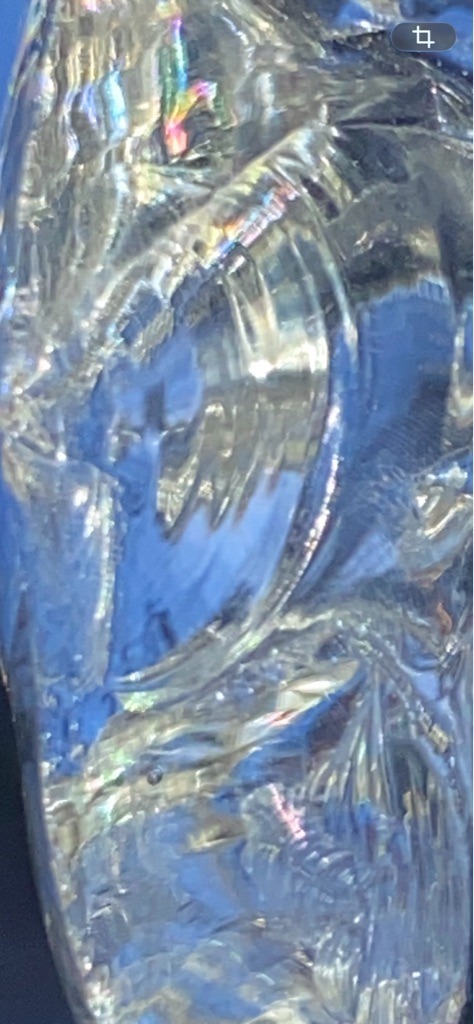
Rough / Raw Natural Diamond (possible Industrial Grade)
Rough / Raw Natural Diamond (possible Industrial Grade) · Rough Uncut / Irregular
N/A (Rough state) Cut
Carat
Estimated 2.5 - 4.0 carats based on crystalline structure
Color
Estimated J-L (Near Colorless to Faint Yellow tint)
Clarity
Estimated I2-I3 (Included) due to heavy internal veining and visible fractures
Shape
Rough Uncut / Irregular
Overall Assessment
A raw, heavily included natural diamond crystal with significant internal stress and fractures, suitable for organic-style jewelry or industrial collection.
Cut Quality
N/A (Rough state)
Brilliance
Low; characteristic of rough material without light-reflecting facets
Fire
Low to Moderate; visible spectral dispersion in the upper fracture zones
Scintillation
Poor; uneven light distribution through raw crystal
Proportions
Natural dodecahedral/octahedral fragment tendency
Symmetry
N/A (Crystalline rough)
Polish
N/A (Natural skin)
Fluorescence
Indeterminate; though rough diamonds often show faint to medium blue under UV
Inclusions
Heavy internal feathers, fractures, and possible carbon spots; distinct conchoidal fracture patterns
Blemishes
Natural trigons and growth lines on the surface
Origin
Likely African (e.g., Botswana or DRC) based on morphology
Treatment Detection
None visible; appears to be in its natural state
Estimated Value
$400 - $1,200 (Highly dependent on yield potential and internal cleanness)
Certification Estimate
GIA Rough Diamond Report; estimated clarity I3
Investment Potential
Low; largely ornamental or industrial use; value is primarily in finishing potential
Similar Diamonds
Uncut macle or rough octahedral pieces typically seen in artisanal collections
Setting Suggestions
Tension setting or custom claw setting for 'raw' jewelry styles in high-karat yellow gold
Care & Maintenance
Avoid ultrasonic cleaning due to deep-reaching internal fractures
Interesting Facts
Rough diamonds can lose up to 50-60% of their mass during the cutting and polishing process