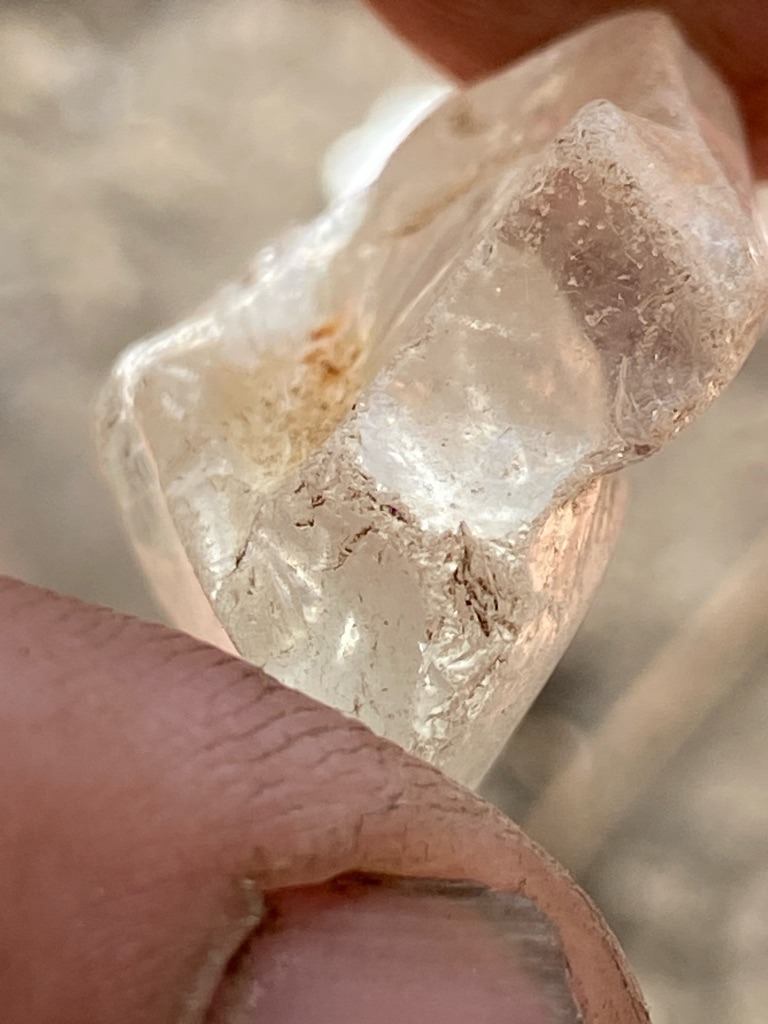
Natural rough diamond crystal
Natural rough diamond crystal · Rough octahedral/irregular crystal form (uncut)
Not applicable (Rough crystal, unpolished) Cut
Carat
Estimated 2.0 to 3.5 carats
Color
Light brown/yellowish tint (Cape series)
Clarity
I1 to I2 (Included, featuring internal fractures and feathers)
Shape
Rough octahedral/irregular crystal form (uncut)
Overall Assessment
An interesting, natural rough diamond crystal with noticeable inclusions and a brownish tint, ideal for a collector specimen or custom rustic cut.
Cut Quality
Not applicable (Rough crystal, unpolished)
Brilliance
Low to moderate due to rough surface and inclusions
Fire
Subdued due to rough unpolished exterior
Scintillation
Minimal in current rough state
Proportions
Natural raw proportions, requiring custom cutting plan
Symmetry
Natural crystal symmetry, distorted octahedral faces
Polish
Natural crystal face texture (trigons and striations likely present)
Fluorescence
Cannot be determined accurately without UV testing (likely Medium blue if tested)
Inclusions
Feathers, clouds, and dark mineral inclusions visible internally
Blemishes
Natural surface pitting, rough skin, and possible trigons
Origin
Alluvial or primary kimberlite pipe deposit (Africa or South America)
Treatment Detection
No treatments detected; completely natural rough specimen
Estimated Value
Varies widely based on potential yield after cutting, roughly $500 to $1,500 USD for the rough stone
Certification Estimate
GIA rough evaluation or local gemological laboratory certificate
Investment Potential
Collector value for mineral specimens; variable investment depending on final cut yield
Similar Diamonds
Other natural unpolished alluvial rough diamond specimens
Setting Suggestions
Can be set in its raw, uncut state using a custom bezel or wire-wrap setting for organic jewelry
Care & Maintenance
Clean with warm soapy water and a soft brush; avoid harsh acids or ultrasonic cleaners due to internal fractures
Interesting Facts
Rough diamonds retain their geological history, showing natural growth marks called trigons on their crystal faces