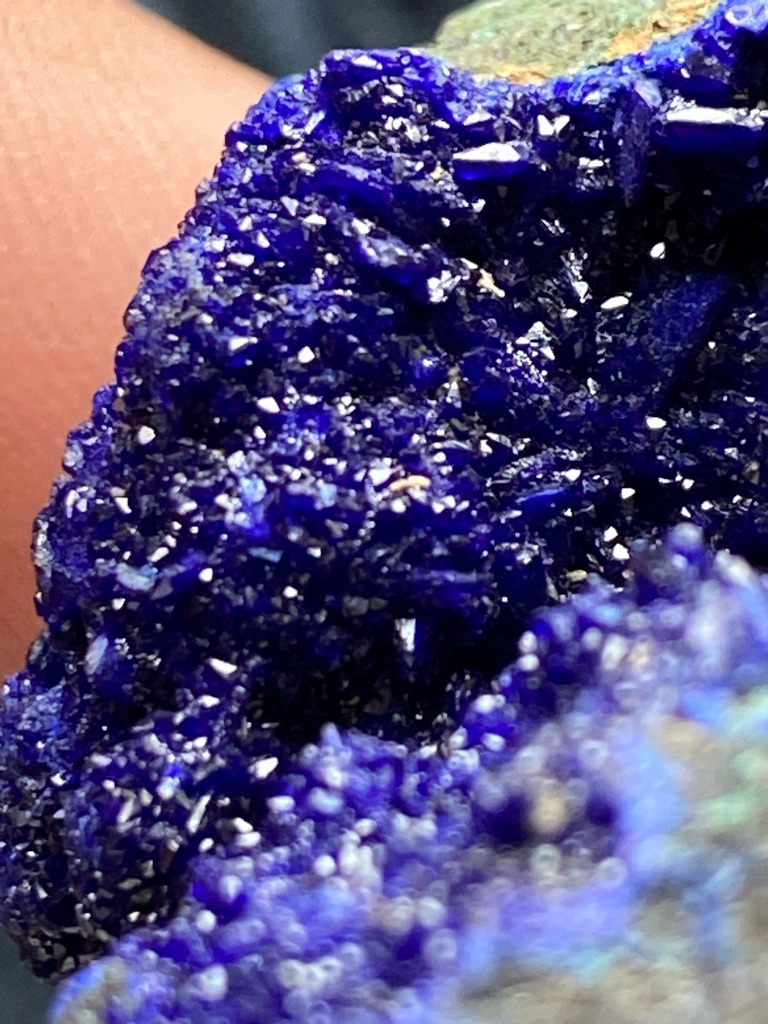
Not a diamond; this is Azurite, a soft copper mineral (not carbon)
Not a diamond; this is Azurite, a soft copper mineral (not carbon) · Raw crystal cluster / Rough mineral formation
Not applicable (uncut, natural crystalline aggregate) Cut
Carat
Not applicable (measured in grams for minerals, not carats)
Color
Deep vivid blue (Fancy Dark Violetish Blue in gemological terms if cut, but this is a mineral specimen)
Clarity
Not applicable (opaque mineral specimen)
Shape
Raw crystal cluster / Rough mineral formation
Overall Assessment
This specimen is a vibrant, deep blue azurite cluster characterized by micro-crystalline formations. While visually striking, it is a copper carbonate mineral rather than a diamond, requiring specialized mineral care rather than jewelry valuation.
Cut Quality
Not applicable (uncut, natural crystalline aggregate)
Brilliance
Vitreous to dull luster depending on the crystal face
Fire
None (azurite does not exhibit diamond-like dispersion)
Scintillation
Flashes of light from tiny crystal facets under direct illumination
Proportions
Not applicable to rough mineral specimens
Symmetry
Natural crystalline symmetry (monoclinic system)
Polish
Natural unpolished crystal faces and fractures
Fluorescence
None to inert
Inclusions
Abundant internal crystal structures and matrix rock inclusions
Blemishes
Natural surface pitting, rough texture, and contact marks
Origin
Commonly found in Morocco, France, Arizona (USA), and Australia
Treatment Detection
Natural specimen with no apparent enhancements or treatments detected visually
Estimated Value
Varies by specimen weight and quality, typically valued as a mineral specimen rather than gemstone carat weight
Certification Estimate
Certified by mineralogical institutions or universities rather than diamond labs like GIA
Investment Potential
Collectible mineral specimen value rather than financial gemstone investment
Similar Diamonds
None, as azurite is chemically and physically completely distinct from diamond
Setting Suggestions
Too soft for standard jewelry settings; best preserved as a mineral specimen or used carefully in bespoke pendant designs
Care & Maintenance
Extremely soft (Mohs hardness 3.5-4); avoid ultrasonic cleaners, harsh chemicals, prolonged light exposure, and moisture to prevent color alteration to malachite
Interesting Facts
Azurite has been used as a blue pigment in paintings since antiquity and often alters into malachite over time due to weathering