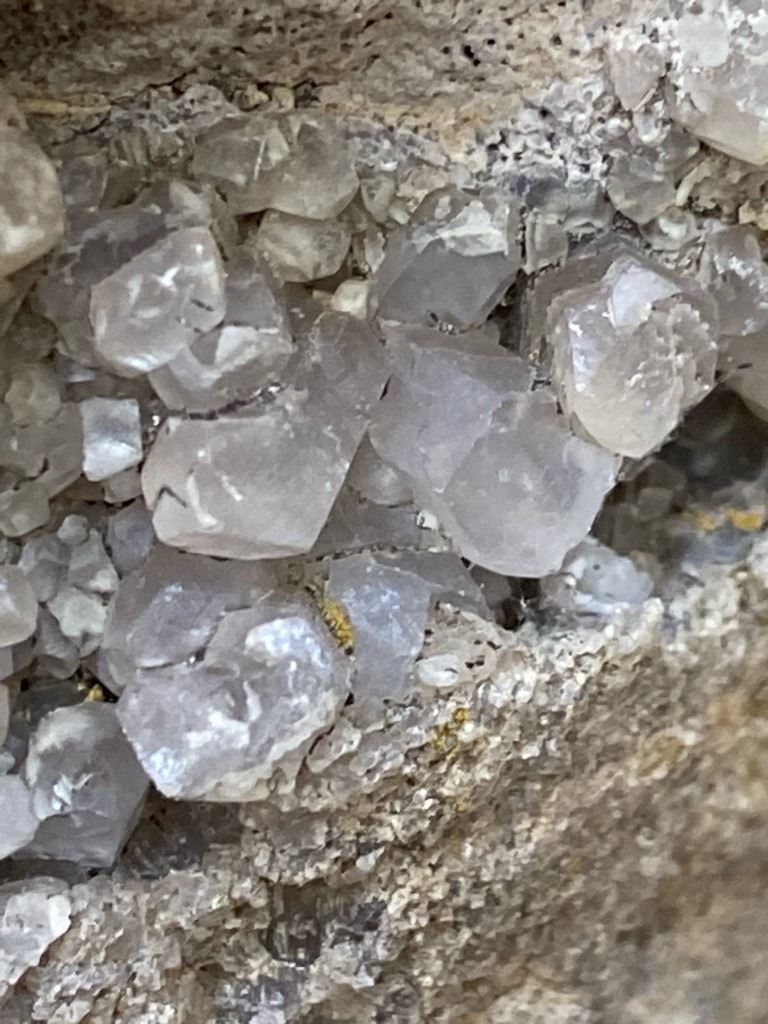
Not a diamond; the image shows raw crystalline mineral formations in matrix, likely quartz or calcite geode clusters rather than cut or rough gem-quality diamonds.
Not a diamond; the image shows raw crystalline mineral formations in matrix, likely quartz or calcite geode clusters rather than cut or rough gem-quality diamonds. · Rough crystalline / Sub-hedral to euhedral crystal clusters
Not applicable (natural raw crystal formation) Cut
Carat
Not applicable (uncut mineral matrix)
Color
Colorless to milky white
Clarity
Included / Heavily included with internal matrix structures
Shape
Rough crystalline / Sub-hedral to euhedral crystal clusters
Overall Assessment
The specimen displayed in the photograph consists of raw, uncut mineral crystals embedded in a matrix rock, entirely distinct from gem-grade diamonds.
Cut Quality
Not applicable (natural raw crystal formation)
Brilliance
Low to moderate vitreous luster typical of rough quartz/calcite
Fire
Low dispersion
Scintillation
Minimal due to lack of faceted cut
Proportions
Not applicable
Symmetry
Natural crystal symmetry (isometric/trigonal habits depending on the exact mineral species)
Polish
Natural unpolished crystal faces
Fluorescence
Unknown without UV testing
Inclusions
Abundant internal fractures, veil inclusions, and host rock matrix
Blemishes
Natural surface etching and growth features
Origin
Natural geological matrix deposit
Treatment Detection
No treatments detected; completely natural raw specimen
Estimated Value
Nominal mineral specimen value depending on exact locality
Certification Estimate
Not eligible for standard diamond grading laboratories like GIA; would be evaluated by mineralogical institutions
Investment Potential
Low as an investment, valued primarily as a decorative or educational mineral specimen
Similar Diamonds
None (this is not a diamond)
Setting Suggestions
Best preserved as a raw mineral specimen rather than jewelry set
Care & Maintenance
Keep away from harsh acids if calcite; clean gently with mild soapy water and a soft brush
Interesting Facts
Shows native crystal growth in vugs or cavities within the host rock