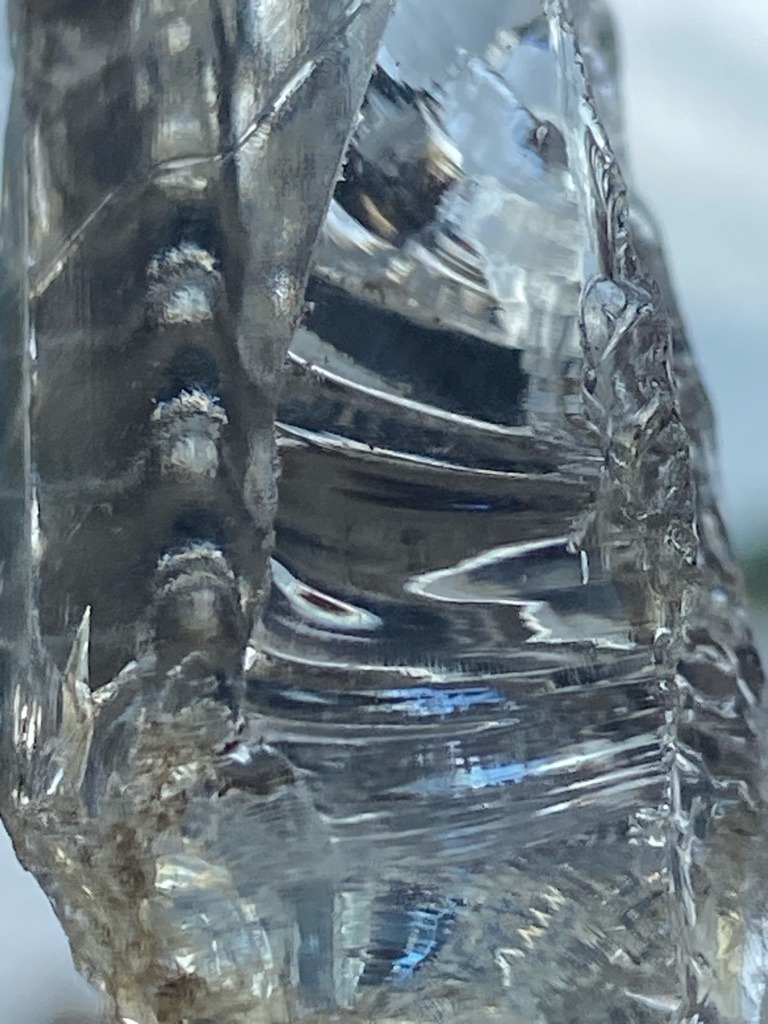
Rough Natural Diamond Crystal
Rough Natural Diamond Crystal · Uncut / Raw Octahedron / Irregular Rough Specimen
Not Applicable (Uncut Rough Specimen) Cut
Carat
Estimated 2.50 to 3.50 carats based on visual volume
Color
Near Colorless to Faint Yellow-Brown (G-I range)
Clarity
Included (I1-I2 range with internal feathers and crystal inclusions)
Shape
Uncut / Raw Octahedron / Irregular Rough Specimen
Overall Assessment
An interesting natural rough diamond specimen exhibiting characteristic crystal growth features, ideal for custom gemstone cutting or raw jewelry design.
Cut Quality
Not Applicable (Uncut Rough Specimen)
Brilliance
Limited due to rough surface and uncut state
Fire
Minimal visible fire on raw exterior surfaces
Scintillation
Poor sparkle until faceted and polished
Proportions
Not Applicable (Uncut Rough)
Symmetry
Natural crystalline symmetry, distorted octahedron
Polish
Natural crystal faces showing trigons and striations
Fluorescence
Cannot be definitively determined without UV testing, likely None to Faint
Inclusions
Visible internal cleavage planes, feathers, and small crystal inclusions
Blemishes
Natural surface textures, growth lines (striations), and minor natural indentations
Origin
Likely alluvial or primary kimberlite pipe deposit (African or Canadian origin typical)
Treatment Detection
No treatments detected; entirely natural rough state
Estimated Value
Varies by weight and final yield potential, roughly $1,500 - $3,500 USD in rough form
Certification Estimate
GIA or IGI would classify this as Rough Natural Diamond with estimated post-cut grades pending
Investment Potential
Moderate, primarily valued for its unique raw aesthetic or custom cutting potential
Similar Diamonds
Comparable to standard industrial-to-gem grade natural rough diamond parcels
Setting Suggestions
Can be set raw in an organic/rustic bespoke mounting, or custom cut into a cushion or emerald shape
Care & Maintenance
Standard cleaning with warm soapy water and a soft brush; avoid harsh impacts due to natural cleavage planes
Interesting Facts
Displays natural growth features such as striations and stepped growth layers formed deep within the Earth's mantle