Natural (Rough Crystal/Specimen)
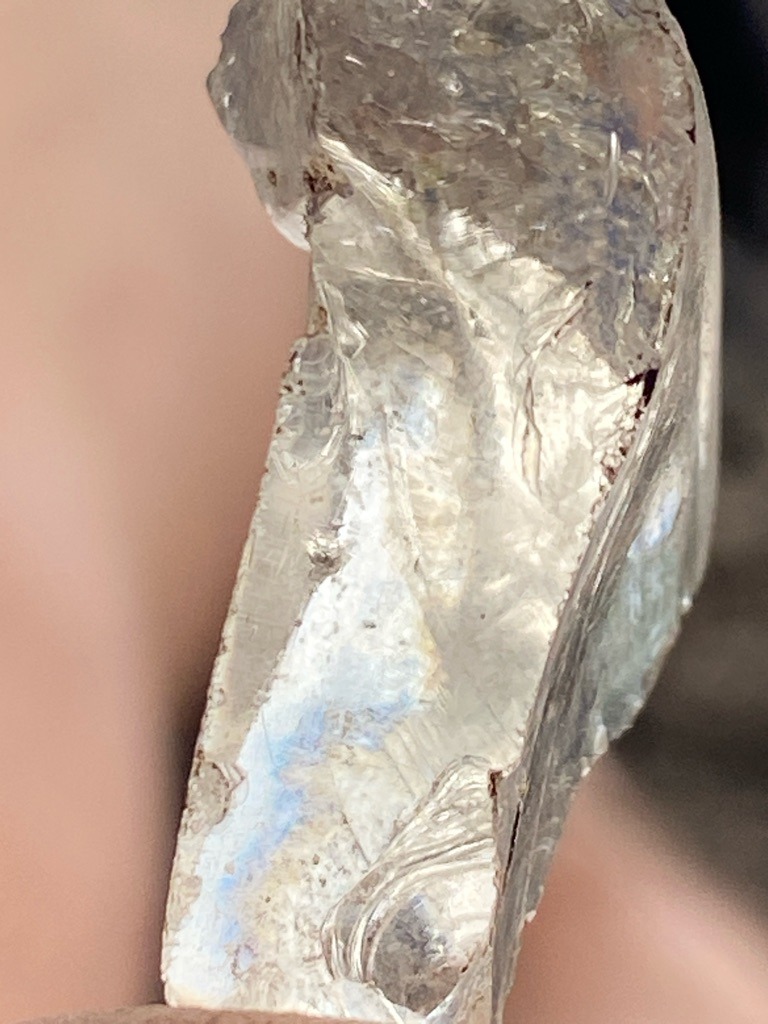
Natural (Rough Crystal/Specimen) · Rough/Uncut Crystalline Form
Not Applicable (Uncut rough stone) Cut
Carat
Estimated 2.0 to 3.5 carats
Color
Near-colorless to light brown tint
Clarity
I1 to I3 (Included, typical for raw, unpolished mineral specimens)
Shape
Rough/Uncut Crystalline Form
Overall Assessment
An interesting and authentic natural rough diamond specimen, well-suited for a mineral collection rather than fine jewelry processing.
Cut Quality
Not Applicable (Uncut rough stone)
Brilliance
Low to moderate due to rough, unpolished facets
Fire
Minimal due to lack of precision cut facets
Scintillation
Poor, limited to reflective natural cleavage planes
Proportions
Natural asymmetrical rough formation
Symmetry
Natural irregular crystal symmetry
Polish
Raw, unpolished surface with natural growth features (trigons/striations)
Fluorescence
Indeterminate from visual inspection alone
Inclusions
Heavy internal feathers, cloudiness, and mineral crystals
Blemishes
Natural surface fractures, pitting, and rough skin
Origin
Alluvial or primary kimberlite pipe deposit (exact country unknown)
Treatment Detection
No treatments detected; completely natural raw state
Estimated Value
Minimal commercial value as a gemstone; valued primarily as a raw mineral specimen ($50-$200)
Certification Estimate
GIA or local gem lab certificate of authenticity as a mineral specimen
Investment Potential
Low investment potential for jewelry use, but collectible for mineral enthusiasts
Similar Diamonds
Other unpolished industrial or specimen-grade rough diamonds
Setting Suggestions
Wire-wrapped or organic prong setting to showcase its raw, natural aesthetic
Care & Maintenance
Store separately to prevent scratching other materials; clean gently with warm soapy water
Interesting Facts
Rough diamonds display natural growth markings called trigons on their octahedral faces