Natural (Rough Crystal / Fragment)
Natural (Rough Crystal / Fragment) · Uncut / Raw Crystalline Fragment
Not Applicable (Uncut Rough) Cut
Carat
Estimated 3.5 - 5.0 carats (rough)
Color
Near Colorless to Faint Yellow (G-J range)
Clarity
I1 to I3 (Included rough stone)
Shape
Uncut / Raw Crystalline Fragment
Overall Assessment
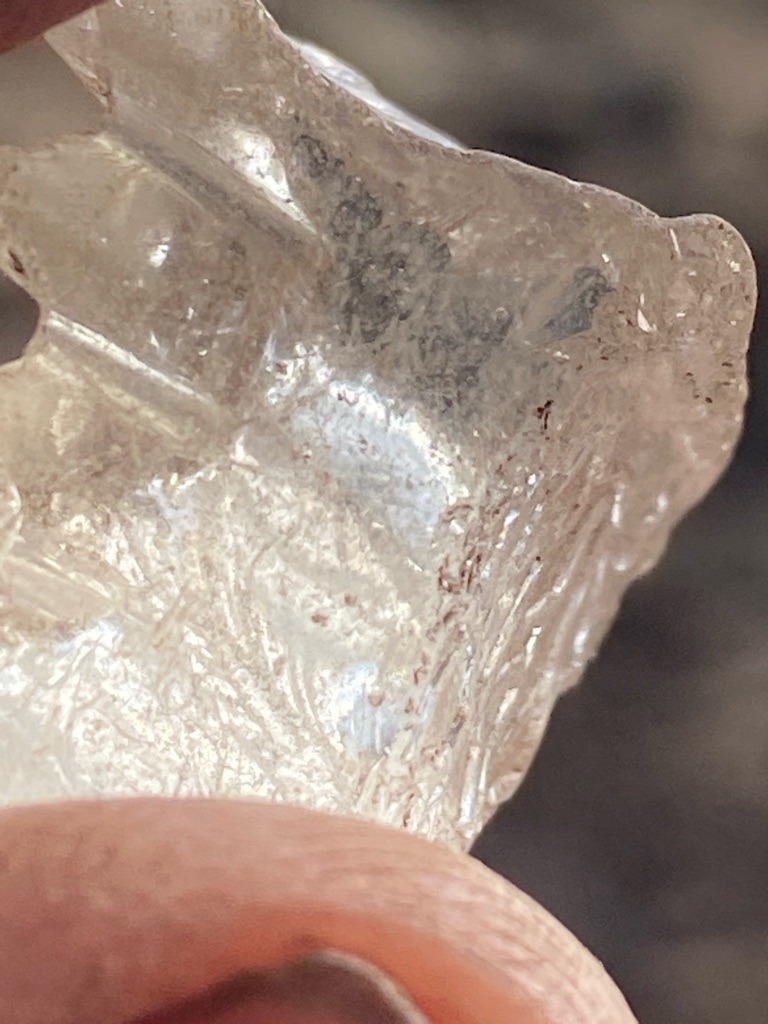
This is a natural, unpolished diamond crystal fragment in its raw state. While it lacks the optical performance of a cut diamond, it possesses unique geological charm as a mineral specimen.
Cut Quality
Not Applicable (Uncut Rough)
Brilliance
Low due to lack of facets and rough surface texture
Fire
Minimal due to uncut nature and lack of dispersion angles
Scintillation
Absent due to unpolished and uncut surfaces
Proportions
Not Applicable for rough material
Symmetry
Natural Asymmetric Crystal Formation
Polish
Natural Rough Surface (Unpolished)
Fluorescence
Cannot be determined without UV testing (Likely Faint to Medium)
Inclusions
Heavy internal clouding, feather fractures, and potential crystal inclusions visible
Blemishes
Natural surface etching, trigons, and rough cleavage planes
Origin
Alluvial or primary kimberlite pipe deposit (Africa or South America typical)
Treatment Detection
No treatments detected; completely natural raw state
Estimated Value
$500 - $1,500 USD (Industrial to low-grade jewelry rough)
Certification Estimate
GIA or IGI would classify this as an uncertified rough diamond specimen
Investment Potential
Low investment value as cut gem, higher appeal as a mineral specimen or collector piece
Similar Diamonds
Other natural unpolished gem and industrial-grade rough diamond fragments
Setting Suggestions
Wire-wrapped pendant setting or custom organic bezel to preserve the raw look
Care & Maintenance
Store separately to avoid scratching other gems; clean gently with warm soapy water and soft brush
Interesting Facts
Rough diamonds straight from the earth often feature natural triangular growth markings called trigons on their faces