Non-diamond (Glass/Quartz)
Non-diamond (Glass/Quartz) · Rough / Uncut (Fragment)
Uncut / Raw Cut
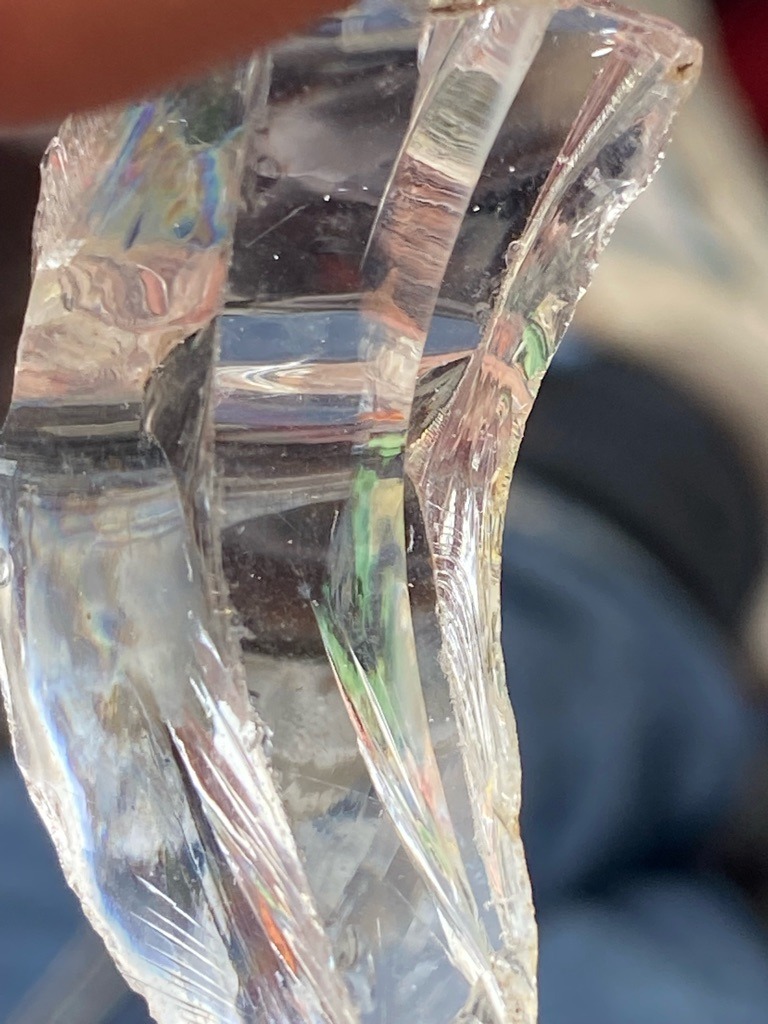
Carat
Estimated 10-20 carats (based on hand scale)
Color
Colorless (Transparent)
Clarity
Included / Transparent (showing internal fractures)
Shape
Rough / Uncut (Fragment)
Overall Assessment
This specimen is not a diamond. Based on the fracture patterns and lack of characteristic refractive properties, it is likely a fragment of glass or clear quartz.
Cut Quality
Uncut / Raw
Brilliance
Low (Refractive index inconsistent with diamond)
Fire
Low to moderate (Diffraction from thin-film interference on fracture surfaces)
Scintillation
Poor (Lacks faceted reflections)
Proportions
Asymmetric/Irregular
Symmetry
N/A (Rough fragment)
Polish
N/A (Natural/Fracture surfaces)
Fluorescence
None visible
Inclusions
Conchoidal fractures and internal flow lines visible
Blemishes
Chipped edges and impact marks
Origin
Likely terrestrial geological (Quartz) or man-made (Glass)
Treatment Detection
None detected
Estimated Value
Negligible (Industrial or specimen value only)
Certification Estimate
Unlikely to be certified as a diamond by GIA/AGS
Investment Potential
None
Similar Diamonds
Herkimer Diamonds (Quartz) or Cullet Glass
Setting Suggestions
Wire-wrapped as a curiosity or specimen piece
Care & Maintenance
Protect from impact; glass and quartz are more brittle than diamond
Interesting Facts
The characteristic curved ridges (conchoidal fractures) are typical of glass or quartz, whereas diamonds fracture along cleavage planes.