Natural Rough Diamond
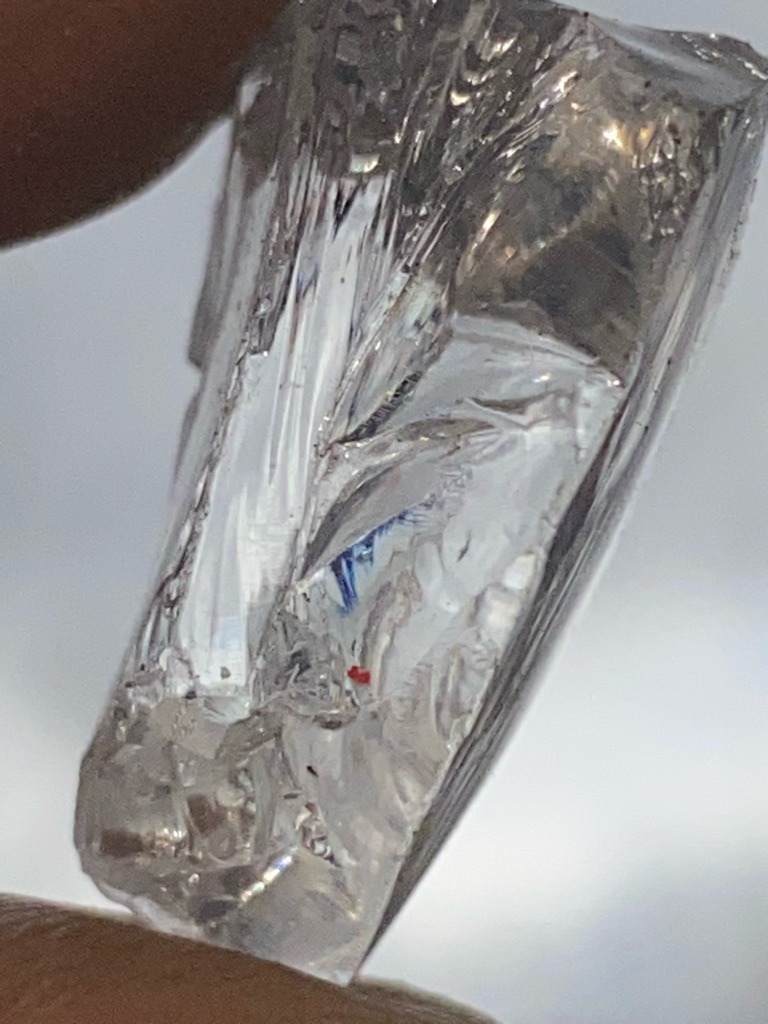
Natural Rough Diamond · Rough/Uncut Macle (Triangular/Flattened)
N/A (Rough/Uncut State) Cut
Carat
Estimated 3.0-5.0 carats based on finger size scale
Color
G-H (Near Colorless) with a slight greyish-yellow tint
Clarity
SI1-SI2 (Slightly Included) based on surface-reaching fractures and internal graining
Shape
Rough/Uncut Macle (Triangular/Flattened)
Overall Assessment
This is a significant natural rough diamond crystal with distinct macle-type flattening. It shows promising color but contains internal features that would require expert planning for faceting to maximize yield and clarity.
Cut Quality
N/A (Rough/Uncut State)
Brilliance
Low (typical of unpolished rough)
Fire
None (requires faceting to disperse light)
Scintillation
Minimal localized surface reflection
Proportions
Elongated natural crystal with step-like growth features
Symmetry
Asymmetrical (Natural mineral growth)
Polish
N/A (Natural trigons and growth marks present)
Fluorescence
Incalculable from image; likely None to Faint
Inclusions
Visible internal twinning planes, clouds, and a small red inclusion (possibly garnet)
Blemishes
Surface percussion marks and deep natural trigons
Origin
Likely African (e.g., Botswana or DRC) based on crystal habit
Treatment Detection
No treatments detected; appears to be raw, untreated earth-mined rough
Estimated Value
$1,500 - $3,500 (Wholesale rough market value)
Certification Estimate
GIA (Gemological Institute of America) - Rough Analysis Report
Investment Potential
Moderate; value depends on the yield and grade of the potential polished stone
Similar Diamonds
Uncut octahedral or macle diamond crystals
Setting Suggestions
Custom 'Rough Diamond' prong setting or bezel-set pendant in 18k yellow gold
Care & Maintenance
Avoid ultrasonic cleaners if deep surface fractures are present; clean with warm soapy water
Interesting Facts
Rough diamonds often have 'trigons,' which are microscopic triangular pits on the surface that grow during the diamond's formation.