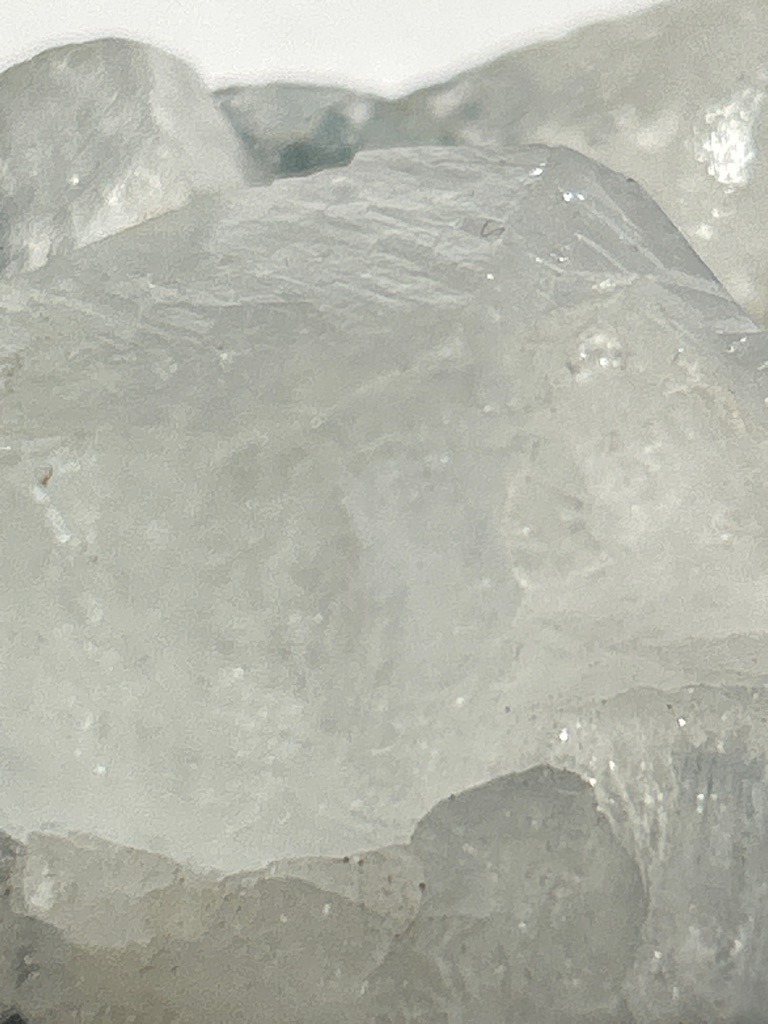
Natural rough diamond crystal
Natural rough diamond crystal · Rough octahedron with rounded edges
Uncut natural rough form Cut
Carat
Estimated 2.5 to 3.5 carats
Color
Near-colorless (estimated G-H range)
Clarity
Estimated SI1 to SI2 (moderate natural inclusions)
Shape
Rough octahedron with rounded edges
Overall Assessment
An appealing natural rough diamond crystal displaying classic octahedral form and near-colorless appearance, ideal for unique artisan jewelry creation or collection as an unpolished geological specimen
Cut Quality
Uncut natural rough form
Brilliance
Low due to unpolished and natural rough surface
Fire
Minimal dispersion visible through raw exterior
Scintillation
Limited flash due to lack of standard facets
Proportions
Natural crystalline habit, not faceted
Symmetry
Natural distorted octahedral symmetry
Polish
Natural unpolished surface with crystal face striations
Fluorescence
Indeterminate from visual assessment
Inclusions
Internal cloud-like patterns and small mineral inclusions typical of rough diamonds
Blemishes
Natural surface trigons and growth lines on crystal faces
Origin
Natural terrestrial origin (African or Canadian rough source likely)
Treatment Detection
No signs of enhancement or artificial treatment detected; completely natural
Estimated Value
Varies by weight and clarity; rough market value approximately $1,500 to $4,000 USD
Certification Estimate
GIA rough diamond report or Kimberley Process certificate
Investment Potential
Moderate to high for collectors and custom jewelry designers seeking raw, ethically sourced specimens
Similar Diamonds
Other natural unpolished octahedral rough diamond crystals of comparable weight
Setting Suggestions
Best showcased in a bespoke organic raw diamond pendant or rustic wire-wrapped ring setting using yellow gold or platinum
Care & Maintenance
Clean gently with warm soapy water and a soft brush; avoid harsh ultrasonic cleaners on untreated rough
Interesting Facts
Rough diamonds showcase the true geological history of the Earth, preserving natural crystal growth patterns billions of years old before human intervention through cutting