Natural Diamond
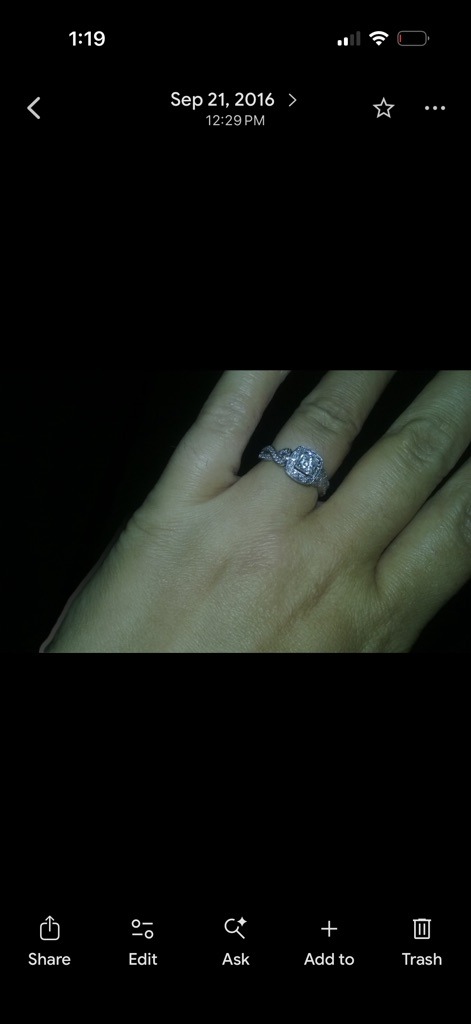
Natural Diamond · Cushion Cut with Halo and Pave Band
Very Good Cut
Carat
Estimated 0.75 - 1.00 carat center stone
Color
Estimated G-H (Near Colorless)
Clarity
Estimated VS2 - SI1
Shape
Cushion Cut with Halo and Pave Band
Overall Assessment
A classic, elegant halo engagement ring featuring a cushion-cut center diamond with a split twist band, offering great sparkle, visual presence, and timeless style.
Cut Quality
Very Good
Brilliance
High brilliance enhanced by the surrounding halo setting
Fire
Good dispersion and spectral fire, typical of well-cut modern cushion or modified cushion diamonds
Scintillation
Strong sparkle and lively play of light, boosted by the micro-pavé halo and accent stones
Proportions
Standard proportions for a halo-set cushion cut, table percentage estimated around 58-62%, depth around 60-64%
Symmetry
Good
Polish
Good
Fluorescence
None to Faint
Inclusions
Minor small pinpoints or crystals likely present under magnification, not visible to the naked eye
Blemishes
None readily apparent from the photograph
Origin
Natural mined diamond, likely originating from Canada, Australia, or South Africa
Treatment Detection
No obvious signs of clarity enhancement or unnatural color treatments
Estimated Value
$3,500 - $6,000 USD depending on exact carat weight, gold weight, and certified grading
Certification Estimate
Likely GIA or IGI grading if loose, estimating SI1 clarity and G color
Investment Potential
Standard retail jewelry depreciation applies; center stone holds steady inherent diamond value
Similar Diamonds
Standard cushion-cut center stones with pave halos from major retail jewelers like Tiffany & Co., Blue Nile, or James Allen
Setting Suggestions
Currently set in a white gold or platinum halo split-shank/twist band, which brilliantly maximizes the visual footprint of the center stone
Care & Maintenance
Clean regularly with warm soapy water and a soft-bristled brush; have prongs and pave settings inspected annually by a professional jeweler
Interesting Facts
Halo settings were popularized in the Victorian era to make center stones appear larger and more brilliant by surrounding them with smaller accent diamonds