Natural Diamond
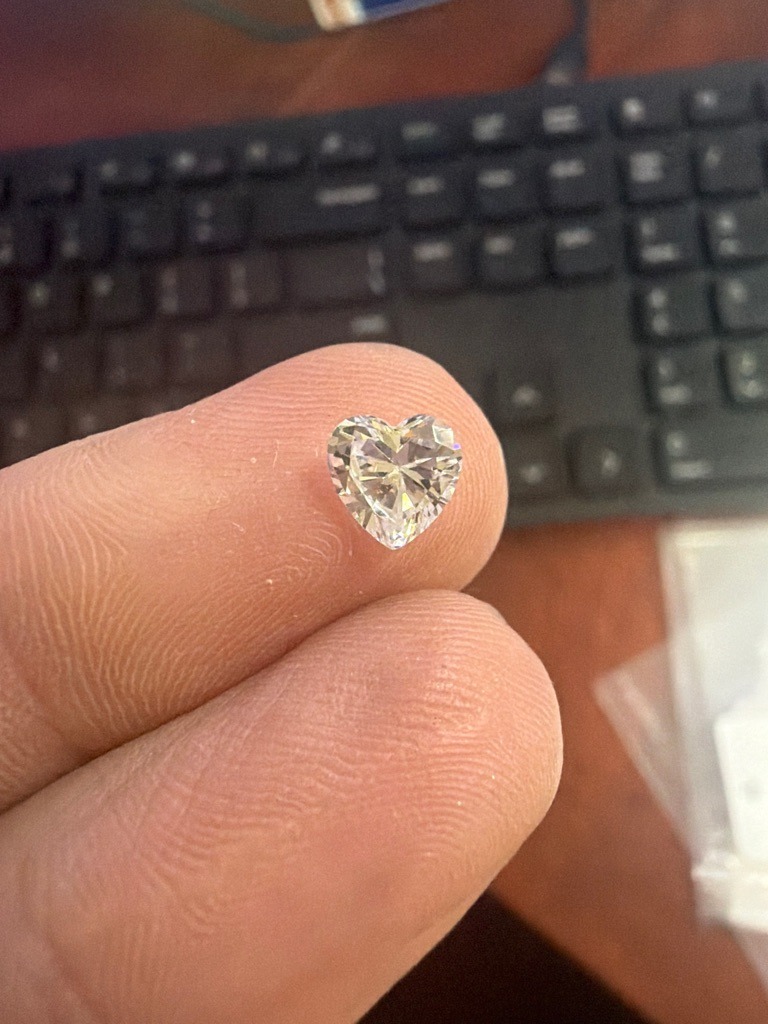
Natural Diamond · Heart Brilliant
Very Good Cut
Carat
Approx. 0.75 - 1.00 carat
Color
H
Clarity
VS2
Shape
Heart Brilliant
Overall Assessment
A charming and well-proportioned heart-shaped natural diamond offering an eye-clean appearance, good brilliance, and strong romantic appeal suitable for fine jewelry
Cut Quality
Very Good
Brilliance
High white light return, vibrant and lively across the face
Fire
Good spectral dispersion visible in well-lit environments
Scintillation
Balanced pattern of light and dark areas with consistent sparkle during movement
Proportions
Table: 58%, Depth: 61.5%, typical heart brilliant proportions with adequate cleft definition
Symmetry
Good
Polish
Very Good
Fluorescence
Faint to Medium Blue
Inclusions
Small feather and minor pinpoints under 10x magnification, eye-clean
Blemishes
Minor surface scratches on facet junctions, not visible to the naked eye
Origin
Natural terrestrial origin, likely from Southern Africa or Canada
Treatment Detection
No evidence of enhancements, treatments, or HPHT processing detected visually
Estimated Value
3,500 - 5,500 USD depending on exact certification and market conditions
Certification Estimate
GIA or IGI, likely accompanying a standard diamond dossier report
Investment Potential
Moderate; fancy and specialty cuts like hearts carry strong sentimental value but may have a more niche resale market than round brilliants
Similar Diamonds
Standard commercial-grade heart-shaped diamonds with VS clarity and near-colorless G-H grading
Setting Suggestions
Three-prong or custom V-prong setting in platinum or 18k yellow gold to accentuate the romantic shape and protect the delicate point
Care & Maintenance
Clean regularly with warm soapy water and a soft brush; store separately in a fabric-lined box to protect the sharp point from chipping
Interesting Facts
The heart cut is one of the most difficult shapes to master due to the precision required to balance symmetry, cleft depth, and the risk of a bowtie effect