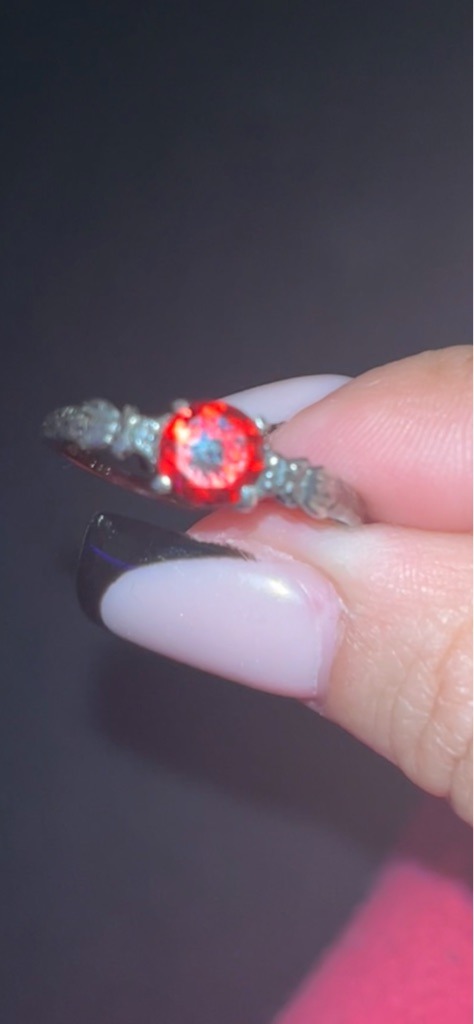
Not a diamond; this gemstone appears to be a colored synthetic stone or colored cubic zirconia, possibly a ruby substitute due to the strong red fluorescence/color.
Not a diamond; this gemstone appears to be a colored synthetic stone or colored cubic zirconia, possibly a ruby substitute due to the strong red fluorescence/color. · Round Brilliant
Good Cut
Carat
Approximately 0.50 ct (visual estimate)
Color
Fancy Vivid Red (Stimulant)
Clarity
VS1 (visually clean)
Shape
Round Brilliant
Overall Assessment
An attractive fashion ring featuring a vibrant red center stone, ideal for casual wear but lacking gemstone investment value.
Cut Quality
Good
Brilliance
Moderate, typical of colored simulant stones
Fire
High dispersion due to lighting, though characteristic of simulants rather than natural diamond
Scintillation
Good flash and sparkle under direct light
Proportions
Standard round brilliant proportions with medium table and depth
Symmetry
Good
Polish
Good
Fluorescence
Strong red
Inclusions
None visible to the naked eye
Blemishes
Minor surface wear visible on the setting and stone girdle
Origin
Laboratory-created simulant or colored cubic zirconia
Treatment Detection
Colored coating or dyed simulant material likely used to achieve the vibrant red hue
Estimated Value
$20 - $100 USD (Fashion/Costume jewelry)
Certification Estimate
Not certified; would likely be graded as a fashion jewelry component by labs like GIA or IGI if tested
Investment Potential
None; costume jewelry pieces do not appreciate in value
Similar Diamonds
Red cubic zirconia, synthetic ruby, or spinel simulants
Setting Suggestions
Classic prong setting in sterling silver or white gold
Care & Maintenance
Avoid harsh chemicals, ultrasonic cleaners, and abrasive materials; clean gently with warm soapy water and a soft cloth
Interesting Facts
Natural red diamonds are among the rarest colored diamonds in the world, making bright red stones in everyday rings almost universally simulants