Rough, Uncut Mineral Crystal (Likely Quartz or Glass Cullet rather than a gem-grade diamond based on conchoidal fracture and crystal habit)
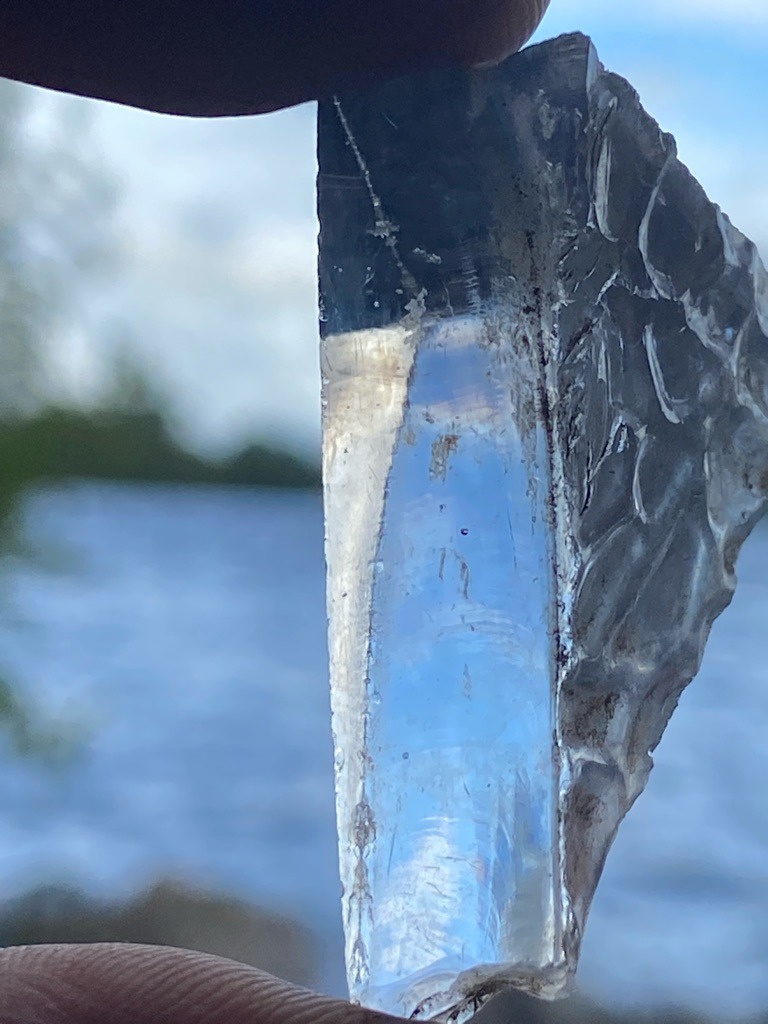
Rough, Uncut Mineral Crystal (Likely Quartz or Glass Cullet rather than a gem-grade diamond based on conchoidal fracture and crystal habit) · Rough Crystal / Raw Fragment with Conchoidal Fracture
Not Applicable (Rough, uncut state) Cut
Carat
Estimated > 50 carats based on physical size and thickness
Color
Colorless / Transparent with surface impurities
Clarity
Included / Heavily flawed internally with bubbles and fractures (I3 equivalent if graded as gem)
Shape
Rough Crystal / Raw Fragment with Conchoidal Fracture
Overall Assessment
The specimen shown in the image is a large, raw, transparent fragment with conchoidal fractures and internal bubbles, strongly indicative of quartz or industrial glass cullet rather than a natural diamond rough.
Cut Quality
Not Applicable (Rough, uncut state)
Brilliance
Low to moderate due to raw state and internal fractures
Fire
Minimal dispersion visible in current rough state
Scintillation
Absent due to lack of standard facet patterns
Proportions
Irregular raw form, no standard pavilion or crown angles
Symmetry
Asymmetrical raw mineral specimen
Polish
Unpolished, natural or fractured faces
Fluorescence
Cannot be determined visually without UV testing
Inclusions
Internal gas bubbles, fractures, and particulate inclusions visible
Blemishes
Natural rough surface textures, chips, and conchoidal fracture ripples
Origin
Natural quartz crystal or man-made glass cullet
Treatment Detection
No obvious treatments detected, appears as-found
Estimated Value
Nominal value as a mineral specimen or glass scrap
Certification Estimate
Not applicable for major gemological labs (GIA/AGS do not grade raw industrial glass or quartz as diamonds)
Investment Potential
None as a gemstone investment
Similar Diamonds
None, specimen lacks diamond crystal characteristics (octahedral habit, hardness)
Setting Suggestions
Not suitable for jewelry setting in current raw form
Care & Maintenance
Standard handling for mineral specimens, avoid impact to prevent chipping along fractures
Interesting Facts
Displays prominent conchoidal fracturing typically seen in glass or cryptocrystalline silicates