Natural (Rough Crystal)
Natural (Rough Crystal) · Uncut / Rough Crystalline Form
Not Applicable (Uncut Rough) Cut
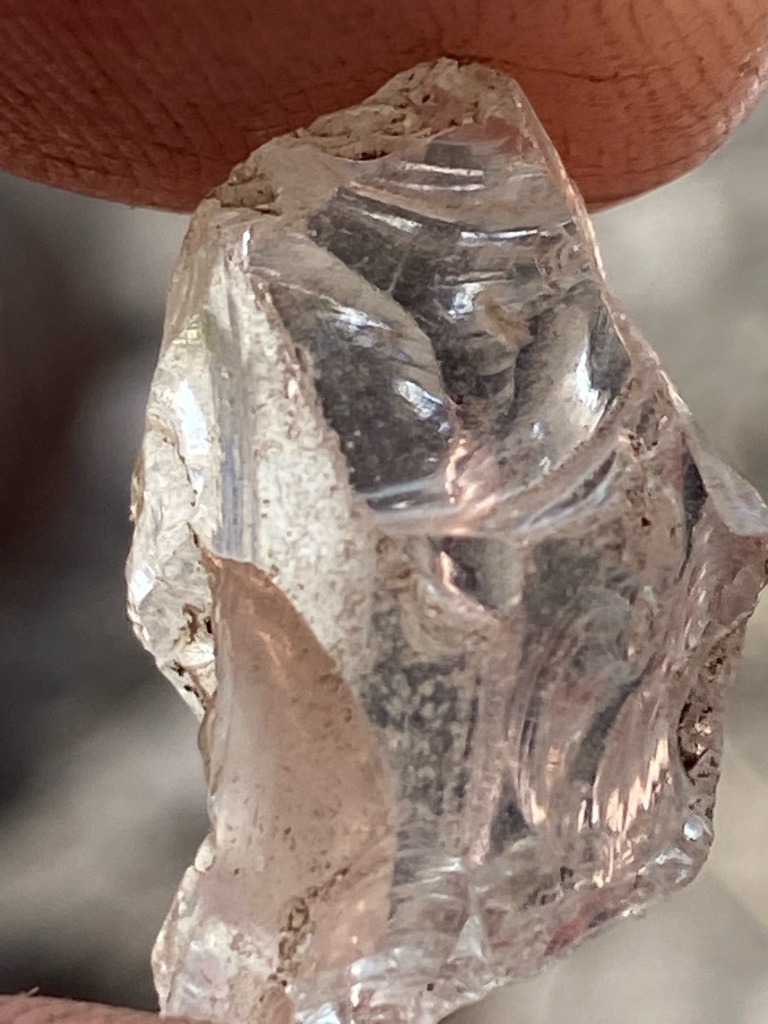
Carat
Estimated 3.5 to 5.0 carats
Color
Near-colorless to light brown tint (K-M range approximately)
Clarity
Included (SI2 to I1 range)
Shape
Uncut / Rough Crystalline Form
Overall Assessment
This is a fascinating specimen of an uncut natural diamond crystal. While it possesses visible internal inclusions and a warm tint that limits its ultimate high-end gem potential, its raw geological beauty makes it a wonderful collector piece or an interesting candidate for organic, rough-diamond jewelry design.
Cut Quality
Not Applicable (Uncut Rough)
Brilliance
Limited due to rough surface and uncut state
Fire
Minimal dispersion observed through rough exterior
Scintillation
Low, restricted by lack of precision facets
Proportions
Natural rough geometry with no faceted proportions
Symmetry
Natural irregular octahedral/dodecahedral growth forms
Polish
Natural crystal faces (trigons and striations visible)
Fluorescence
Cannot be determined visually without UV testing
Inclusions
Internal feather fractures, cloud clusters, and crystal inclusions
Blemishes
Natural surface etching, trigons, and rough skin
Origin
Alluvial or primary kimberlite deposit origin
Treatment Detection
No signs of artificial treatment; completely natural rough specimen
Estimated Value
Depends heavily on yield after cutting, roughly $500 - $1,500 USD for rough specimen
Certification Estimate
GIA or IGI rough diamond evaluation report
Investment Potential
Moderate, primarily valued as a collector mineral specimen or custom-cut potential
Similar Diamonds
Other natural industrial or near-gem quality rough diamond crystals
Setting Suggestions
Raw uncut diamond jewelry using a prong, bezel, or wire-wrapped setting in yellow or white gold
Care & Maintenance
Store separately to avoid scratching other gems; clean gently with warm soapy water and a soft brush
Interesting Facts
Rough diamonds display natural growth marks called trigons on their octahedral faces, which are evidence of their ancient formation deep within the Earth's mantle.