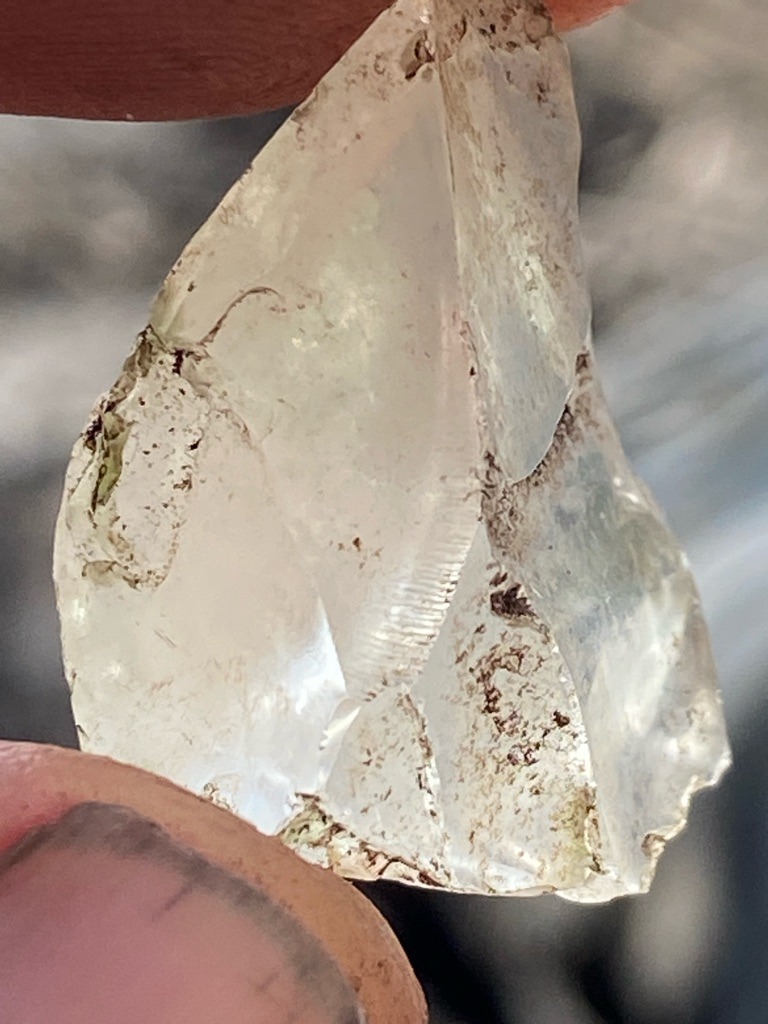
Natural rough crystal / mineral specimen (likely quartz or glass given the conchoidal fractures, striations, and matrix staining, not a diamond)
Natural rough crystal / mineral specimen (likely quartz or glass given the conchoidal fractures, striations, and matrix staining, not a diamond) · Rough irregular crystal fragment with conchoidal fracture
Not applicable (Rough, unpolished mineral specimen) Cut
Carat
Estimated 15-25 carats equivalent weight based on physical size
Color
Near-colorless to light brownish-yellow tint
Clarity
I3 / Heavily included with internal fractures, iron staining, and surface cavities
Shape
Rough irregular crystal fragment with conchoidal fracture
Overall Assessment
Visual analysis indicates this is a natural rough mineral fragment (likely quartz or glass-like material) rather than a diamond, displaying significant internal fractures, iron staining, and conchoidal breakage.
Cut Quality
Not applicable (Rough, unpolished mineral specimen)
Brilliance
Low, limited by numerous internal fractures and lack of proper faceting
Fire
Minimal to none due to lack of dispersion facets
Scintillation
Poor, light escapes through numerous fractures rather than reflecting internally
Proportions
Not applicable for rough unpolished stones
Symmetry
Asymmetrical rough crystal form
Polish
Unpolished, natural crystal surface with conchoidal fracture patterns
Fluorescence
Cannot be determined without UV testing (likely none to faint)
Inclusions
Heavy internal fracturing, feather inclusions, and mineral/dirt staining in fissures
Blemishes
Surface chips, natural growth striations, pits, and rough fracture edges
Origin
Natural rough mineral, likely alluvial or pegmatitic deposit
Treatment Detection
No evidence of artificial treatments; appears completely natural
Estimated Value
Nominal mineral specimen value ($10 to $50 depending on exact mineral composition)
Certification Estimate
Gemological laboratories would not issue a diamond grading report for this specimen; standard identification report only
Investment Potential
Low; valuable strictly as a raw mineral specimen rather than an investment gem
Similar Diamonds
None, as this specimen does not exhibit gem-quality diamond characteristics
Setting Suggestions
Wire-wrapped pendant or raw mineral display piece
Care & Maintenance
Handle with care to prevent further fracturing along existing fissure lines; clean gently with warm soapy water and a soft brush
Interesting Facts
Features distinct conchoidal fracture patterns and natural striations commonly found in quartz and other silicate minerals