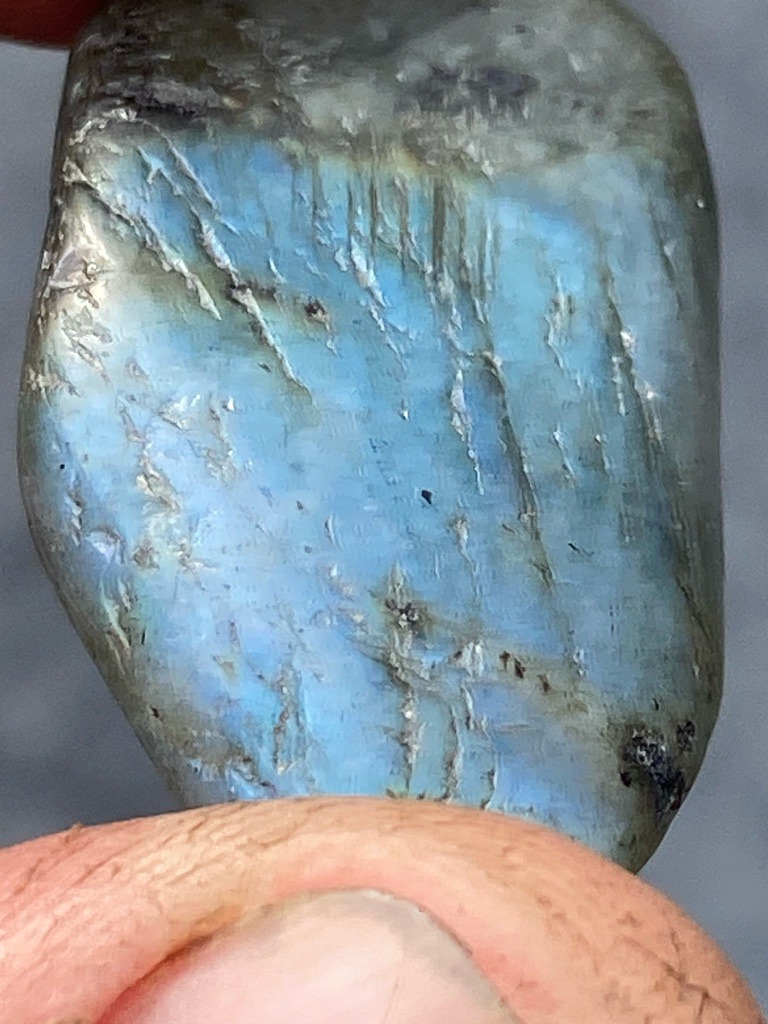
Not a diamond; this specimen is a natural mineral, specifically a piece of labradorite feldspar exhibiting labradorescence.
Not a diamond; this specimen is a natural mineral, specifically a piece of labradorite feldspar exhibiting labradorescence. · Rough or tumbled cabochon-like irregular pebble shape
Not applicable (uncut or tumbled natural mineral specimen) Cut
Carat
Cannot be precisely determined visually without scale, estimated roughly at 15-25 carats based on typical size
Color
Natural blue and multicolored iridescence (labradorescence) on a dark grey to greenish-grey base
Clarity
Included, typical for natural feldspar with internal twinning planes and fractures
Shape
Rough or tumbled cabochon-like irregular pebble shape
Overall Assessment
A striking natural specimen of labradorite showcasing vibrant blue schiller, highly prized by lapidaries and crystal enthusiasts despite not being a gemstone-quality diamond
Cut Quality
Not applicable (uncut or tumbled natural mineral specimen)
Brilliance
Exhibits optical phenomenon (labradorescence/schiller) rather than standard diamond brilliance
Fire
Limited dispersion, dominated by interference colors of labradorescence
Scintillation
Flashes of iridescent blue and green light as the viewing angle changes
Proportions
Irregular natural mineral proportions
Symmetry
Asymmetrical natural form
Polish
Smooth, tumbled or partially polished surface with visible natural fissures
Fluorescence
None observed
Inclusions
Internal lamellar twinning planes, fissures, and mineral inclusions typical of labradorite
Blemishes
Natural surface pitting, cracks, and rough patches
Origin
Commonly sourced from Madagascar, Canada (Labrador), Finland, and Australia
Treatment Detection
Untreated natural mineral
Estimated Value
Low commercial value, typically ranging from $10 to $50 depending on size and play of color
Certification Estimate
Certified by gemological institutes as Labradorite (feldspar variety)
Investment Potential
Low investment potential, valued primarily for decorative and collectible purposes
Similar Diamonds
None, as this is a feldspar mineral and not a diamond
Setting Suggestions
Wire-wrapped in sterling silver or bezel-set as a pendant or statement ring
Care & Maintenance
Avoid harsh chemicals, ultrasonic cleaners, and hard impacts due to perfect cleavage and moderate hardness (6-6.5 on Mohs scale)
Interesting Facts
Labradorite displays a unique optical phenomenon called labradorescence, caused by light diffraction in microscopic lamellae layers