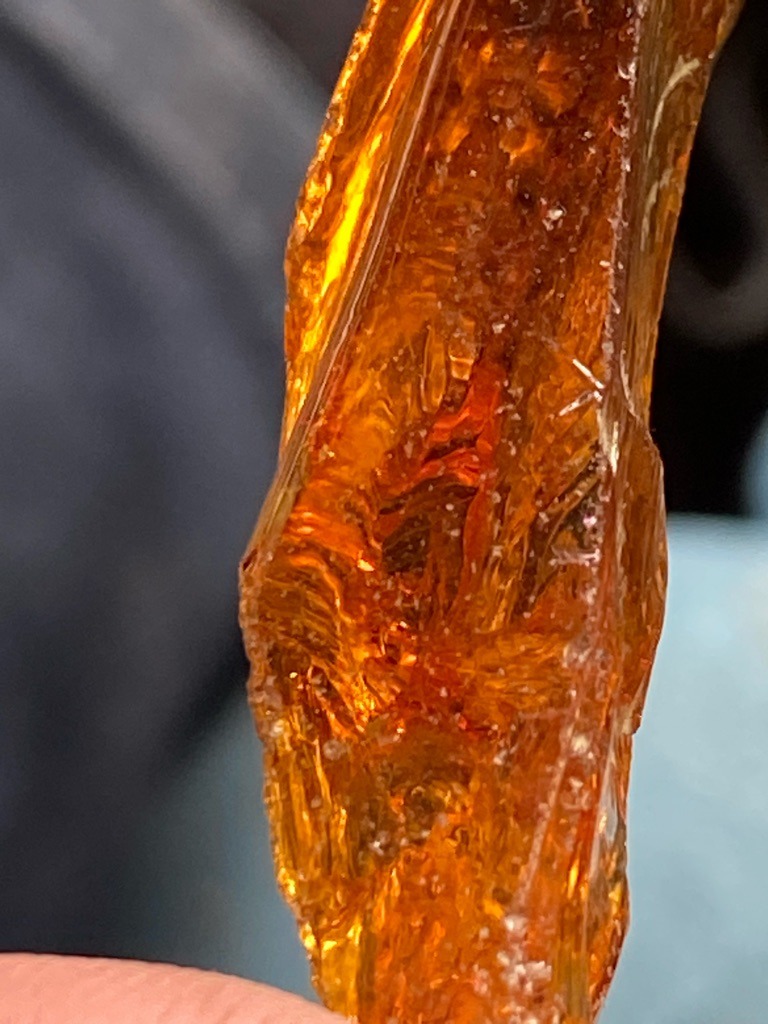
Not a diamond; appears to be raw amber or resin material.
Not a diamond; appears to be raw amber or resin material. · Rough uncut organic chunk / irregular shape
N/A Cut
Carat
N/A (Rough organic material)
Color
Deep Amber / Brownish-Orange
Clarity
Not applicable to organic resins (contains visible natural debris)
Shape
Rough uncut organic chunk / irregular shape
Overall Assessment
The specimen displayed is a rich orange-brown rough organic resin, likely amber or copal, rather than a crystalline diamond. It exhibits characteristic flow lines and natural inclusions.
Cut Quality
N/A
Brilliance
Resinous to vitreous luster, low optical brilliance compared to diamond
Fire
None
Scintillation
Low, limited to surface reflections
Proportions
N/A
Symmetry
Asymmetrical rough
Polish
Unpolished natural surface showing resin flow lines
Fluorescence
Often exhibits strong blue fluorescence under UV light (typical for amber)
Inclusions
Trapped organic debris, bubbles, and particulate matter typical of fossilized tree resin
Blemishes
Natural surface weathering, cracks, and conchoidal fractures
Origin
Baltic region, Dominican Republic, or similar amber-producing areas
Treatment Detection
Check for pressed or reconstituted amber, and plastic imitations (copal vs. amber)
Estimated Value
Low to moderate depending on weight, clarity, and inclusion type (e.g., presence of fossil insects)
Certification Estimate
Gemological laboratories such as GIA or local gem testing labs for authenticity testing of organic gems
Investment Potential
Low as a financial investment unless containing rare preserved inclusions (insects/flora)
Similar Diamonds
None (organic resin)
Setting Suggestions
Wire-wrapping, bezel settings, or organic custom jewelry designs in yellow gold or silver
Care & Maintenance
Soft cloth cleaning only; keep away from harsh chemicals, perfumes, alcohol, and extreme heat
Interesting Facts
Amber is not a mineral but fossilized tree resin that can date back millions of years and occasionally preserves prehistoric insects