Natural (Likely Quartz or Glass Imitation)
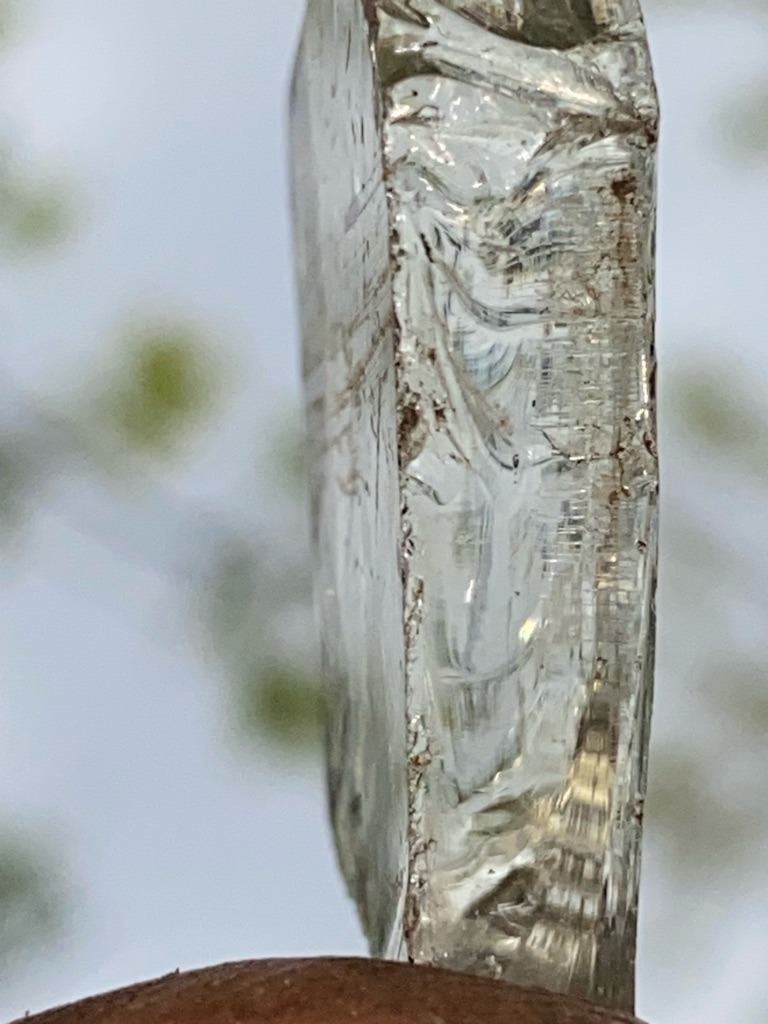
Natural (Likely Quartz or Glass Imitation) · Rough / Uncut (Slice-like fragment)
N/A (Uncut/Rough material) Cut
Carat
Estimated 2.0 - 5.0 carats based on visual scale
Color
K-M Range (Faint Yellow/Tinted)
Clarity
I3 (Included Level 3 - Heavily Included/Fractured)
Shape
Rough / Uncut (Slice-like fragment)
Overall Assessment
The specimen appears to be an industrial-grade mineral fragment or a common imitation like quartz. It lacks the refractive index, adamantine luster, and crystal habit associated with gem-quality diamonds. The heavy fracturing suggests poor structural integrity.
Cut Quality
N/A (Uncut/Rough material)
Brilliance
Very Low (Surface reflection only)
Fire
None detected
Scintillation
None
Proportions
N/A (Non-faceted)
Symmetry
Poor (Irregular rough fragment)
Polish
N/A (Natural rough surface)
Fluorescence
Indeterminable via image
Inclusions
Heavy internal fracturing, step-like growth or cleavage lines, and possible fluid inclusions
Blemishes
Deep surface pits, conchoidal fractures, and heavy abrasions
Origin
Likely secondary alluvial source or common industrial mineral deposit
Treatment Detection
None apparent; appears to be raw, unrefined material
Estimated Value
$5 - $50 (Nominal/Specimen value only)
Certification Estimate
Likely GIA Identification Report (as non-diamond mineral)
Investment Potential
None (Lacks gem-quality characteristics or structural integrity)
Similar Diamonds
Heavily included industrial 'bort' diamonds or clear raw quartz crystals
Setting Suggestions
Wire wrap or specimen display box
Care & Maintenance
Handle with care to avoid further splitting along fracture lines; clean with soft brush and warm soapy water
Interesting Facts
The step-like striations and fracture patterns seen here are more characteristic of quartz or common glass than the octahedral or dodecahedral growth patterns of natural diamond crystals