Potential Diamond Simulant (Cubic Zirconia or Moissanite) or Lab-Grown Diamond
Potential Diamond Simulant (Cubic Zirconia or Moissanite) or Lab-Grown Diamond · Round Brilliant
Good to Very Good (Slightly high crown appearance) Cut
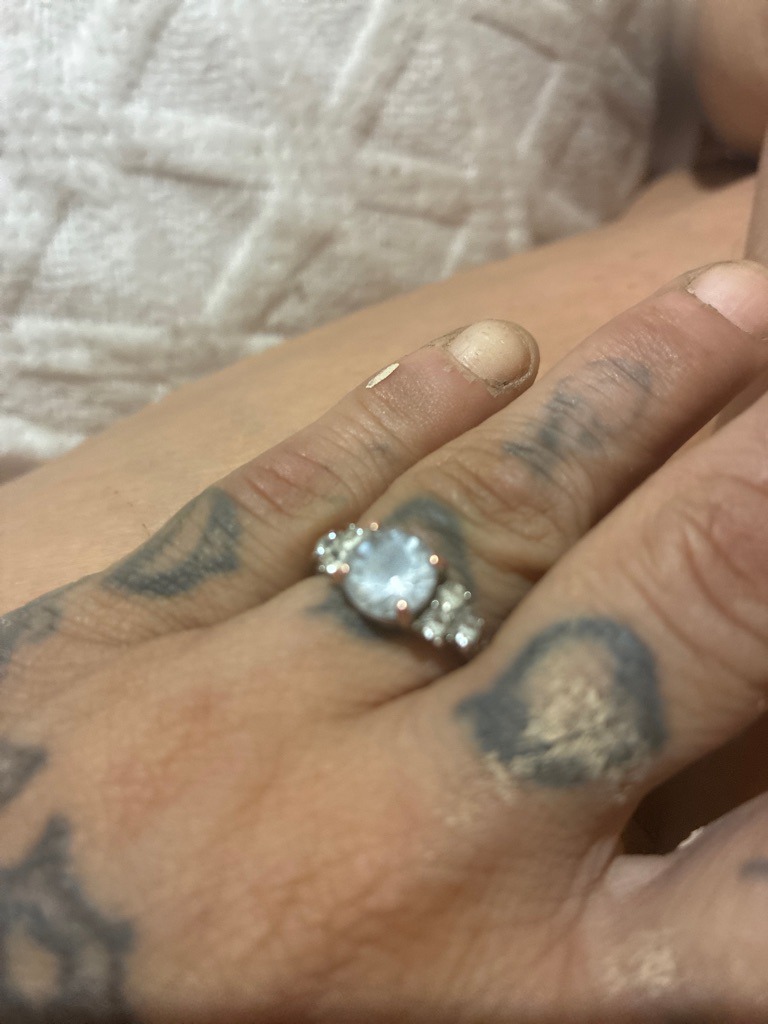
Carat
Estimated 1.50 - 2.00 carats (Center Stone)
Color
Appears Colorless (D-F range) based on image lighting
Clarity
Visually VS1 or higher (Eye-clean), but high dispersion suggests a simulant
Shape
Round Brilliant
Overall Assessment
The stone exhibits high dispersion and colorlessness typical of modern man-made diamonds or high-quality simulants. A physical thermal conductivity test is required to distinguish identity.
Cut Quality
Good to Very Good (Slightly high crown appearance)
Brilliance
High (Strong white light return)
Fire
Very High (Shows significant rainbow dispersion typical of Moissanite or CZ)
Scintillation
Moderate to High
Proportions
Standard Round Brilliant proportions with a visibly pronounced table
Symmetry
Good
Polish
Very Good
Fluorescence
None visible under ambient light
Inclusions
None visible to the naked eye at this resolution (Eye-clean)
Blemishes
Minor surface abrasions possible; light reflecting off side facets
Origin
Synthetic/Man-made
Treatment Detection
None detected; appears to be a synthetic material
Estimated Value
$50 - $200 (if Simulant); $1,200 - $3,000 (if Lab-Grown Diamond)
Certification Estimate
Simulants typically carry no major lab cert; if Lab Diamond, likely IGI or GIA
Investment Potential
Low (Simulants and lab-grown stones generally do not hold resale value well)
Similar Diamonds
Standard commercial-grade lab-grown round brilliants
Setting Suggestions
Currently in a 4-prong white metal (likely silver or white gold) setting with side accents
Care & Maintenance
Clean with mild soap and a soft brush; avoid harsh chemicals if the metal is plated silver
Interesting Facts
The 'rainbow' flashes or fire in the image often indicate a higher refractive index than natural diamond, common in Moissanite.