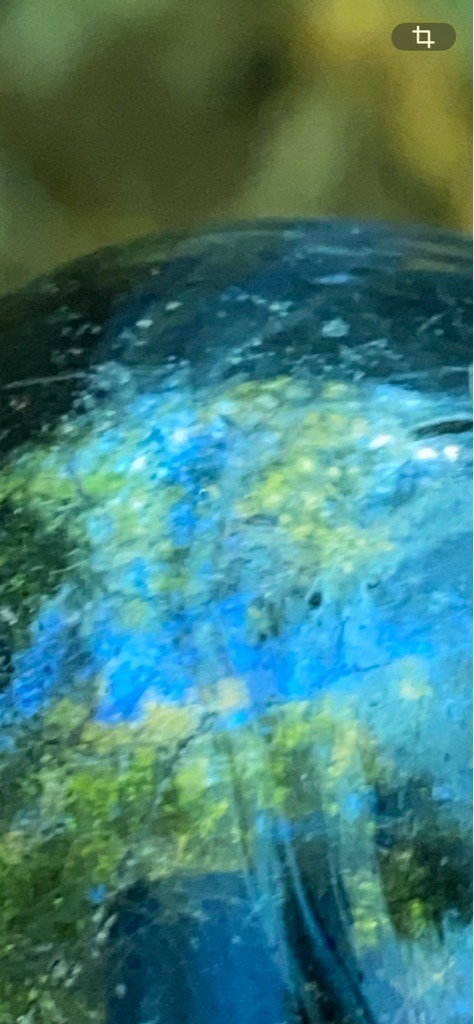
Not a diamond; the image displays a gemstone with labradorescence, strongly resembling Labradorite or a similar feldspar mineral, not a crystalline diamond.
Not a diamond; the image displays a gemstone with labradorescence, strongly resembling Labradorite or a similar feldspar mineral, not a crystalline diamond. · Cabochon / Irregular polished surface
N/A Cut
Carat
Cannot be reliably determined from visual angle, likely a heavy mineral specimen or gemstone sphere.
Color
N/A (Exhibits natural optical phenomenon: blue and greenish-yellow labradorescence)
Clarity
N/A (Opaque to translucent feldspar mineral with natural internal cleavage planes and fractures)
Shape
Cabochon / Irregular polished surface
Overall Assessment
The uploaded image does not depict a diamond. It shows a feldspar mineral, highly likely Labradorite, characterized by its distinctive iridescent blue and green labradorescence.
Cut Quality
N/A
Brilliance
Exhibits optical sheen rather than diamond brilliance
Fire
None
Scintillation
Flashes of blue and green labradorescence when moved under a light source
Proportions
N/A
Symmetry
N/A
Polish
Smooth cabochon polish showing natural surface scratches and wear
Fluorescence
N/A
Inclusions
Natural twinning lamellae and microscopic inclusions causing light interference (schiller effect)
Blemishes
Surface scratches and abrasions typical of softer feldspar minerals
Origin
Commonly found in Canada, Madagascar, Finland, and Norway
Treatment Detection
No obvious treatments detected; natural optical phenomenon
Estimated Value
Low to moderate commercial mineral/gemstone value
Certification Estimate
Gemological laboratories would identify this as Labradorite (feldspar family)
Investment Potential
Low investment potential; sold primarily as a decorative or collectible ornamental gemstone
Similar Diamonds
None, as this is a feldspar mineral and not a diamond
Setting Suggestions
Best set in a protective bezel setting using sterling silver or yellow gold to complement the earthy tones
Care & Maintenance
Labradorite has a Mohs hardness of 6 to 6.5; avoid harsh chemicals, ultrasonic cleaners, and hard impacts
Interesting Facts
The brilliant play of colors is caused by light interference within microscopic layers of plagioclase feldspar