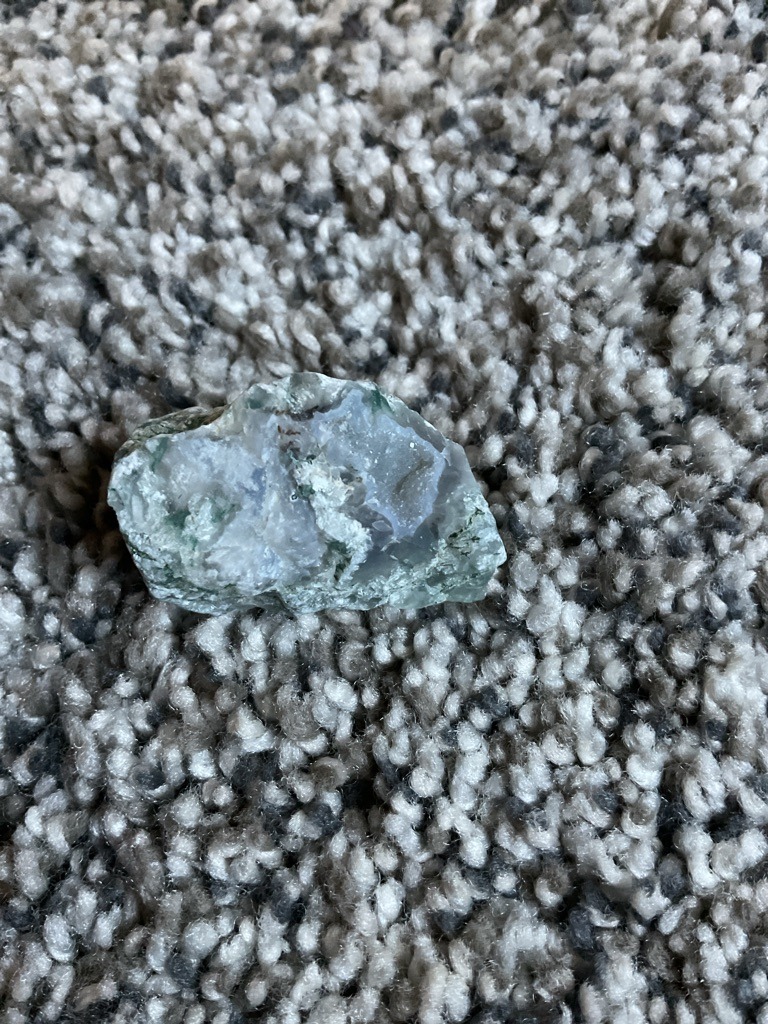
Non-diamond (likely Moss Agate / Green Fluorite / Chalcedony)
Non-diamond (likely Moss Agate / Green Fluorite / Chalcedony) · Rough / Uncut Unformed
None (Natural Mineral Specimen) Cut
Carat
Estimated at 15-25 carats based on size relative to carpet fibers
Color
Translucent pale green with milky white and darker green moss-like inclusions
Clarity
Translucent to Opaque (Non-gem quality for diamonds)
Shape
Rough / Uncut Unformed
Overall Assessment
This is a natural mineral specimen, likely a variety of chalcedony like moss agate or a piece of fluorite. It does not possess the crystal structure, adamantine luster, or optical properties of a diamond.
Cut Quality
None (Natural Mineral Specimen)
Brilliance
Very low to none (Waxy/Vitreous luster typical of silicates)
Fire
None
Scintillation
None
Proportions
Irregular natural mineral growth; no gem proportions applicable
Symmetry
None / Asymmetrical
Polish
Natural / Matte / Non-polished
Fluorescence
Cannot be determined without UV light, but common in Fluorite specimens
Inclusions
Visible dendritic moss-like mineral inclusions and fracturing
Blemishes
Surface pitting and mineral crusting characteristic of raw specimen
Origin
Likely terrestrial surface find (India, Brazil, or USA common for such minerals)
Treatment Detection
No visible signs of treatment; appears to be raw natural mineral
Estimated Value
$1 - $10 (Common mineral specimen value)
Certification Estimate
GIA/IGI would identify this as a variety of Chalcedony or Fluorite, not a diamond
Investment Potential
Low - decorative mineral value only
Similar Diamonds
No similarity to gemstone-grade diamonds; comparable to common moss agate
Setting Suggestions
Wire wrapping for a pendant or inclusion in a rock collection
Care & Maintenance
Clean with warm soapy water and a soft brush; avoid harsh chemicals if fluorite (low hardness)
Interesting Facts
Moss agate is not actually an agate because it lacks banding; it is a variety of chalcedony with dendritic inclusions.