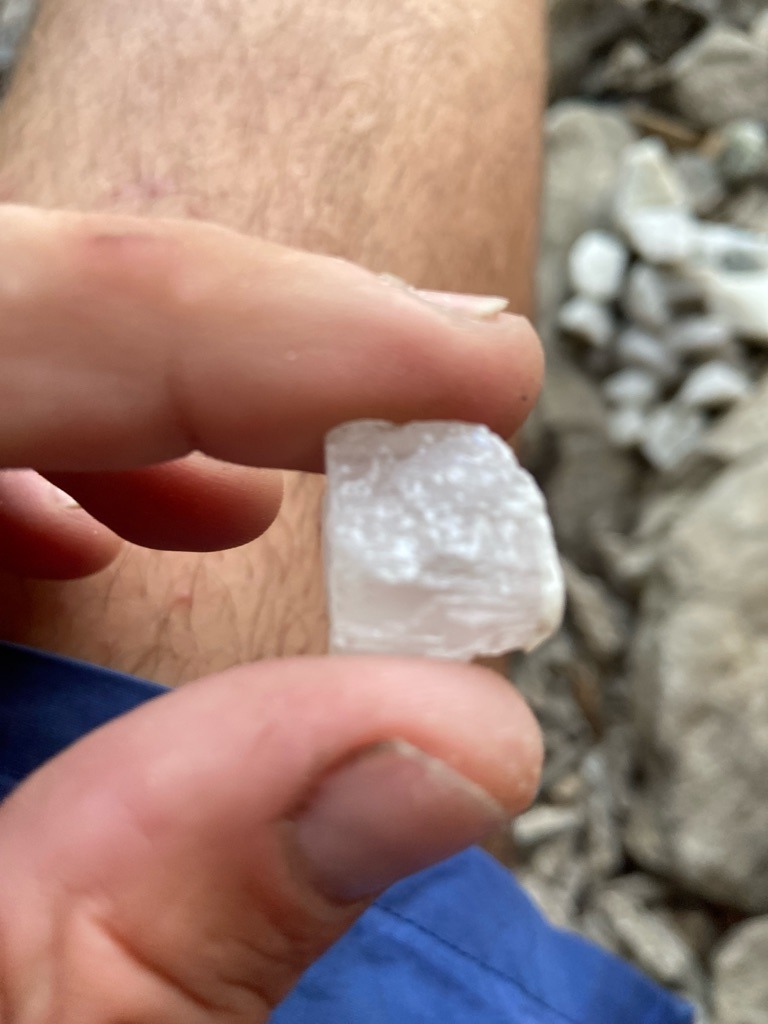
Not a diamond; likely raw quartz or calcite crystal based on rough crystal habit and vitreous luster found in a field/river setting.
Not a diamond; likely raw quartz or calcite crystal based on rough crystal habit and vitreous luster found in a field/river setting. · Rough crystal / Irregular uncut form
Not applicable (Rough, unpolished stone) Cut
Carat
Estimated around 5 to 10 carats based on physical dimensions (rough visual estimate)
Color
Translucent to milky white / Colorless
Clarity
Included / Heavily included (SI2-I1 equivalent if tested as gemstone material)
Shape
Rough crystal / Irregular uncut form
Overall Assessment
The specimen shown in the image is a rough, milky translucent mineral fragment—most likely raw quartz or calcite—rather than a diamond. It lacks the adamantine luster, crystal habits, and optical properties of diamond, but remains an interesting natural geological specimen for a rock collection.
Cut Quality
Not applicable (Rough, unpolished stone)
Brilliance
Low to moderate due to rough, unpolished surface scatter
Fire
Minimal to none, characteristic of quartz rather than diamond
Scintillation
Poor due to lack of faceted surfaces
Proportions
Not applicable for rough uncut minerals
Symmetry
Natural crystal symmetry, highly irregular due to natural formation and possible breakage
Polish
Unpolished, raw natural state
Fluorescence
Indeterminate without UV testing (likely inert or faint)
Inclusions
Internal fractures, cloudiness, and micro-inclusions typical of natural raw quartz or rough mineral specimens
Blemishes
Surface roughness, natural etch marks, chipping, and abrasion consistent with river-tumbled or raw field finds
Origin
Natural terrestrial mineral found outdoors in a rocky or riverbed environment
Treatment Detection
None detected; appears entirely natural and untreated
Estimated Value
Minimal monetary value as a mineral specimen (under $10 USD), valued more as a personal keepsake or rockhound find
Certification Estimate
Standard gemological laboratories (GIA or local labs) would identify this as quartz, not diamond, precluding diamond grading scales
Investment Potential
Negligible as an investment; educational and sentimental value only
Similar Diamonds
None (diamond exhibits entirely different refractive index, hardness, and crystal system)
Setting Suggestions
Wire-wrapped pendant or rustic bezel setting if polished into a cabochon, though typically kept as a raw display specimen
Care & Maintenance
Standard cleaning with mild soapy water and a soft brush; avoid harsh chemicals and sudden thermal shock
Interesting Facts
Many amateur prospectors mistake rough quartz crystals for raw diamonds due to their translucent appearance and crystal shape found in nature