Natural (Likely a rough specimen or non-diamond mineral)
Natural (Likely a rough specimen or non-diamond mineral) · Rough / Uncut (Sub-rectangular Macle or irregular blocky crystal)
N/A (Rough state) Cut
Carat
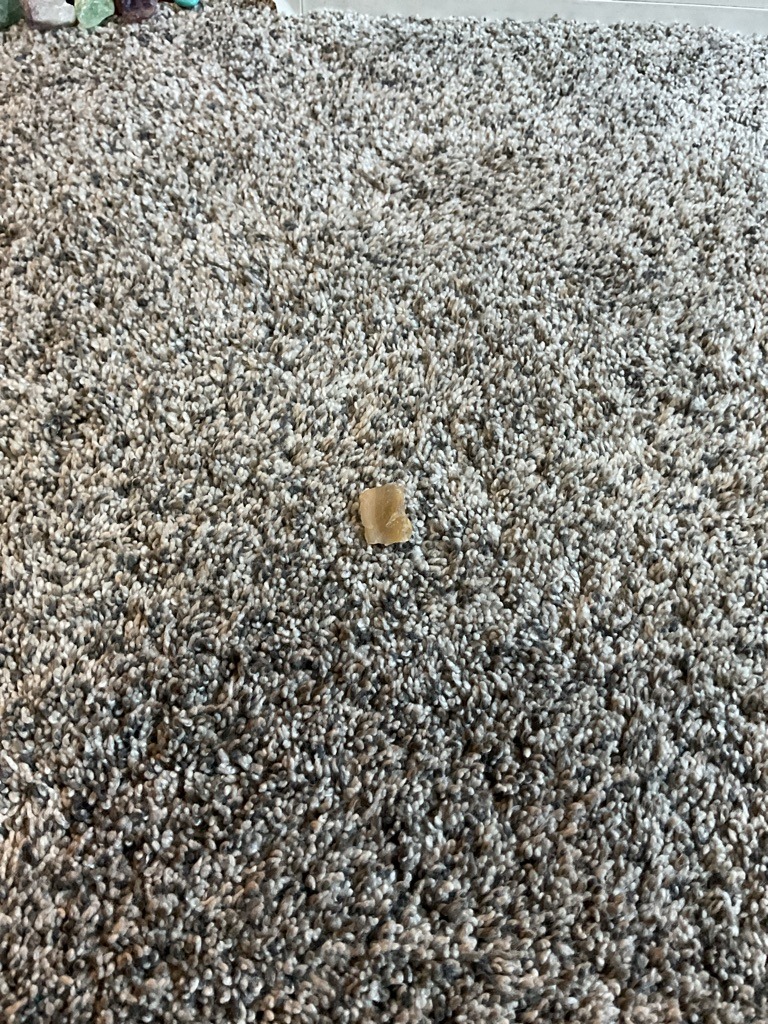
Estimated 2.00 - 4.00 carats based on scale relative to carpet fibers
Color
Fancy Brownish-Yellow to Champagne (Estimated N-Z or Light Fancy Brown)
Clarity
I1 to I3 (Included), appears translucent with visible internal fracturing
Shape
Rough / Uncut (Sub-rectangular Macle or irregular blocky crystal)
Overall Assessment
This is a yellowish-brown rough specimen. While it lacks the sparkle of a cut gemstone, it displays the characteristic waxy luster and structural irregularities of a raw mineral. Without a thermal conductivity or refractive index test, it is difficult to distinguish between a low-grade rough diamond and a similar-looking quartz or calcite pebble.
Cut Quality
N/A (Rough state)
Brilliance
Low (Due to lack of faceted surfaces and light refraction)
Fire
None detected (Dispersion not visible in rough form)
Scintillation
None detected
Proportions
N/A (Unfaceted specimen)
Symmetry
Poor (Natural irregular habit)
Polish
N/A (Natural crystal surface/rough texture)
Fluorescence
None observed (Requires UV light for confirmation)
Inclusions
Heavy internal clouding, visible feathers, and crystal graining
Blemishes
Natural surface pits, trigons, and impact marks consistent with rough stones
Origin
Likely alluvial source from Africa or South America if natural diamond
Treatment Detection
None visible (Appears in its raw, natural state)
Estimated Value
$50 - $300 (Dependent on actual mineral ID; low as a diamond specimen, high for common quartz/calcite)
Certification Estimate
GIA Rough Diamond Grading Report (Specimen would likely be graded as a 'Natural Rough Diamond')
Investment Potential
Low (Collectibility limited to mineral enthusiasts or fans of raw jewelry)
Similar Diamonds
Industrial grade rough or 'Salt and Pepper' raw specimens
Setting Suggestions
Bezel-set 'Rough Diamond' pendant or a rustic prong setting in yellow gold
Care & Maintenance
Avoid ultrasonic cleaners as internal fractures may expand; clean with lukewarm soapy water.
Interesting Facts
Most rough diamonds are octahedrons; this specimen's flatter, blocky shape is typical of 'boart' or industrial-grade material.