Likely Cullet Glass or Quartz (Non-Diamond)
Likely Cullet Glass or Quartz (Non-Diamond) · Rough / Uncut (Amorphous)
None (Uncut/Amorphous) Cut
Carat
Estimated 300-500 carats based on palm size
Color
Colorless / Transparent
Clarity
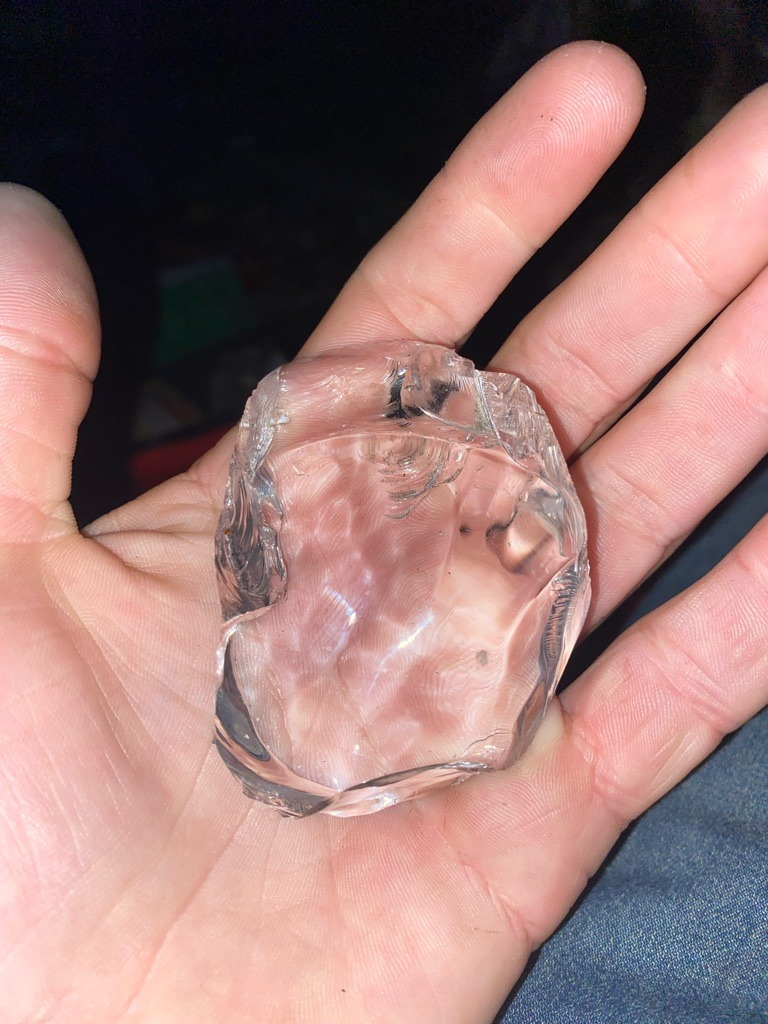
Translucent with visible flow lines and internal ripples
Shape
Rough / Uncut (Amorphous)
Overall Assessment
The specimen lacks the octahedral or dodecahedral crystal habit of a natural diamond. The internal flow lines and fracture patterns strongly suggest this is a piece of clear cullet glass or possibly a large quartz pebble rather than a gemstone.
Cut Quality
None (Uncut/Amorphous)
Brilliance
Low (Typical of silica-based materials rather than carbon)
Fire
None visible (Low dispersion)
Scintillation
Low (Surface reflections only)
Proportions
Asymmetric and irregular
Symmetry
None (Irregular)
Polish
N/A (Natural/Fractured surface)
Fluorescence
None visible under standard lighting
Inclusions
Visible internal flow lines, swirl marks, and potential air bubbles indicative of glass
Blemishes
Conchoidal fractures and impact chips along edges
Origin
Likely industrial bypass or silicate mineral bypass
Treatment Detection
None detected; natural cooling patterns observed
Estimated Value
$1 - $20 (Material value as glass/quartz)
Certification Estimate
Not eligible for diamond grading; potentially GIA/GGL for identification only
Investment Potential
Zero (Non-precious material)
Similar Diamonds
None; characteristics do not match diamond crystal structures (isometric)
Setting Suggestions
Decorative display or wire-wrapping if used for costume purposes
Care & Maintenance
Avoid high heat to prevent thermal shock in glass/quartz
Interesting Facts
The conchoidal (shell-like) fracture pattern is a primary indicator that this is glass or quartz rather than a diamond crystal