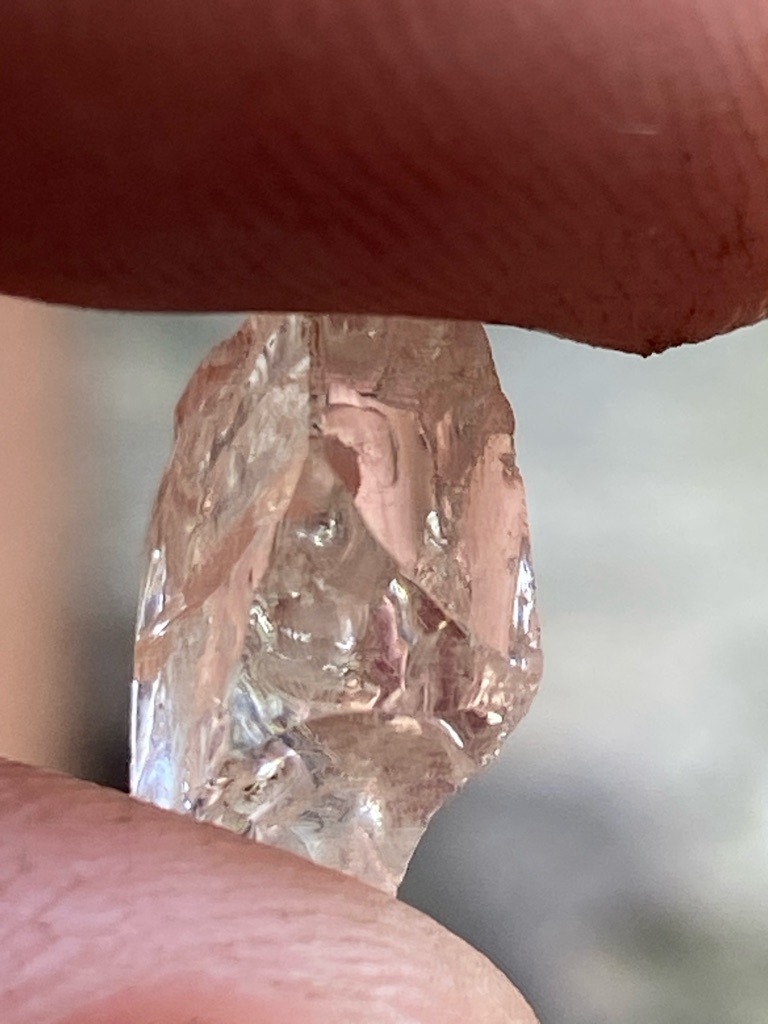
Natural Rough Diamond
Natural Rough Diamond · Uncut Rough / Irregular Octahedral Fragment
Not Applicable (Uncut Rough Crystal) Cut
Carat
Estimated 1.5 to 2.5 carats
Color
Near-colorless to light brown/champagne tint
Clarity
Estimated SI1 to SI2 (based on visible natural internal features)
Shape
Uncut Rough / Irregular Octahedral Fragment
Overall Assessment
This is a genuine, untreated natural rough diamond crystal showing characteristic growth features. It is ideal for bespoke raw jewelry designs or as a collector's mineral specimen before any potential cutting and polishing.
Cut Quality
Not Applicable (Uncut Rough Crystal)
Brilliance
Low (due to rough, unpolished surface)
Fire
Minimal dispersion visible through raw exterior
Scintillation
Limited, reflecting light off natural crystal faces rather than facets
Proportions
Natural crystal habit, no traditional cut proportions apply
Symmetry
Natural crystal growth symmetry, irregular form
Polish
Natural crystal faces (trigons and natural striations visible)
Fluorescence
Cannot be determined without UV light testing (likely None to Faint)
Inclusions
Natural mineral inclusions and internal feather fractures typical of rough stones
Blemishes
Natural surface pitting, rough skin, and growth lines
Origin
Natural geological origin from a primary kimberlite pipe or secondary alluvial deposit
Treatment Detection
No signs of artificial treatment; completely untreated natural rough
Estimated Value
Variable depending on final cut yield, roughly $500 - $1,500 for rough specimen use
Certification Estimate
GIA or similar major lab if submitted for rough evaluation, noting natural origin
Investment Potential
Collectible as a specimen piece, or speculative investment depending on potential yield if cut
Similar Diamonds
Other natural unpolished octahedral rough diamonds and uncut crystal specimens
Setting Suggestions
Raw diamond jewelry using organic prong settings in yellow or rose gold to complement the natural earthy tone
Care & Maintenance
Standard ultrasonic cleaning is safe, but avoid harsh acids and protect from impact against hard surfaces
Interesting Facts
Rough diamonds retain their pristine geological history, often preserving growth marks called trigons on their natural crystal faces