Natural Rough Diamond (Potential)
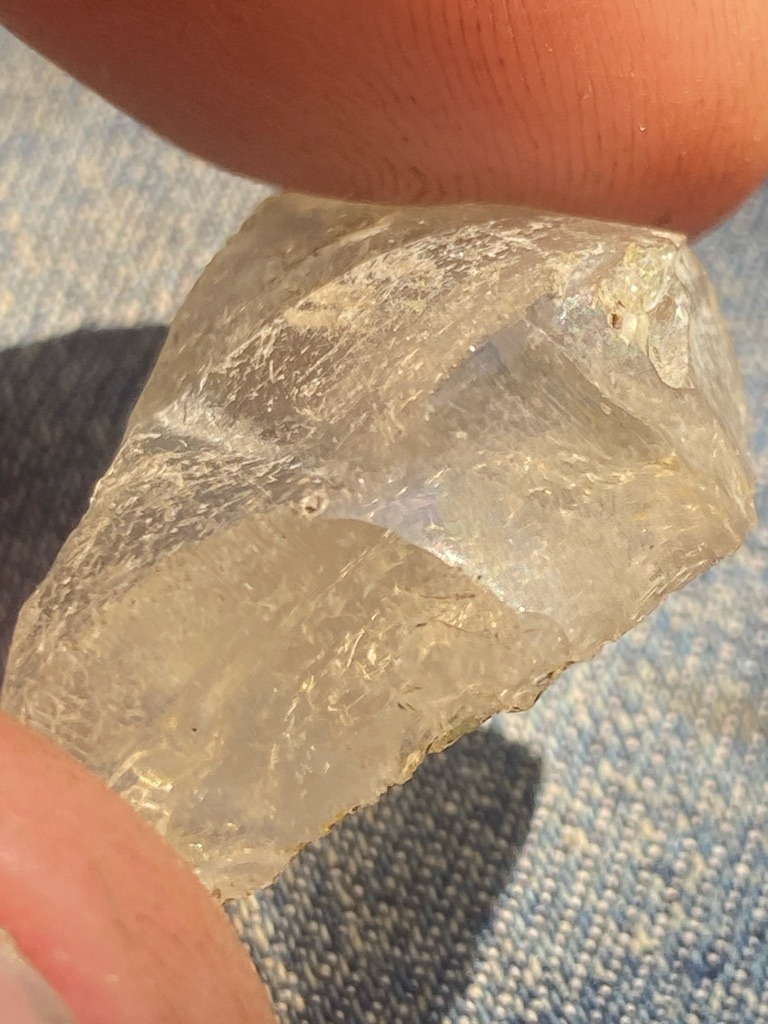
Natural Rough Diamond (Potential) · Rough / Uncut (Natural Octahedral Fragment)
N/A (Uncut Rough) Cut
Carat
Estimated 15.0 - 25.0 carats (based on finger scale)
Color
Likely L-O range (Faint Yellow/Warm tinted)
Clarity
Estimated I1 - I3 (Heavily included with visible veils and fractures)
Shape
Rough / Uncut (Natural Octahedral Fragment)
Overall Assessment
A substantial rough diamond specimen of industrial to lower gem-quality quality, notable for its size but challenged by significant internal fractures.
Cut Quality
N/A (Uncut Rough)
Brilliance
Low (typical for rough material prior to faceting)
Fire
Low (light dispersion is blocked by internal inclusions)
Scintillation
Minimal (restricted to surface reflections)
Proportions
N/A (As-mined condition)
Symmetry
N/A (Natural asymmetric crystal structure)
Polish
N/A (Natural crystal faces)
Fluorescence
Indeterminate without UV light
Inclusions
Prominent internal fractures, clouds, and surface-reaching feathers
Blemishes
Natural trigons (potentially), surface abrasions, and impact marks
Origin
Likely alluvial or primary source (e.g., Africa or Brazil)
Treatment Detection
No visible treatments; appears in natural raw state
Estimated Value
$1,000 - $3,500 (depending on yield and inner clarity)
Certification Estimate
GIA Rough Diamond Report (identifying origin/weight)
Investment Potential
Low to Moderate (high risk due to unpredictable yields during cutting)
Similar Diamonds
Uncut alluvial diamonds from the DRC or Namibia
Setting Suggestions
Specimen display or custom 'rough diamond' cage pendant in 18k gold
Care & Maintenance
Avoid ultrasonic cleaners; the internal fractures are sensitive to thermal shock
Interesting Facts
The surface features on rough diamonds are called 'trigons' and help verify authenticity