Non-diamond mineral (Likely Fossilized Coral or Sedimentary Rock)
Non-diamond mineral (Likely Fossilized Coral or Sedimentary Rock) · Rough/Uncut (Natural amorphous specimen)
N/A (Uncut/Natural state) Cut
Carat
Estimated 25 - 50 carats (Equivalent to approximately 5-10 grams)
Color
Opaque Tan/Brownish-Yellow (Non-diamond scale)
Clarity
Opaque (Does not meet transparency standards for gemstones)
Shape
Rough/Uncut (Natural amorphous specimen)
Overall Assessment
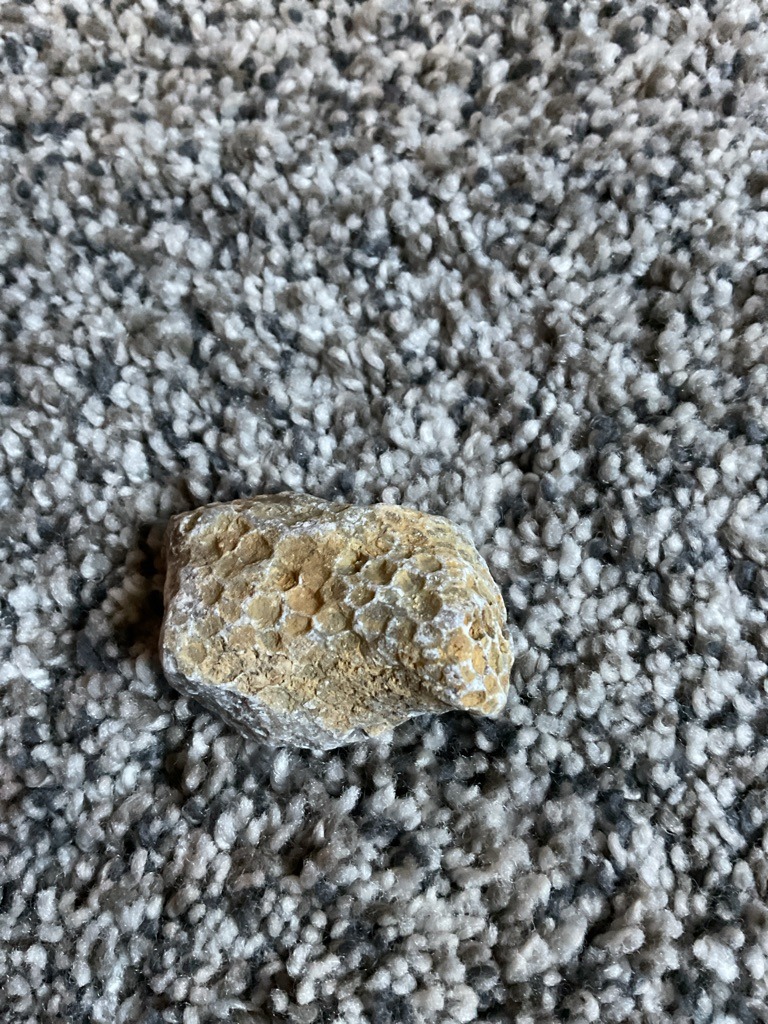
The object in the image is not a diamond. It is a geological specimen, likely a fragment of fossilized coral or a porous sedimentary rock based on the distinct pitted surface texture.
Cut Quality
N/A (Uncut/Natural state)
Brilliance
None (Matte surface does not reflect light internally)
Fire
None (No spectral dispersion observed)
Scintillation
None
Proportions
N/A (No geometric facets present)
Symmetry
N/A (Asymmetric natural specimen)
Polish
N/A (Natural rough surface)
Fluorescence
Unknown (Requires UV testing; natural stone typically low)
Inclusions
Macroscopic pores and honeycomb-like fossil structures
Blemishes
Heavy surface weathering and sediment coating
Origin
Likely sedimentary deposit or ancient seabed (common for fossil corals like Favosites)
Treatment Detection
None detected; appears to be a raw natural geological find
Estimated Value
Minimal specimen value ($1 - $10 USD as a geological curiosity)
Certification Estimate
N/A (Not suitable for diamond grading; may be identified by geological labs)
Investment Potential
None (No market as a gemstone; purely educational/decorative)
Similar Diamonds
None (This specimen shares no physical properties with diamond)
Setting Suggestions
Wire wrapping for a collection or display in a geological display case
Care & Maintenance
Keep dry and clean with a soft brush; avoid harsh chemicals that may dissolve minerals
Interesting Facts
The honeycomb pattern strongly suggests a fossil colonial coral, likely millions of years old.