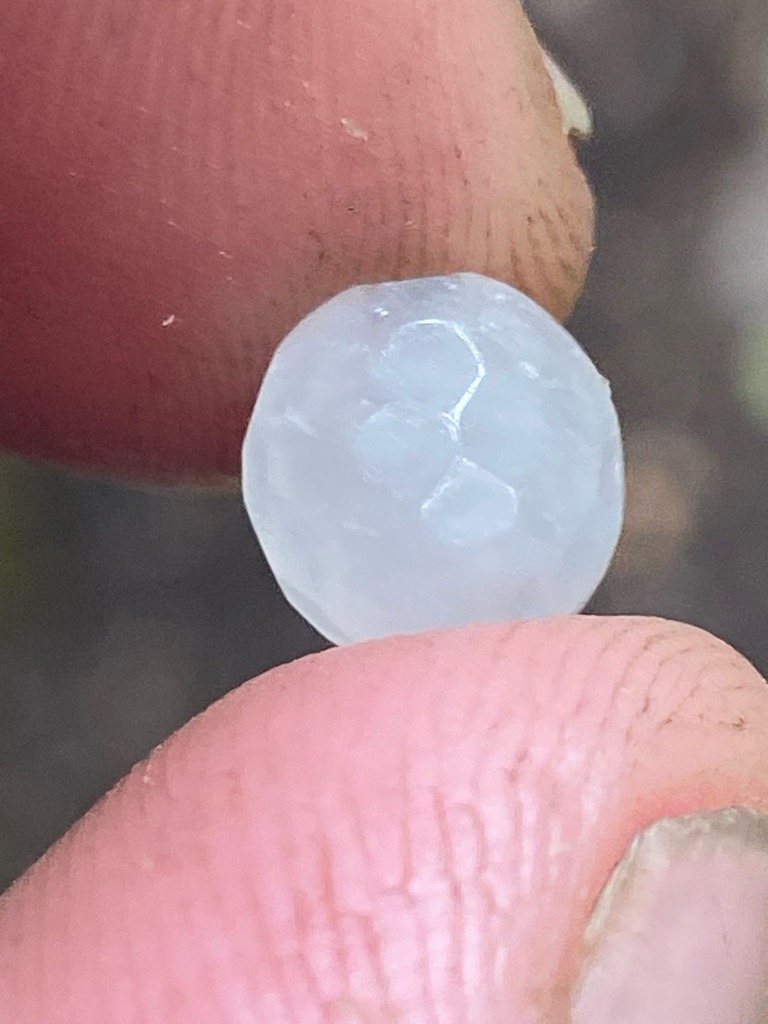
Natural rough diamond
Natural rough diamond · Uncut crystal, heavily rounded or tumbled pebble form with natural curved faces
Not applicable (rough, uncut stone) Cut
Carat
Estimated around 0.5 to 1.0 carats based on standard human finger scale reference
Color
Near-colorless to milky white (approx. G-J equivalent if faceted)
Clarity
Included due to milky appearance and internal cloudy features
Shape
Uncut crystal, heavily rounded or tumbled pebble form with natural curved faces
Overall Assessment
A charming, water-worn rough diamond pebble displaying natural crystal characteristics and rounded contours, retaining its geological authenticity.
Cut Quality
Not applicable (rough, uncut stone)
Brilliance
Low due to unpolished and milky nature
Fire
Minimal to none in current rough state
Scintillation
Absent due to lack of facets
Proportions
Not applicable to rough crystals
Symmetry
Asymmetrical natural crystal form with rounded contours
Polish
Natural unpolished surface with typical frosted or etched crystal skin
Fluorescence
Unknown without UV testing, likely inert to moderate blue
Inclusions
Cloudy internal structures, potential pinpoint inclusions and feather formations typical of rough stones
Blemishes
Natural resorption surfaces, indentation features, and minor surface pitting common on rough diamond skins
Origin
Alluvial deposit origin suggested by the heavily worn, rounded exterior
Treatment Detection
No treatments detected; completely natural unheated and untreated rough
Estimated Value
Modest value as an industrial or lower-grade specimen piece
Certification Estimate
GIA would likely issue a rough diamond description report rather than a standard grading report
Investment Potential
Low investment potential; primarily of interest to collectors of raw minerals or specimens
Similar Diamonds
Alluvial rough diamond pebbles and industrial-grade uncut crystals
Setting Suggestions
Best suited for organic-style bezel settings or wire-wrapping to showcase its raw geological beauty
Care & Maintenance
Standard gentle cleaning with warm soapy water and a soft brush; protect from hard impacts
Interesting Facts
The rounded shape is often the result of natural water transport and abrasion in riverbeds over millions of years