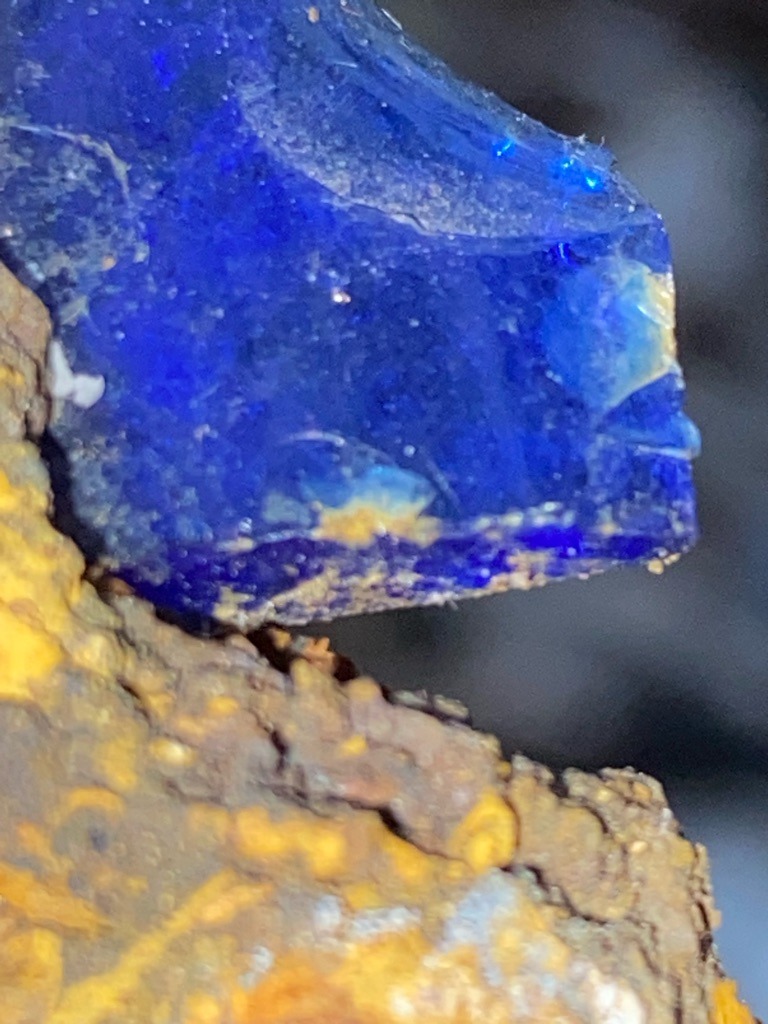
The specimen is not a diamond; it is likely a blue glass slag or a cobalt-rich mineral specimen like cobaltocalcite or azurite in a rocky matrix.
The specimen is not a diamond; it is likely a blue glass slag or a cobalt-rich mineral specimen like cobaltocalcite or azurite in a rocky matrix. · Rough / Uncut / Amorphous
None (Rough Specimen) Cut
Carat
Estimated 2-5 carats for the visible crystalline area
Color
Deep Vivid Cobalt Blue
Clarity
Translucent to Opaque (I3 equivalent if compared to diamond)
Shape
Rough / Uncut / Amorphous
Overall Assessment
This material lacks the crystal habit, refractive index, and luster of a diamond. It is a blue mineral sample or glass fragment embedded in a host matrix.
Cut Quality
None (Rough Specimen)
Brilliance
Low; characteristic of non-gemstone vitreous luster
Fire
None visible
Scintillation
None; matte/vitreous surface reflections only
Proportions
Not Applicable
Symmetry
Not Applicable
Polish
None; displays natural conchoidal or irregular fracture surfaces
Fluorescence
Indeterminate from image
Inclusions
Heavy internal fracturing, clouding, and matrix inclusions
Blemishes
External pitting, surface reaching fractures, and adherence to host rock
Origin
Likely industrial byproduct (glass slag) or secondary mineral deposit
Treatment Detection
N/A
Estimated Value
$5 - $20 (Specimen value only)
Certification Estimate
N/A; GIA/IGI would identify this as non-diamond/glass
Investment Potential
None
Similar Diamonds
None; does not share optical properties with blue diamonds (IIB)
Setting Suggestions
Collection display box; not suitable for jewelry due to likely fragility
Care & Maintenance
Avoid harsh chemicals; clean with soft brush and water
Interesting Facts
The vibrant blue color is often the result of cobalt or copper in various silica or mineral bases.