Likely Quartz or Non-Diamond Mineral
Likely Quartz or Non-Diamond Mineral · Rough/Uncut (Amorphous Shard)
Uncut (Natural rough state) Cut
Carat
Estimated 15-25 carats based on size relative to fingers
Color
Colorless/Transparent
Clarity
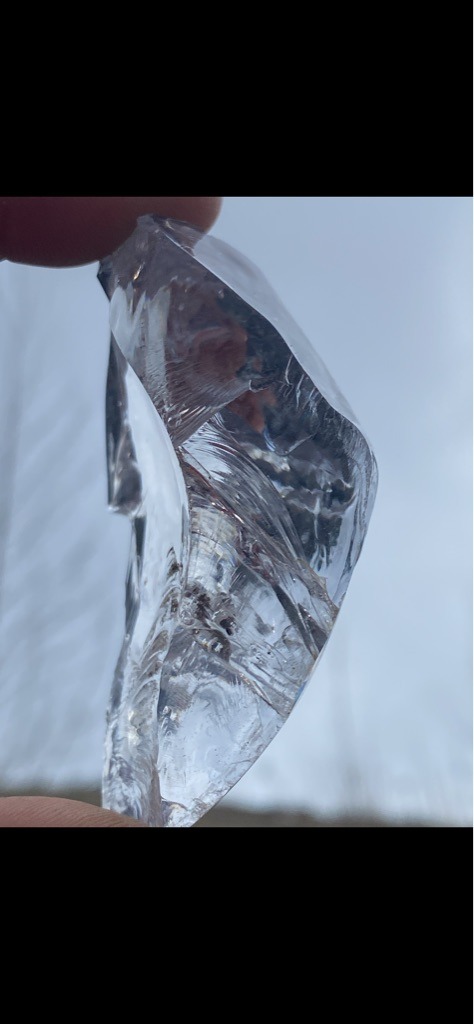
Translucent with significant internal veining
Shape
Rough/Uncut (Amorphous Shard)
Overall Assessment
Based on the photographic evidence, this specimen displays physical characteristics (fracture patterns and luster) more consistent with a large quartz shard or glass than a natural diamond. A thermal conductivity test is required for definitive identification.
Cut Quality
Uncut (Natural rough state)
Brilliance
Low (typical of uncut non-diamond minerals)
Fire
None visible
Scintillation
None visible
Proportions
Irregular shard shape
Symmetry
N/A (Rough specimen)
Polish
N/A (Natural surface texture)
Fluorescence
Cannot be determined without UV light
Inclusions
Visible fluid inclusions and heavy internal fracturing/veining
Blemishes
Surface conchoidal fracturing and stepped growth patterns
Origin
Likely alluvial or volcanic source if natural mineral
Treatment Detection
No obvious signs of treatment; appears raw
Estimated Value
Low (Specimen value if Quartz; significantly higher if verified as Macle diamond rough)
Certification Estimate
GIA Rough Stone Report (if natural diamond), but likely a laboratory mineral test
Investment Potential
Low unless verified as a high-quality diamond macle
Similar Diamonds
Uncut industrial-grade diamond rough (if verified)
Setting Suggestions
Custom wire wrap or specimen display case
Care & Maintenance
Avoid heavy impact to prevent further cleavage propagation
Interesting Facts
The conchoidal fracture patterns are more characteristic of glass or quartz than the octahedral cleavage of diamond.