Natural (Rough Crystal / Fragment)
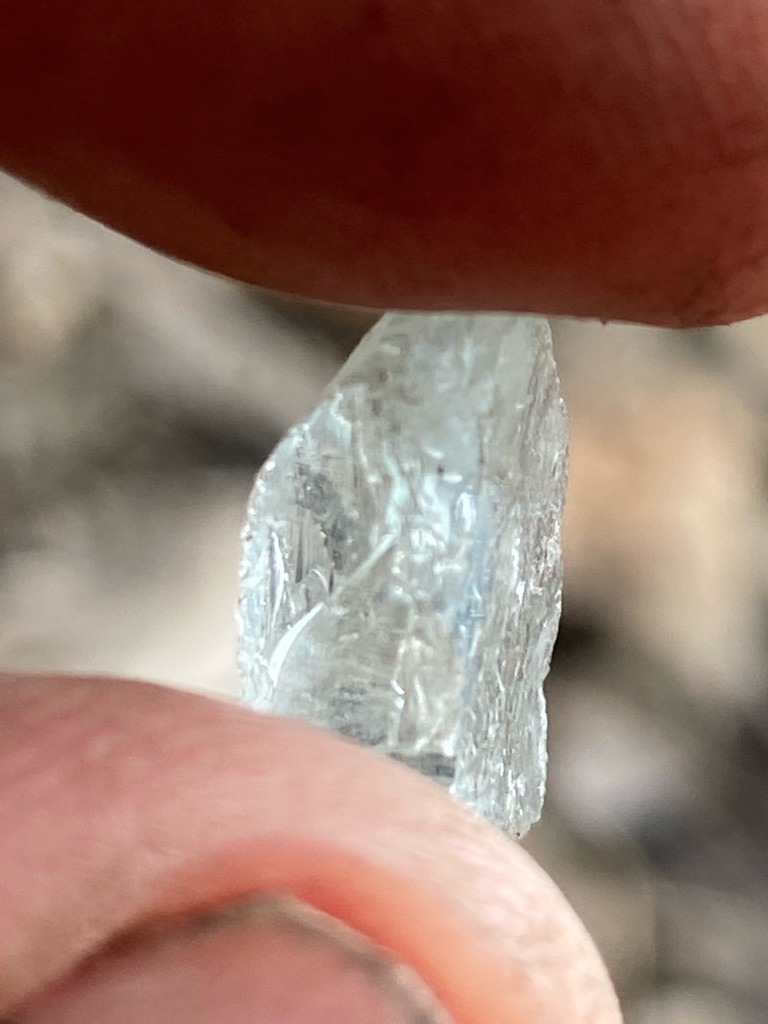
Natural (Rough Crystal / Fragment) · Uncut / Rough irregular fragment
Not Applicable (Uncut rough specimen) Cut
Carat
Estimated 0.8 - 1.2 carats
Color
Near Colorless (Estimated G-I)
Clarity
Included (Estimated SI1 - SI2)
Shape
Uncut / Rough irregular fragment
Overall Assessment
An interesting, natural near-colorless rough diamond fragment exhibiting natural surface textures and internal characteristics, ideal for custom organic jewelry or specimen collection.
Cut Quality
Not Applicable (Uncut rough specimen)
Brilliance
Low to moderate due to rough, unpolished exterior surfaces
Fire
Minimal dispersion visible on raw faces
Scintillation
Poor due to lack of standard facet alignment
Proportions
Not Applicable (Uncut rough specimen)
Symmetry
Natural irregular symmetry
Polish
Raw natural crystal faces / fractured surface
Fluorescence
Cannot determine accurately without UV testing (Likely None to Faint)
Inclusions
Natural internal feathers, cloudiness, and crystal inclusions typical of rough diamond material
Blemishes
Natural surface etching, trigons, and rough fracture lines
Origin
Alluvial or primary kimberlitic natural rough deposit
Treatment Detection
No evidence of artificial treatments detected in rough state
Estimated Value
Low-to-moderate rough market value, approximately $100 - $300 depending on final cutting yield
Certification Estimate
GIA or similar major gemological lab for rough origin verification, though typically sold as uncertified rough
Investment Potential
Low investment potential as a single rough stone; primarily of interest to lapidaries or custom jewelry designers
Similar Diamonds
Other unworked near-colorless industrial or low-gem grade rough diamond fragments
Setting Suggestions
Can be set raw in an organic, rustic, or bohemian-style bezel setting using yellow or white gold
Care & Maintenance
Standard gentle cleaning with warm soapy water and a soft brush; protect from hard impacts which could propagate natural cleavage planes
Interesting Facts
Rough diamonds retain their natural geological history, showing surface features like growth lines and striations formed deep within the Earth's mantle